


Afghanistan needs $129 million for quake recovery, UN says, as donor support falls
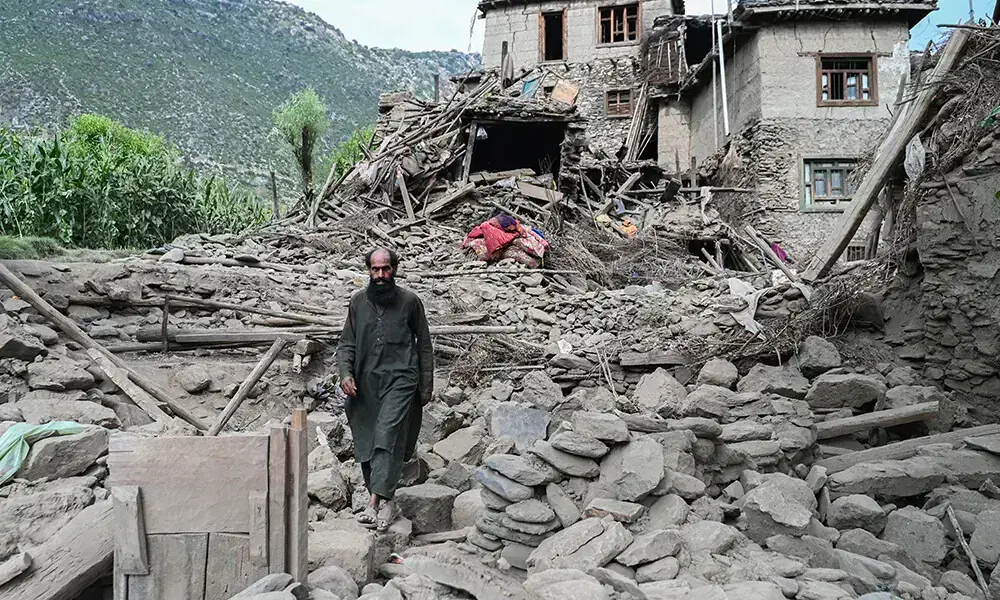

KARACHI: A UN-led assessment says Afghanistan requires $128.8 million to restore housing, schools and key services in its quake-hit eastern provinces, warning that reconstruction faces “significant shortfalls” as donor support for the country falls sharply.
The Joint Rapid Recovery Needs Assessment (JRRNA), conducted with the World Bank, EU and ADB, outlines a three-year plan to rebuild homes, health facilities, water systems and farmland in the eastern provinces of Kunar, Nangarhar and Laghman.
It comes as aid to Afghanistan shrinks, with the UN estimating a $3.2 billion need this year and a similar requirement in 2026, less than half of which has been funded.
“The earthquakes-hit communities are already strained by drought, mass returns and a sharp economic contraction,” UN Resident Representative Stephen Rodriguez told Reuters. “There is very limited capacity left to cope with another shock.”
Spokespeople for the Taliban administration and the government’s disaster management authority did not respond to requests for comment.
Powerful 6.3 quake kills at least 20 in Afghanistan, hundreds injured
The JRRNA says the quakes caused $86.6 million in damage across 10 districts, affecting 56,000 families, with more than 6,200 homes collapsed, 2,000 severely damaged, and 22 health facilities and 80 schools hit. The full recovery bill is higher at $128.8 million.
Housing is the biggest challenge, costing $54.9 million to rebuild thousands of homes. Education needs $14.9 million, with more funding needed for water, irrigation, farmland and rural roads.
UN agencies have provided emergency tents and cash to thousands of families, with nearly 10,000 households needing urgent shelter support and 7,700 people still displaced.
Rodriguez said the assistance eased immediate pressures but was “nowhere near enough” to move families out of survival mode without longer-term investment.
TIGHTENING AID ENVIRONMENT
Rodriguez said a major donor cut $80–90 million this year, forcing more than 400 health centres to close in the first half of 2025, adding that basic services had already been scaled back as needs rise. He did not identify the donor.
Afghans begin clean-up after earthquake that killed at least 27
The UN Development Programme plans to seek $150 million for infrastructure, jobs and private-sector support next year, including $43 million for re-integration of refugees who have returned, but Rodriguez said it was unclear how much donors would provide.
Afghanistan has also absorbed one of the world’s largest forced return of refugees. Rodriguez said 4.3 million to 4.5 million Afghans have returned since 2021, with UN refugee agency data showing up to 2.5 million more in Iran and 1.7 million in Pakistan could return if current policies continue.
“The absorptive capacity is already exceeded,” he said, noting that 88% of returnees are in debt and only 4% have salaried jobs. With 400,000 young Afghans entering the labour market each year, Rodriguez warned that delays in reconstruction risk fuelling social tensions and outward migration.




















Comments
Comments are closed for this article.