


China’s yuan eases as investors await US data backlog for Fed clues
- The onshore yuan was 0.09% weaker at 7.1060 per dollar, while its offshore counterpart was down about 0.07% in Asian trade to 7.1072
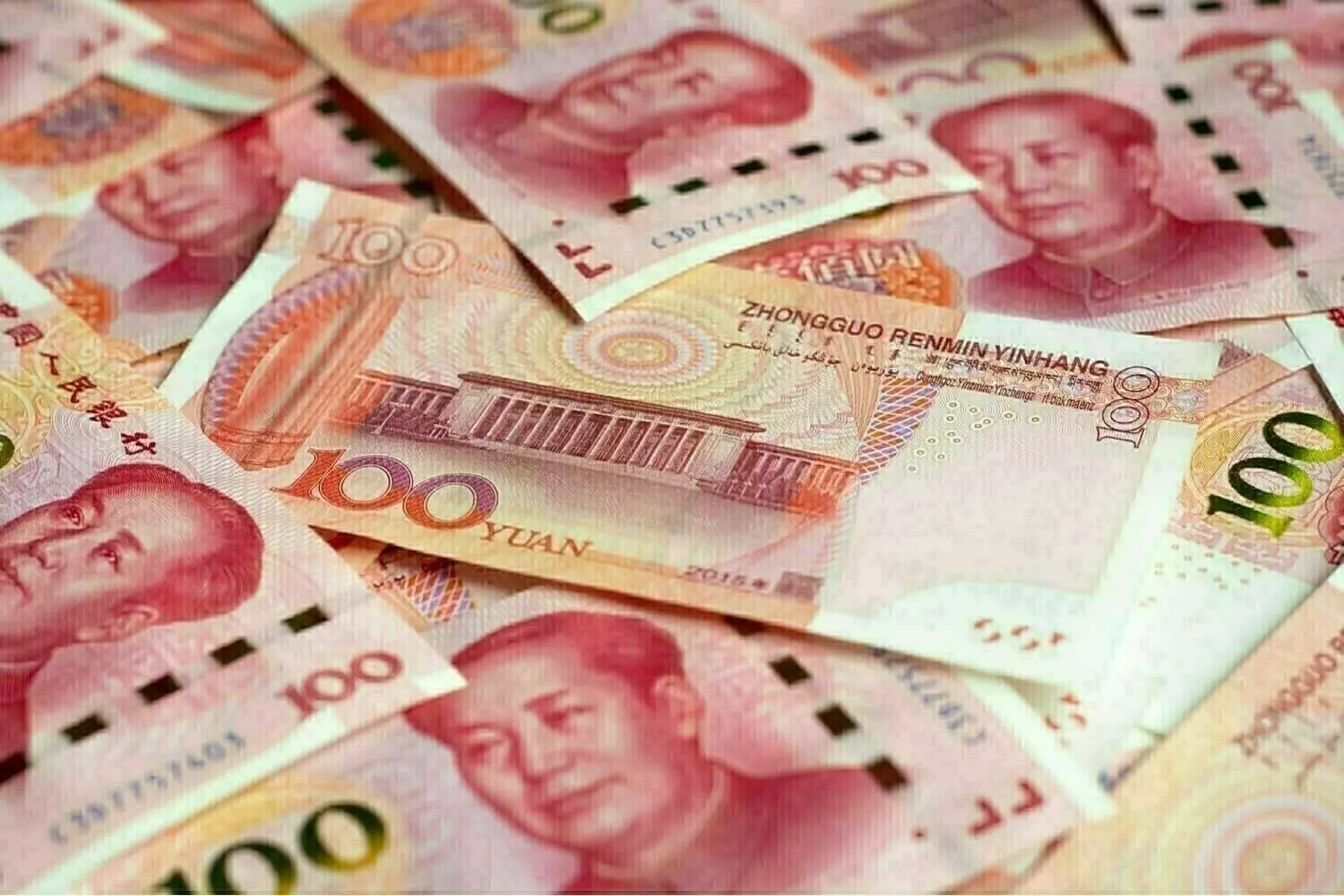

SHANGHAI: China’s yuan drifted lower against the dollar on Monday with investors reluctant to take active positions ahead of the release of a backlog of US economic data that is likely to give clues about the timing of Federal Reserve policy easing.
The data, delayed by the US government shutdown, will begin to clear this week, with the closely watched September nonfarm payrolls report to be published on Thursday.
“Although the US government shutdown has ended, critical jobs and inflation data may remain permanently unavailable or severely delayed, blurring the pricing basis for the dollar,” analysts at Huatai Futures said in a note.
The economic data, particularly the labour market figures, will be carefully parsed by Fed officials to determine whether the economy is in need of further support.
Markets are now pricing in just over a 40% chance of a 25-basis-point Fed interest rate cut next month, down from more than 60% earlier this month.
As of 0358 GMT, the onshore yuan was 0.09% weaker at 7.1060 per dollar, while its offshore counterpart was down about 0.07% in Asian trade to 7.1072.
The yuan showed little reaction to the escalating diplomatic row with Japan over Taiwan, with the yuan-yen cross rate trading largely flat on Monday.
Traders also shrugged off much-strengthened official yuan guidance, as the central bank continued the broad trend since May of setting firmer-than-expected midpoints.
Prior to the market open, the People’s Bank of China set the midpoint rate at 7.0816 per dollar, its strongest since October 14, 2024, and 140 pips firmer than a Reuters estimate of 7.0956.
The PBOC allows the spot yuan to trade 2% either side of the fixed midpoint each day.
Based on Monday’s fixing, the yuan’s value against a basket of currencies, as measured by yuan CFETS index, fell to a two-week low of 97.8, and was down 3.62% year-to-date.
The spot rate, however, gained about 2.73% during the same period.
“Trade-weighted yuan will likely return to a modest appreciation path, supported by continued resilient external demand, along with improved portfolio flows amid a stronger narrative on China’s tech innovation and economic rebalancing,” analysts at Morgan Stanley said in a client note.
They expect the yuan CFETS to appreciate 2% in 2026 and another 2.5% in 2027.
Separately, a string of October Chinese economic data, including a contraction in exports and a further slowdown in retail sales, pointed to a tougher fourth quarter of this year, analysts said.
“Given that the 15th Five-Year Plan starts next year, we expect the government to pull the infrastructure lever,” Barclays analysts said in a note.
“In the coming months, we will watch for two key events - the December Central Economic Work Conference for clues to the direction of fiscal and monetary policies, and the March National People’s Congress meeting for the government’s growth target and fiscal budget.”

















Comments
Comments are closed for this article.