


EDITORIAL: Pakistan, one of the world’s most water-stressed countries, faces an intensifying crisis that is both environmental and geopolitical in nature. The first edition of the World Bank’s Global Water Monitoring Report titled “Continental Drying: A Threat to Our Common Future” paints a troubling picture of how unsustainable water use, climate change, and regional politics are converging to exacerbate this country’s growing water vulnerability.
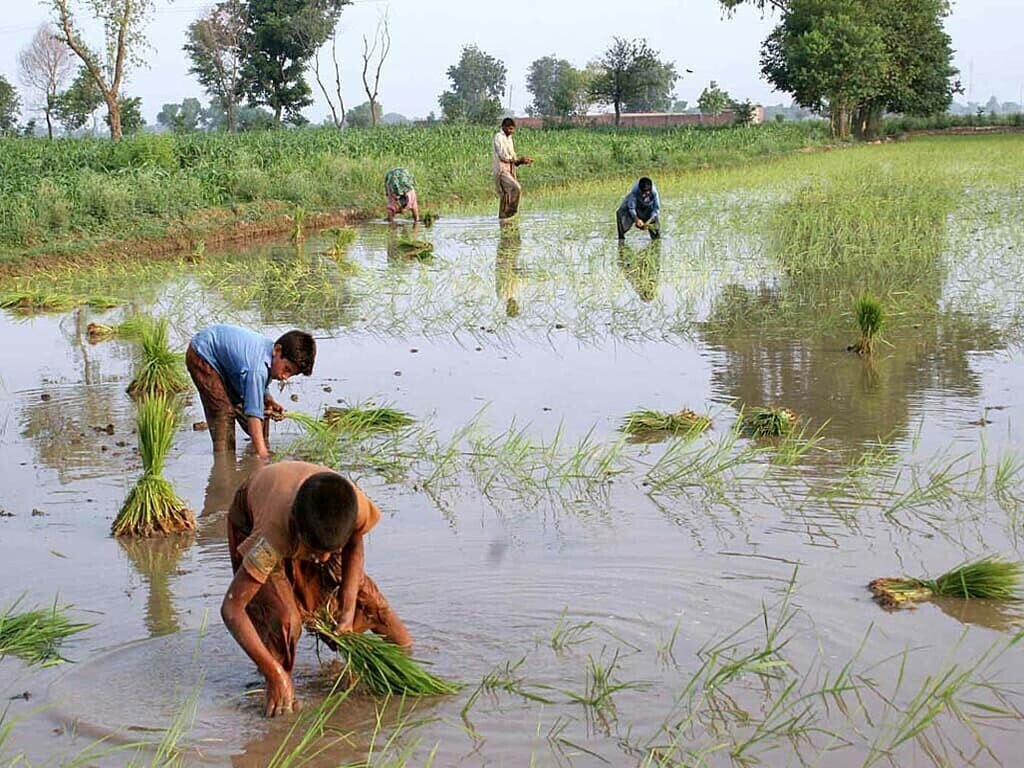
According to the report, Pakistan is among six nations with the highest levels of inefficient agricultural water use amid increasingly arid conditions. The agricultural sector — which consumes over 90 percent of our freshwater resources — remains dominated by water-intensive crops, such as rice and sugarcane. Alarmingly, rice cultivation has expanded into the semi-arid zones of southern Punjab, a practice that is accelerating groundwater depletion.
The report notes that two-thirds of inefficient irrigation in drying areas is linked to the cultivation of such water-hungry crops, highlighting a critical mismatch between Pakistan’s agricultural choices and its hydrological reality. However, the water challenge is not solely the result of domestic inefficiencies. It is being compounded by India’s weaponisation of transboundary river waters.
Under the Indus Waters Treaty (IWT) of 1960, the waters of the western rivers — Indus, Jhelum, and Chenab — were allocated to Pakistan, while India retained rights over the eastern rivers. Yet, India has not only intensified the construction of upstream dams and hydroelectric projects on our rivers, but during the recent months its senior leaders, including Prime Minister Narendra Modi, have openly been threatening to divert and block water flows into Pakistan, vowing that “not a drop of water from the Indus River will be allowed to reach Pakistan”.
Such rhetoric fundamentally undermines the spirit of the IWT that has served as a cornerstone of South Asian water diplomacy for over six decades. The combination of internal mismanagement, inefficient irrigation, and external threats poses a grave risk to our economy, food security, and overall well-being.
The World Bank’s report further reveals that the planet is losing 324 billion cubic meters of freshwater annually, largely due to droughts, deforestation, and poor water management. For Pakistan, where per capita water availability has fallen below the scarcity threshold of 1,000 cubic meters, these global losses only amplify local vulnerabilities. This situation demands urgent reform.
Our policymakers must overhaul water governance framework, promote efficient irrigation technologies, shift toward smarter and less water-intensive crop patterns, invest in large-scale reforestation, and strengthen groundwater regulation.
In essence, Pakistan’s water crisis is not merely an environmental issue; it is a national challenge, intertwined with weak agricultural policy and volatile regional politics. The World Bank’s findings are a stark reminder that water could become a trigger for conflict unless managed with foresight, equity, and resilience.
Copyright Business Recorder, 2025




















Comments
Comments are closed for this article.