


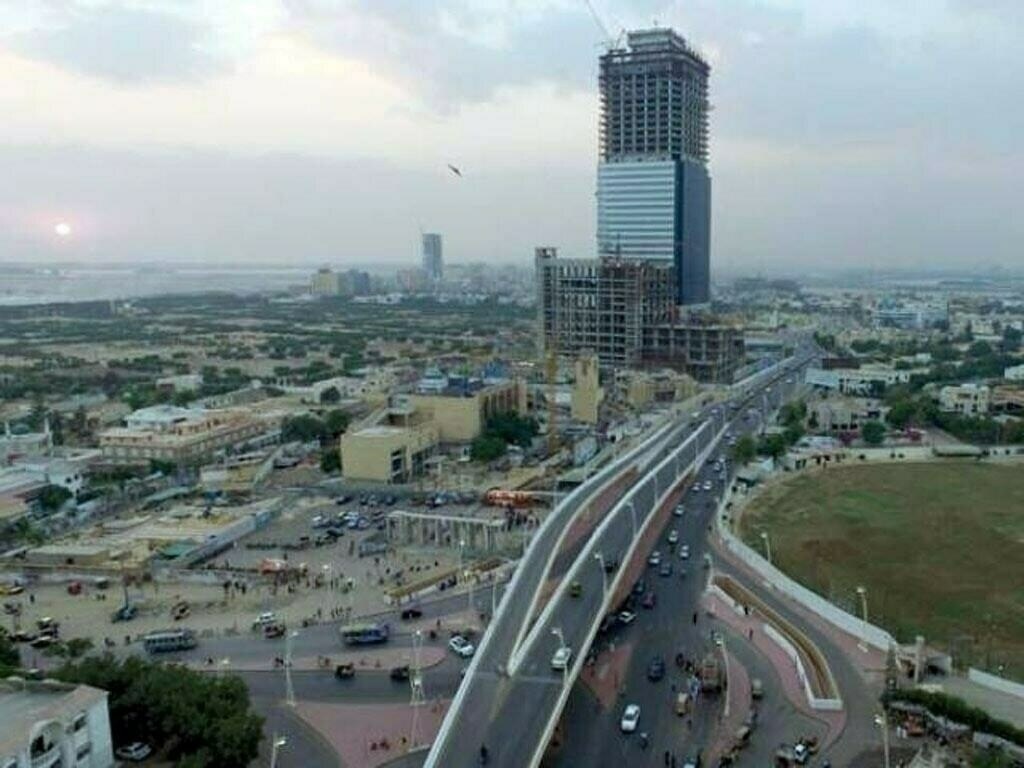
EDITORIAL: A startling new World Bank study, published on November 4, has upended long-held assumptions about Pakistan’s urbanisation. Using satellite imagery and the Degree of Urbanisation methodology, it finds that nearly 88 percent of Pakistan’s population lives in areas with urban characteristics, far above the official estimate of just 39 percent.
The working paper, “When Does a Village Become a Town? Revisiting Pakistan’s Urbanisation Using Satellite Data” exposes how outdated administrative boundaries have masked the nation’s true demographic transformation.
According to the study, 46 percent of Pakistanis now live in high-density cities while another 42 percent inhabit moderately dense urban centres.
And it is not just major metropolises like Karachi and Lahore driving this urban expansion, but secondary cities and peri-urban belts still misclassified as ‘rural’ in official data. This distortion has had far-reaching consequences, from how property taxes are collected to how infrastructure programmes are planned in these areas.
Moreover, when functional cities are treated as villages on paper, local governments are deprived of the fiscal means and administrative instruments vital for delivering essential public services and efficient urban management.
The World Bank’s findings, then, not only upend the basis of Pakistan’s development planning, they also reveal an urbanisation story mired in crisis. Rapid population growth has left cities overwhelmed by decaying infrastructure, suffocating congestion and underfunded municipalities.
Most damagingly, sprawling slums have multiplied, trapping millions in deprivation and denial of basic services. As the social and physical fabric of urban and peri-urban life frays, poverty, disease, environmental degradation, crime and deepening inequality now intersect in a volatile mix.
At its core, this urban planning failure stems from rural economic collapse and the deepening crisis in agriculture. Millions are abandoning farming because it no longer sustains them. This is an alarming reality for an economy still intricately tethered to agriculture, which provides direct and indirect employment to a huge section of the population, and underpins the largest industrial and export sectors. Moreover, declining yields of staple crops also threaten the nation’s food security.
Yet urban-focused policymakers and intelligentsia have long ignored that rural decline drives urban decay. It is about time governments, political parties and the wider urban populace, especially in our megacities, recognised this reality.
To curb the kind of mass rural-to-urban migration that strains infrastructure and erodes social cohesion in metropolises, most advanced economies channel resources from cities to the countryside, a deliberate policy tool that helps sustain acceptable living standards in rural areas, ensures access to basic services there and creates jobs.
When urban voices in Pakistan criticise rural subsidies or social protection programmes, they forget that supporting the rural economy ultimately safeguards cities. History beyond our shores underscores this truth.
New York’s mass transit system, for instance, was not just the work of reform-minded planners striving for efficient public transport for New Yorkers, but also that of the city’s far-sighted mercantile elite, which understood that easing congestion in the city centre would not only improve living conditions but also serve the interests of commerce, civic order and a dependable workforce. Their investment in public infrastructure extended beyond New York City’s limits, and was not confined to the city centre, laying the groundwork for a more functional, prosperous metropolis that became a model of urban dynamism and economic vitality.
Pakistan’s challenge today, then, is two-fold. First, the government must acknowledge that we are no longer a predominantly rural nation. It urgently needs to enumerate the true urban footprint by reflecting it accurately in official statistics.
Second, there is a critical need to craft a coherent national policy that safeguards the vitality of both city and village. We must recognise that the two exist within a mutually dependent system, where the prosperity of one is inseparable from the well-being of the other.
Copyright Business Recorder, 2025




















Comments
Comments are closed for this article.