


Revised buyback rates for net metering: PM directs PD to verify new tariff in sync with Nepra
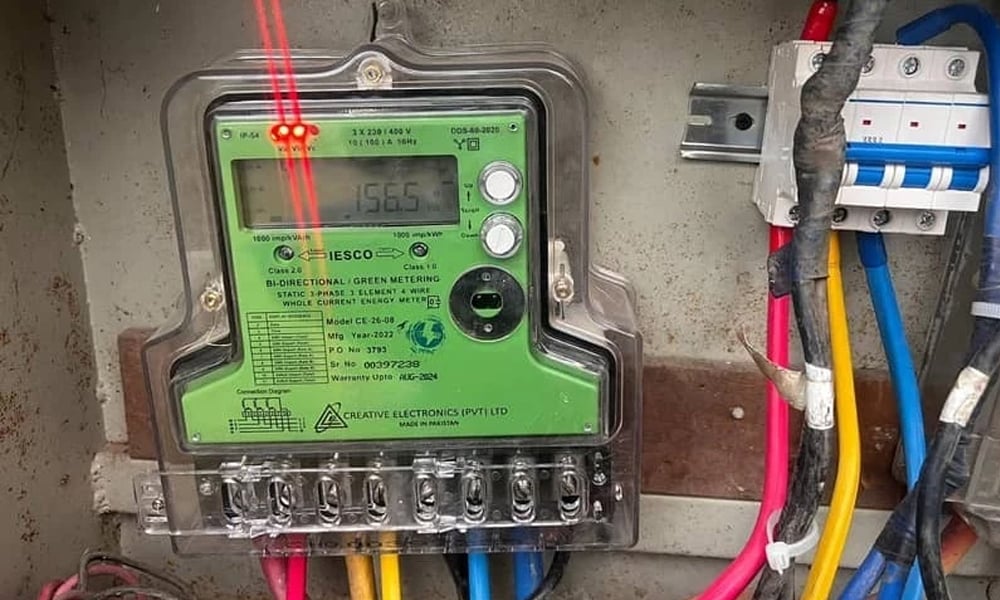

ISLAMABAD: After months of delay in the approval of a summary submitted by the Power Division on revised buyback rates for net metering across the country, Prime Minister Shehbaz Sharif has directed the PD to immediately verify the proposed new tariff in coordination with the National Electric Power Regulatory Authority (Nepra), sources in Nepra told Business Recorder.
According to sources in Nepra, the directive was issued by the Prime Minister during a meeting held on October 22, 2025, at the Prime Minister’s Office, attended by relevant stakeholders.
“Power Division, in coordination with NEPRA, shall review and verify the tariff of buyback rates and the impact on other consumers before finalizing proposals or options for introducing net metering reforms,” said an official familiar with the development.
Net metering consumers: Contract term limited to 5 years
The Power Division has proposed reducing the net metering buyback rate from the current Rs 22 per unit to around Rs 11.30 per unit, arguing that the existing rate imposes an additional financial burden on other electricity consumers.
The Prime Minister also instructed the division to review all existing contracts signed under the Net Metering Rules 2015 to determine whether buyback rates can legally be altered without breaching existing contractual obligations.
“The Power Division shall conduct a thorough review of existing contracts executed with consumers under the Net Metering Rules 2015, especially from a legal perspective,” the source said, adding that the exercise aims to ensure any rate changes comply with the current framework.
In addition, the Prime Minister directed the Power Division to draft new standard contracts aligned with a proposed Net Billing framework for future customers.
The Minister for Information and Broadcasting has been tasked with developing a “strong and cohesive narrative” to effectively communicate the government’s decision on the new framework. This communication strategy will be presented during the next high-level meeting, the date for which has yet to be finalized.
Under the current net metering regime, consumers generating their own electricity and feeding surplus power into the grid avoid paying fixed charges. Officials say this, combined with rising capacity payments (CPP), declining energy sales, and reduced recovery of fixed costs, has contributed to tariff increases for grid-connected consumers.
Earlier this year, the Economic Coordination Committee (ECC) had approved a Rs 10 per unit buyback rate, but the proposal was shelved after some Cabinet members opposed it. The Prime Minister later directed the Power Division to hold fresh consultations with stakeholders.
The division subsequently conducted a session at the Private Power and Infrastructure Board (PPIB) and sent a revised summary to the Prime Minister’s Office, but the matter remained pending for several months.
According to internal assessments, the expansion of net metering capacity has resulted in an estimated sales reduction of 3.2 billion kWh in FY2024, translating into an additional burden of Rs 101 billion on other consumers and an average tariff increase of Rs 0.9 per kWh.
Projections show the impact will intensify over time, with expected sales reductions of 18.8 billion kWh by FY2034, leading to an added burden of around Rs 545 billion and an average tariff hike of Rs 3.6 per kWh for grid customers.
The Indicative Generation Capacity Expansion Plan (IGCEP) 2025 also factors in over 8,000 MW of net metering capacity by FY2034, categorized as a “forced addition” — potentially undermining the principle of least-cost power expansion, officials warned.
At a recent meeting of the National Assembly Standing Committee on Power, Secretary Power Dr. Fakhr e Alam Irfan cautioned that high daytime generation from rooftop solar installations has at times placed the national grid under operational stress.
“On some occasions, the system operator is compelled to restore supply of high-loss feeders to protect the system,” he said, underscoring the need for a balanced approach to distributed generation and system stability.
Copyright Business Recorder, 2025

























Comments
Comments are closed for this article.