


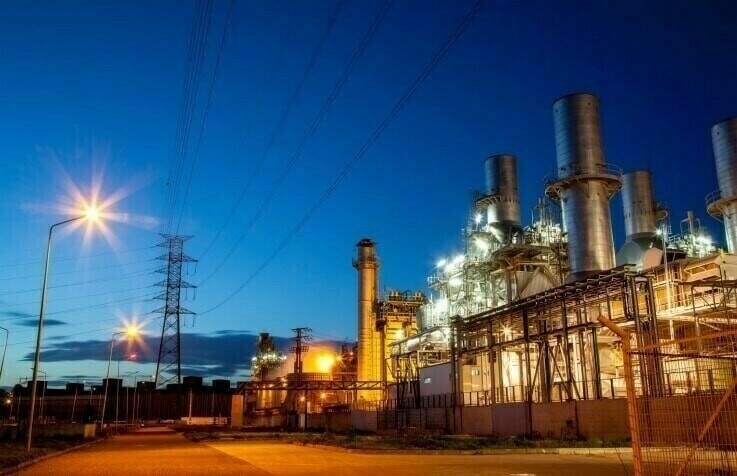
EDITORIAL: In a Business Recorder exclusive, Chief Executive Port Qasim Electric Power Company (PQEPC) Wang Dongfeng, in a letter to Federal Ministers Awais Leghari (Power), Ahsan Iqbal (Planning) and Chairman of the China Pakistan Economic Corridor (CPEC), has warned of a possible suspension of plant operations if the Central Power Purchasing Agency-Guaranteed (CPPA-G) fails to meet its financial obligations.
While he did acknowledge CPPA-G’s recent efforts to make partial payments yet he pointed out that total outstanding have risen to 75.5 billion rupees as of 6 October 2025.
Partial payment of 100 billion rupees to Chinese Independent Power Producers (IPPs) from power sector subsidies was made in August this year in addition to 8 billion rupees from regular budgeted allocations just prior to the Prime Minister’s departure to attend the Heads of State meeting of the Shanghai Cooperation Organisation. This clearly indicated two disturbing factors: (i) there is a sustained dearth of domestic resources to clear not only the outstanding energy sector dues but also of foreign exchange reserves to allow for repatriation; and (ii) the timing was indicative of an attempt to forestall the possibility of the focus of the Chinese government officials on clearing all dues to Chinese IPPs, especially as the administration was reportedly optimistic about fresh project loans under CPEC.
Pakistan’s recalcitrant circular energy debt is sourced partly to sustained sectoral inefficiencies (met with enhanced reliance on domestic borrowing with the interest payments passed onto the consumers) and partly due to an unsustainable budget deficit that is increasingly being met with both domestic and external borrowing (with China emerging as a major contributor to the USD 16 billion rollovers that are critical to Pakistan’s foreign exchange reserves).
In this context, it is relevant to note that the contracts with Chinese IPPs signed by the government of Pakistan under the umbrella of CPEC were on the same conditions as previous contracts that favoured the IPPs at the cost of domestic consumers notably with capacity payments and repatriation in dollars.
While the government has successfully negotiated with domestic IPPs projected to lead to a decline in tariffs by less than 40 paisa per unit yet the Chinese IPPs have so far refused to entertain any renegotiations on this matter.
However, two related elements are quite significant. First, the overdue amount to the 16 Chinese IPPs is around 300 billion rupees; and second the Chinese IPPs have refused to entertain renegotiations on already signed contracts — an approach that has long been part of Chinese policy globally. Instead, the Chinese government has offered rollovers and other loans to the country.
Be that as it may, it has been reported that the Pakistan government is formulating a mechanism to request Chinese IPPs to waive the Late Payment Surcharge (LPS) before disbursing payments from a newly arranged 1.225 trillion-rupee facility secured from 18 banks with their disbursement expected to take three to four months.
The Chinese IPPs’ response is that the LPS waiver must be secured directly with Beijing as they do not have the approval authority.
To conclude, the possibility of the Chinese government abandoning its long-term global policy is not likely and one would hope that the power sector decision-makers undertake reforms that would improve sectoral efficiencies rather than going the same route as previous administrations: renegotiating and securing loans and passing off their interest payments (and principal when due) onto the consumers.
Copyright Business Recorder, 2025




















Comments
Comments are closed for this article.