


Flood-related damage poses risks: Macroeconomic conditions remain broadly stable at FY26 outset: SBP
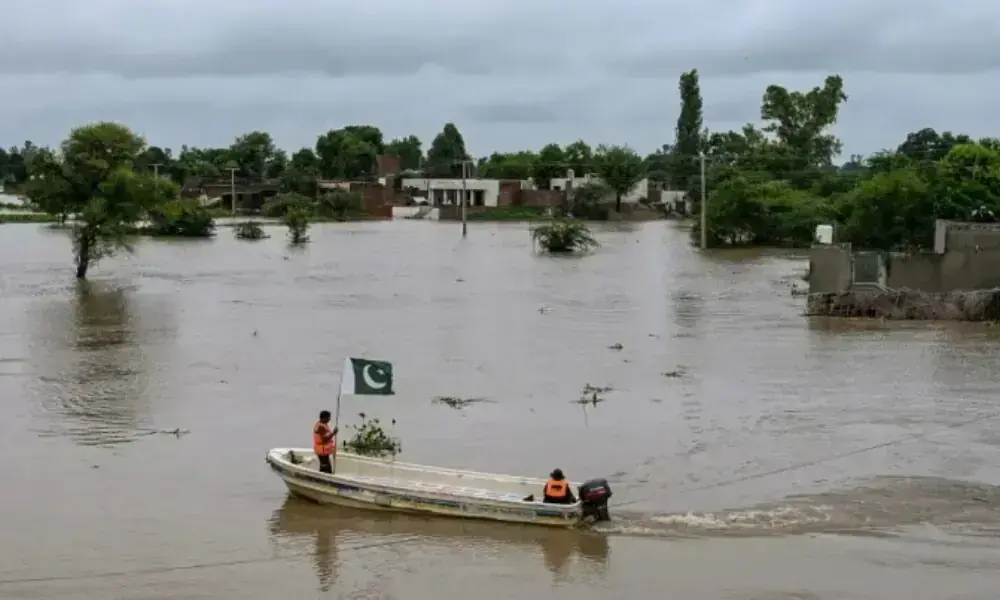

KARACHI: The State Bank of Pakistan (SBP) on Thursday said the country’s macroeconomic conditions remained broadly stable at the start of FY26, with a cautious monetary policy helping restore confidence among businesses and households. However, it warned that flood-related damage to agriculture and infrastructure could pose risks to the overall economic outlook.
According to the Annual Report on the State of Pakistan’s Economy for the FY25, issued by the SBP on Thursday, the flood-induced losses to agriculture and infrastructure are likely to have upside risks for the projection of twin deficits and inflation outlook, while downside risks for growth. Similarly, geopolitical and trade uncertainty may impact external outlook through increased volatility in global commodity prices and slower global growth and trade flows.
In addition, the moderate expansion in economic activity and flood-related shortages of agricultural commodities may lead to an expansion in imports. On the other hand, the slowdown in global demand and damages to agricultural produce are expected to keep exports contained.
Floods 2025: Pakistan faces $1.4bn economic loss, agriculture hit hardest
The report Pakistan’s macroeconomic conditions were broadly stable at the start of FY26 and the macroeconomic stability, alongside a cautious monetary policy stance revived confidence of businesses and households.
Meanwhile, stable external account position, continued fiscal consolidation and implementation of reforms under the IMFs’ EFF program led the three major international credit rating agencies to upgrade Pakistan’s credit rating during April to August 2025.However, recent flood-related damage to agriculture and infrastructure threatens to undermine the country’s improving economic outlook.
The report noted that floods could disrupt supply chains, dampen domestic demand, and limit the availability of agricultural raw materials for agro-based industries. However, it said the lagged impact of the recent policy rate cuts is expected to sustain economic momentum. The rise in high-frequency indicators, such as automobile, cement, and POL product sales, along with higher import volumes in Jul-Aug FY26, supports this outlook.
The SBP added that increased development spending and post-flood reconstruction efforts are likely to boost construction activity, with real GDP growth expected to stay near the lower end of the 3.25-4.25 percent range for FY26. The report pointed that the flood-induced losses to infrastructure have increased spending needs for undertaking rehabilitation and reconstruction of the affected areas. However, continued fiscal consolidation measures, including the efforts to contain energy sector circular debt and targeted power subsidies, together with moderation in debt servicing are expected to contain spending growth.
On the revenue side, the SBP said that the ongoing tax reforms and the efforts to increase documentation of the economy are expected to strengthen tax collection. This, together with sizeable transfers of SBP profit in August 2025, are expected to bolster overall revenue growth. In view of these developments, the SBP projected fiscal deficit to fall in the range of 3.8-4.8 percent of GDP in FY26.
The expansion in economic activity and expected shortages of agricultural commodities may translate into a concomitant increase in imports inFY26. On the other hand, the slowdown in global demand and damages to agriculture produce are expected to weigh on exports.
However, the report said that lower US tariff on Pakistan’s exports relative to the competitors may partly offset the fallout of floods and adverse global developments. Further, the workers’ remittances are maintaining the momentum and likely to partly offset the deterioration in trade deficit. Incorporating these trends, the SBP projects current account deficit in the range of 0-1.0percent of GDP in FY26.
The flood-induced shortages of perishable food commodities may also exert upward pressure on food prices. Additionally, food and energy inflation is also likely to move up due to the phasing out of favorable base effect.
With the steep increase in gas prices in July 2025 and the expiry of the relief in electricity prices applied in Q4-FY25, energy prices are expected to trend up in FY26. However, the restrained domestic demand, alongside benign global commodity price outlook and stable external outlook, is likely to keep underlying inflationary pressure in check, the report mentioned.
Accounting for these trends and developments, the SBP projected the headline NCPI inflation may cross the upper bound of the medium-term target range of 5.0-7.0 percent in the second half of FY26, before reverting to the target range in FY27.However, it mentioned that this outlook is subject to risks emanating from unfolding impact of floods, an uncertain geopolitical environment, and global trade uncertainties.
Copyright Business Recorder, 2025




















Comments
Comments are closed for this article.