


Post-floods: Pakistan’s central bank warns of rising inflation, widening twin deficits in FY26
- Country's economic growth to remain around 3.25% in FY26, State Bank of Pakistan says in its annual report
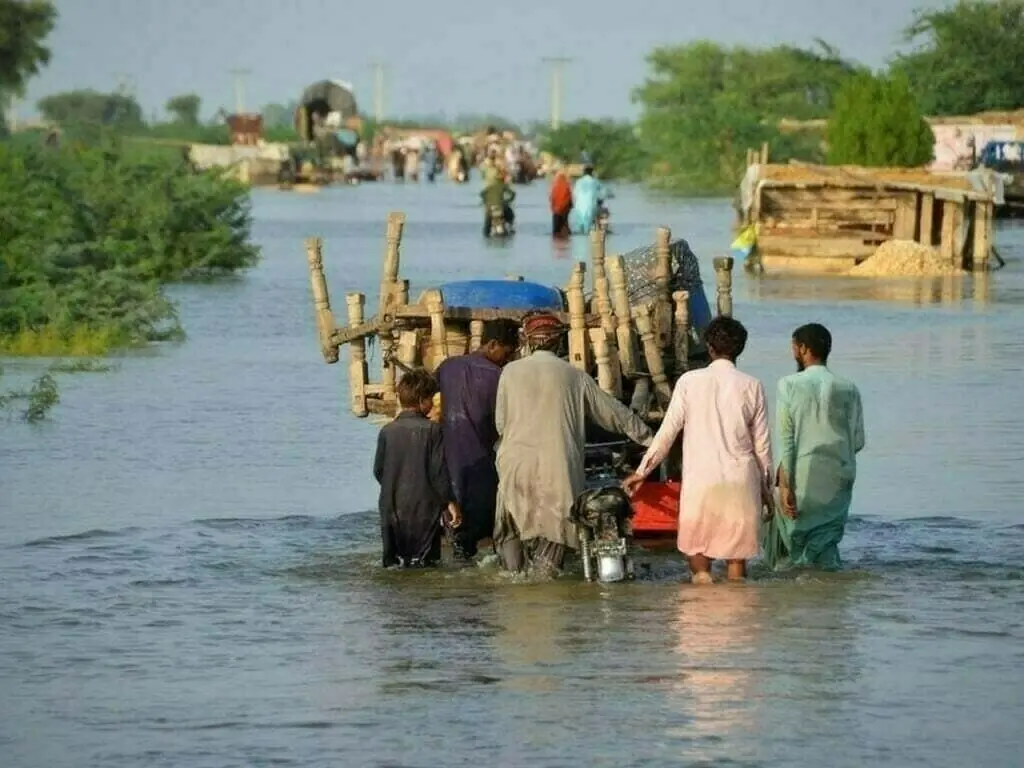

KARACHI: Pakistan’s central bank has warned that flood-induced losses to the country’s agriculture sector, post-flood infrastructure spending, and geopolitical uncertainty may widen trade and current account deficits, accelerate inflation reading, and restrict economic growth to around 3.25% in the ongoing fiscal year 2025-26.
“The flood-induced losses to agriculture and infrastructure [spending] are likely to have upside risks for the projection of twin deficits and inflation outlook, while downside risks for growth,” the State Bank of Pakistan (SBP) said in a brief on economic outlook in its Annual Report 2024-25 on the State of Pakistan Economy released on Thursday.
“Similarly, geopolitical and trade uncertainty may impact external outlook through increased volatility in global commodity prices and slower global growth and trade flows,” SBP said.
“The flood induced damages to agriculture and infrastructure pose risks to overall macroeconomic outlook.”
Banks to offer collateral-free financing of up to Rs1mn to small farmers: SBP
The flood-born shortage of agriculture commodities including cotton may increase imports, while global economic slowdown weighs on the exports in the year (FY26). Food and energy inflation is also likely to move up due to the phasing out of favourable base effect during the year, as per the SBP report.
With the steep increase in gas prices in July 2025 and the expiry of the relief in electricity prices applied in fourth quarter of FY25, energy prices are expected to trend up in FY26.
The headline National Consumer Price Index inflation (NCPI) might cross the upper bound of the medium term target range of 5% to 7% in the second half of FY26, before reverting to the target range in FY27, the report said.
“However, the restrained domestic demand, alongside benign global commodity price outlook and stable external outlook, is likely to keep underlying inflationary pressure in check.”
The SBP anticipated the fiscal deficit to fall in the range of 3.8% to 4.8% of gross domestic product (GDP) in the wake of likely increase collection of tax-revenue and non-tax revenue in the ongoing year (FY26).
The floods specifically inundated extensive area under cultivation of major kharif crops – rice, cotton, maize and sugarcane – mostly in the provinces of Punjab and KP.
“The planned increase in development spending and the post-flood reconstruction efforts are likely to support construction activity during FY26. Incorporating these developments, SBP projects the real GDP growth to remain close to the lower end of the earlier projected range of 3.25% to 4.25% during the ongoing year.
“The flood-induced losses to infrastructure have increased spending needs for undertaking rehabilitation and reconstruction of the affected areas. However, continued fiscal consolidation measures, including the efforts to contain energy sector circular debt and targeted power subsidies, together with moderation in debt servicing are expected to contain spending growth,” SBP said.
An early sign of overheating the economy appears again?
While the post-flood soil enrichment might partly offset agriculture losses by improving yields of Rabi crops – mostly the staple crop of wheat - the overall agriculture output is expected be significantly affected.
“Moreover, the floods may also disrupt supply chains, weaken domestic demand and reduce availability of agriculture raw materials for agrobased industries,” the report said.
The report stated that Pakistan’s macroeconomic conditions had been broadly stable at the start of FY26.
“The macroeconomic stability, alongside a cautious monetary policy stance revived confidence of businesses and households. Meanwhile, stable external account position, continued fiscal consolidation and implementation of reforms under the IMFs’ EFF programme led the three major international credit rating agencies to upgrade Pakistan’s credit rating during April to August 2025,” the central bank said.




















Comments
Comments are closed for this article.