



Pakistan’s startup ecosystem entered the third quarter of 2025 on a high after a strong rebound earlier in the year. But the latest data from Invest2Innovate shows a more mixed picture: total disclosed funding fell to $15.2 million, down from $58 million in Q2.
At first glance, this seems like a slowdown, but a closer look reveals signs of a maturing ecosystem — more deals, more sectors, and new financing models.
One of the most significant changes this quarter is how funding was distributed. Instead of one or two large rounds dominating the numbers, more startups received smaller but meaningful investments. Nine deals were recorded — six disclosed and three undisclosed — making Q3 one of the busiest periods since late 2024.
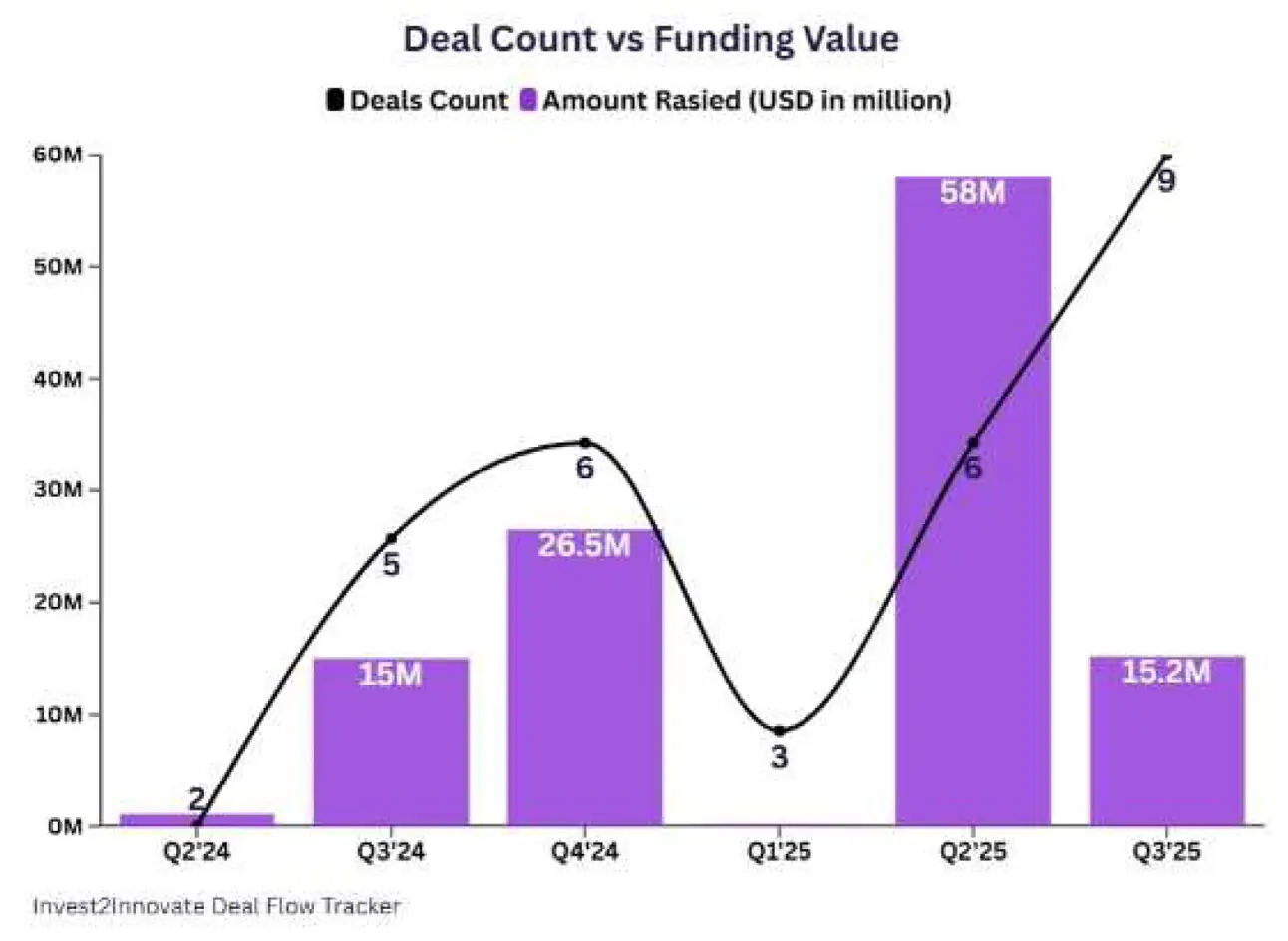
Trukkr led with a $10 million hybrid round, followed by BusCaro with $2 million. Myco, Metric, and ScholarBee also raised smaller amounts in Web3, fintech, and edtech.
Even a small brand like Pakhtun Wardrobe raised equity, showing how funding is reaching a wider set of players.
This wider spread of funding matters because it shows investors are backing diverse types of businesses. Pakistan’s startup scene was once concentrated in a few sectors like logistics and fintech.
Now, more capital is going into Web3, fashion, mobility, and education — a sign of greater depth and confidence in the ecosystem. Even though the total amount of money raised is lower, the fact that more companies are getting funded is a healthy sign.
A second key shift is the rise of hybrid financing. Four of the six disclosed deals this quarter used a mix of equity, debt, or convertible notes. This is a smart way to balance risks: founders avoid giving away too much ownership, while investors get more protection in a volatile economy. If this trend continues, it could make fundraising more flexible and sustainable.
Gender representation is also improving slowly. Male-founded startups still received most of the funding (around 78 percent), but female-founded and co-founded startups — like BusCaro and Metric — raised $3.3 million combined. This shows that women-led ventures are starting to secure a more consistent share of investment, even in tougher quarters.
However, some structural weaknesses remain. Most of the big checks still come from foreign investors like 500 Global, Cartography Capital, and Yango Ventures. Local investors are active at the early stage but don’t have the capacity to fill the funding gap between seed and growth stages. This overreliance on foreign capital leaves the ecosystem vulnerable to global economic shifts. Another issue is concentration: just six startups accounted for almost all disclosed funding. Many promising ventures still struggle to move from early traction to growth rounds.
So, while Q3 2025 shows less money overall, it also shows smarter and broader deployment. This is often what a maturing ecosystem looks like: more players, more instruments, and more resilience. The key now is to build domestic capital capacity and bridge the “missing middle” between seed and scale. If hybrid financing continues to grow and regulatory clarity improves, Pakistan’s startup scene could become more stable and sustainable over time.
As the year heads into its final quarter, the real question is whether this broader base of activity can be turned into deeper growth. The funding headline may look weaker, but the underlying story is one of quiet progress — and that might matter more in the long run.




















Comments
Comments are closed for this article.