


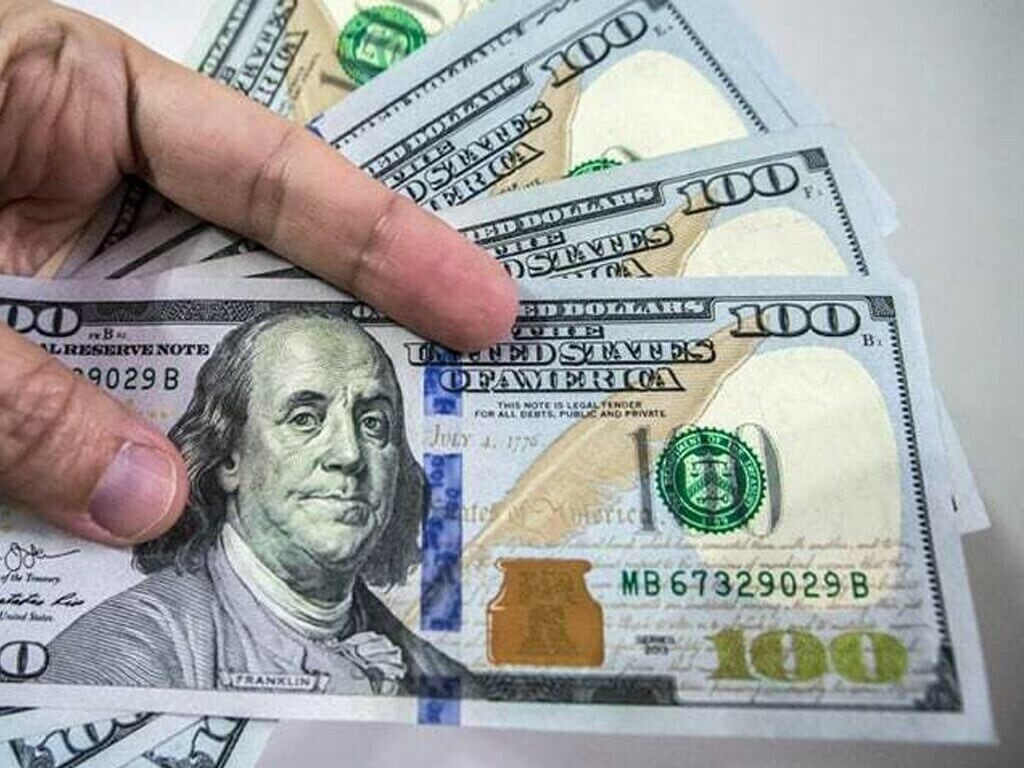

NEW YORK: The dollar edged higher against major peers on Monday, after a change in rhetoric from US President Donald Trump lowered the temperature of simmering trade tensions with China, while political developments in France and Japan undermined the euro and the yen.
The US dollar strengthened 0.78 percent to 0.805 against the Swiss franc after losing ground in the previous session after Trump announced 100 percent tariffs on China.
The broadside revived bad memories of Trump’s Liberation Day rollout of sweeping tariffs in April and sparked a selloff in stocks and cryptocurrencies on Friday.
“It’s kind of a repeat of what happened after Liberation Day,” said Eugene Epstein, head of trading and structured products at Moneycorp in New Jersey.
“Traditionally, the US dollar strengthens when there’s any kind of risk off or any kind of stress across asset classes or markets and, like Liberation Day, the opposite happened because of trade tensions between the US and fellow trade partners in this case, China. Any time something like that comes up people actually sell the US dollar,” Epstein said.
The dollar index, which measures the US currency’s performance against a basket of six others, was last up 0.27 percent at 99.32, recovering from the previous session’s drop.
After announcing the 100 percent tariffs on Friday, Trump said on Sunday: “Don’t worry about China, it will all be fine!”
“Highly respected President Xi just had a bad moment,” he posted on the Truth Social network. “He doesn’t want Depression for his country, and neither do I. The USA wants to help China, not hurt it!!!”
US Treasury Secretary Scott Bessent said on Monday he was confident the standoff could be “de-escalated,” which curbed some of the dollar’s gains.
“I still believe across all developed currencies, the US dollar is still the primary safe haven; obviously, the Swiss franc is as well. With what happened last week, it was just essentially the same playbook: any kind of trade tensions means sell the US dollar. Today, things are reversing because the trade tensions are seemingly de-escalating a little bit,” Epstein added.
European markets broadly shrugged off the French presidency’s announcement of Prime Minister Sebastien Lecornu’s new cabinet lineup on Sunday, reappointing Roland Lescure, a close ally of Emmanuel Macron, as finance minister.
The euro was last down 0.43 percent at USD1.1564 after advancing against the dollar in the previous session.
Against the Japanese yen, the dollar strengthened 0.81 percent to 152.36. A public holiday in Japan made for thinner trading.
Markets meanwhile assessed the path ahead for new Liberal Democratic Party leader Sanae Takaichi after Komeito quit Japan’s ruling coalition on Friday, dealing a blow to her hopes of becoming the first female prime minister of the world’s fourth-largest economy.
Traders will often borrow in a low-yielding currency to invest in a higher-yielder, known as a carry trade. The Japanese yen and Swiss franc have typically been funding currencies and took a harder knock than others on Monday.





















Comments
Comments are closed for this article.