


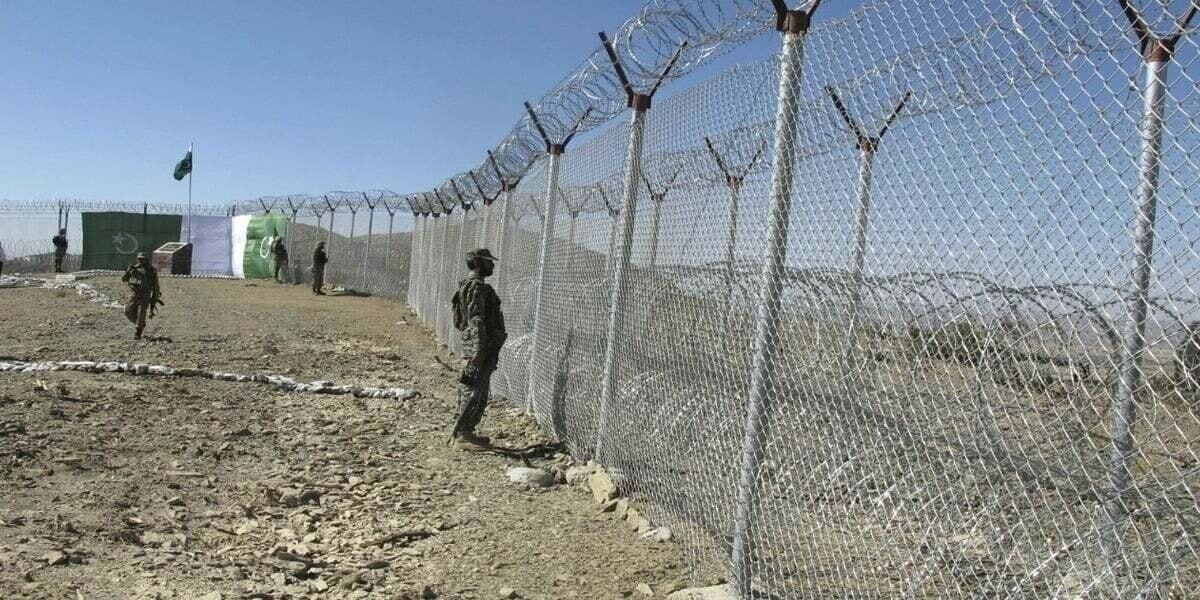

ISLAMABAD/KABUL: At least 23 Pakistani soldiers were martyred and over 200 militants killed in intense overnight clashes along the Pak-Afghan border, following the unprovoked attack launched from Afghan territory, the Inter-Services Public Relations (ISPR) said in a statement on Sunday.
According to the military’s media wing, the fighting broke out late Saturday night after an unprovoked offensive by Afghan Taliban fighters and affiliated militant groups, including the banned Tehreek-e-Taliban Pakistan (TTP).
The skirmishes, which extended across multiple sectors including Angoor Adda, Bajaur, Kurram, Dir, and Chitral in Khyber Pakhtunkhwa, as well as Bahram Chah in Balochistan, involved direct fire and limited cross-border incursions. “During the fierce engagements, 23 soldiers embraced martyrdom while defending the country’s borders and 29 others sustained injuries,” the ISPR said.
Army responds strongly to Afghan border aggression
In retaliation, Pakistani forces carried out targeted strikes and physical raids on suspected militant hideouts, reportedly destroying key Taliban infrastructure and killing more than 200 militants, the military said. “The number of injured among the attackers is believed to be significantly higher,” it added.
According to the statement, Pakistan exercised its right to self-defence and responded with precision fires against militant camps and logistical networks operating inside Afghan territory.
The targeted sites were linked to various groups including TTP, ISKP/ Daesh, and Fitna-al-Hindustan.
Military sources said that among the targets hit were several high-value locations, including the Durrani and Manojba camps, as well as the Taliban’s Asmatullah Karar Camp in Spin Boldak, one of their most significant operational bases for launching attacks against Pakistan.
The Pakistani military took brief control of at least 21 Taliban positions along the border, dismantling multiple terrorist camps. The damage to enemy infrastructure was described as extensive, ranging from tactical outposts to deeper operational bases.
Security officials also confirmed strikes on Taliban tank positions in Kurram and the destruction of several vehicles, including armoured Humvees. Pakistan’s forces also repelled infiltration attempts in Pishin and Zhob, while hoisting the national flag at a seized Afghan border post in Zhob sector.
The ISPR further stated that the timing of the attack – coinciding with a high-profile visit by the Taliban foreign minister to India –raised serious questions about regional coordination between Kabul and New Delhi.
“We have long maintained that terrorist outfits continue to enjoy safe havens in Afghanistan. Last night’s attack only vindicates our position,” the statement said, warning that the use of Afghan soil for cross-border terrorism will not be tolerated.”
Calling on Kabul to take immediate and verifiable action against groups such as TTP, ISKP, and other hostile actors, the military reiterated its demand for the Taliban government to prioritise peace and development over provocation.
Despite the heavy toll, the ISPR reaffirmed that the armed forces remain fully prepared to protect the country’s sovereignty. “Our commitment to defend Pakistan’s territorial integrity and defeat those who threaten national security is absolute,” it said. “The people of Pakistan prefer dialogue and diplomacy, but will not hesitate to act decisively when challenged.”
The statement concluded with a firm warning that Pakistan will continue to neutralise threats emanating from across the border if necessary.
AFP ADDS: Afghanistan and Pakistan said they killed dozens of each other’s troops during a night of heavy border clashes between the two countries.
Afghanistan’s Taliban forces launched attacks on Pakistani troops along their shared border late on Saturday, in what it called “retaliation for air strikes carried out by the Pakistani army on Kabul” on Thursday.
Islamabad has not directly claimed responsibility for the strikes, but has repeatedly stated the right to defend itself against surging militancy that it says is planned from Afghan soil.
The two sides have repeatedly clashed in border regions since the Taliban seized control of Afghanistan in 2021, but airspace violations deep into Afghan territory would mark a significant escalation.
Zabihullah Mujahid, the Taliban government spokesman, said on Sunday that 58 Pakistani soldiers were martyred and around 30 wounded in the clashes, while nine Taliban forces were killed.
AFP was unable to independently verify the casualty figures.
Afghan Foreign Minister Amir Khan Muttaqi said the “situation is under control”.
“Our operation last night achieved its objectives. And then our friends like Qatar and Saudi Arabia appealed that war must stop now, and the war is ceased right now,” he said during a visit to India.
An Afghan military unit described Thursday’s blasts in the capital as “air strikes”, but Mujahid instead said the incident was an “airspace violation”, adding that no damage had been found.
The Afghan military said on Saturday night that Taliban forces were engaged “in heavy clashes against Pakistani security forces in various areas”.
Several border security officials told AFP that no further clashes had been reported at major crossings on Sunday morning.
Extra troops have been sent to the major border crossing at Torkham, which sits on the frontier between Kabul and Islamabad.
Pakistani officials at Torkham, who requested anonymity, told AFP there had been no casualties on their side of the border crossing and that no further clashes had been reported in the area on Sunday morning.
The violence came while India hosted Afghanistan’s foreign minister for the first time since the Taliban returned to power.
Wahid Faqiri, an Afghan international relations expert, said those warming relations have “angered Pakistan and pushed Islamabad towards aggression”.
Militancy increased in Khyber Pakhtunkhwa since the withdrawal of US-led troops from neighbouring Afghanistan in 2021 and the return of the Taliban government.
The vast majority of attacks are claimed by the Pakistani Taliban (TTP), whose campaign against Pakistan security forces has intensified this year — set to be the deadliest in more than a decade.
Violence in the border region has “plunged relations between the neighbours to an all-time low”, said Maleeha Lodhi, a former senior Pakistani diplomat.
“But there will have to be a return to diplomacy to find a resolution to the confrontation,” she told AFP.
The TTP is a separate but closely linked group to the Afghan Taliban, which Islamabad says operates from Afghan soil with impunity.
A UN report this year said the TTP “receive substantial logistical and operational support from the de facto authorities”, referring to the Taliban government in Kabul.
More than 500 people, including 311 troops and 73 policemen, have been killed in attacks between January and September 15, a Pakistan military spokesman said on Friday.
Pakistani Defence Minister Khawaja Muhammad Asif told parliament on Thursday that several efforts to convince the Afghan Taliban to stop backing the TTP had failed.
“Enough is enough,” he said. “The Pakistani government and army’s patience has run out.”
Copyright Business Recorder, 2025

























Comments
Comments are closed for this article.