


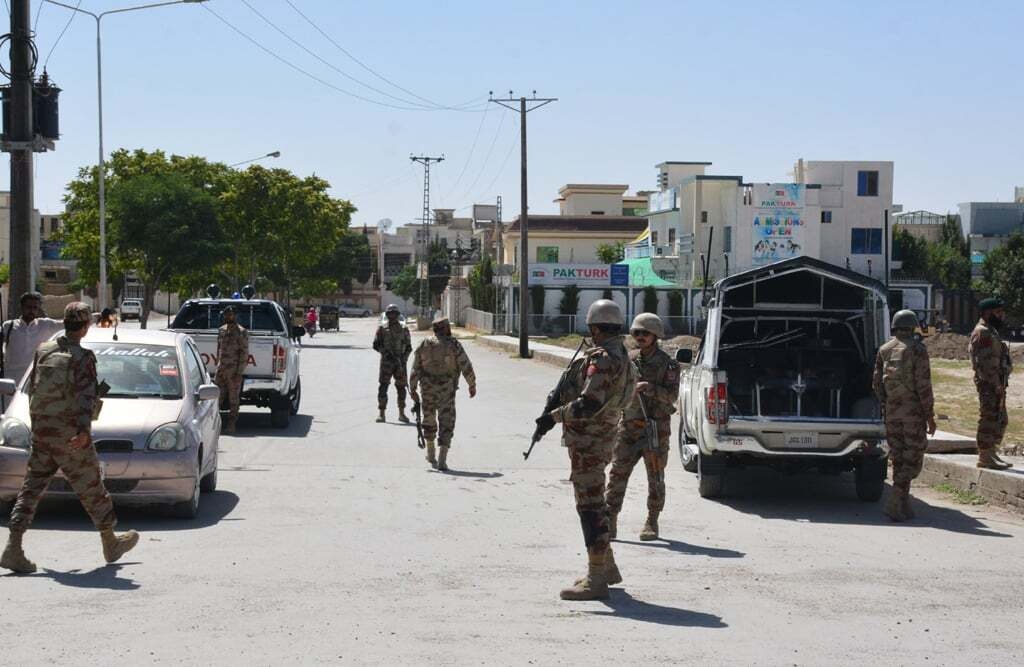
EDITORIAL: The recent incident in the Kharan area of Balochistan in which heavily armed militants stormed a court, took Judge Muhammad Jan and court staff hostage, ransacked official records, and set the premises on fire before abducting the judge at gunpoint, is deeply troubling.
This act of violence follows a similarly disturbing episode in January this year, when a large group of militants descended from the nearby mountains into Zehri tehsil of Khuzdar district.
After establishing control over key areas, they targeted multiple government facilities, including the offices of the Levies Force, NADRA, the municipal committee, and a private bank. Records were destroyed, infrastructure damaged, and a substantial amount of money looted from the bank’s strong room before the attackers retreated to the mountains – before the arrival of security forces.
These incidents cannot be seen in isolation. They are symptomatic of deeper political realities that have long shaped the conflict in Baluchistan. The province has grappled with an acute sense of alienation from the Centre, rooted in decades of political marginalisation, economic neglect, and a consistent lack of meaningful representation in national decision-making processes.
Despite its wealth of natural resources, Baluchistan continues to lag behind in key development indicators, fuelling a persistent perception of exploitation and exclusion. These grievances have been compounded by despicable practice of enforced disappearances.
Since the current phase of insurgency began in 2003, following the killing of Nawab Akbar Bugti, thousands of families have reported the disappearance of loved ones—many of whom remain missing without explanation or accountability. This issue has severely eroded public trust, reinforcing a climate of fear, resentment, and political disillusionment across the province.
What we are witnessing today – killing of innocent civilians, attacks on state institutions, and the destruction of public infrastructure – are not isolated criminal acts; they reflect a protracted political crisis. While security operations are necessary to prevent violence and restore order, use of force alone cannot provide a sustainable solution. Disrupting militant networks without addressing the root causes of unrest is unlikely to yield long-term stability.
It is therefore imperative for the state to move beyond a solely kinetic approach. The people of Balochistan must be heard, not merely managed. There is an urgent need to open political space for a genuine dialogue, involving credible representatives who command respect and legitimacy among their own people.
Any meaningful engagement should begin with an acknowledgment of past mistakes, a commitment to justice, and a political compact based on equity, dignity, and mutual respect. Development initiatives, no matter how well-intentioned, will not succeed unless they are rooted in local ownership and political inclusion.
What Balochistan urgently needs is a clear roadmap, one that restores trust and gives its people a real stake in the country’s democratic and economic future. Until such a course is charted, the cycle of violence and alienation is likely to persist to the detriment of all.
Copyright Business Recorder, 2025




















Comments
Comments are closed for this article.