


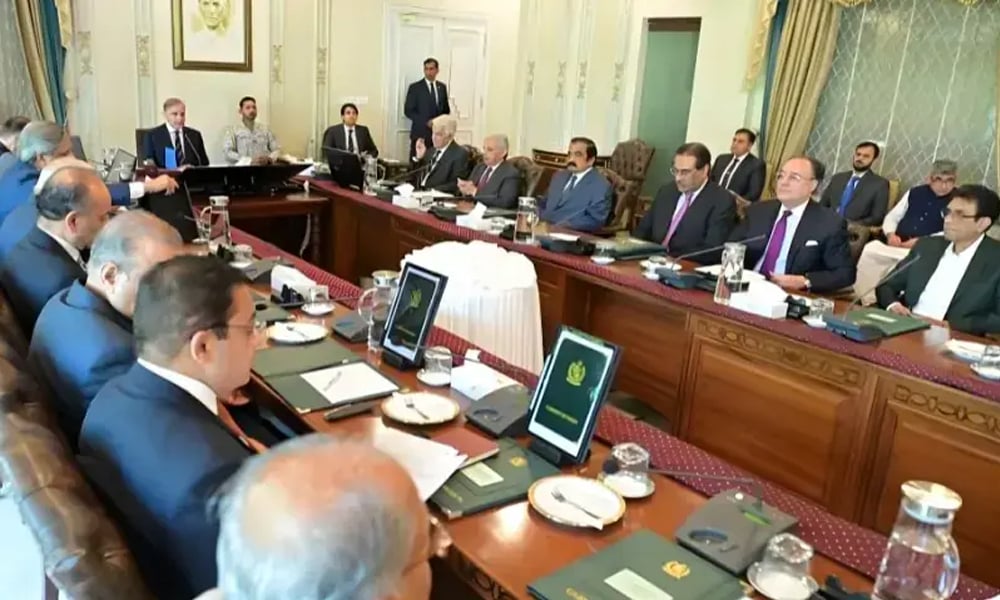

ISLAMABAD: The federal cabinet on Thursday formally approved a Strategic Mutual Defence Agreement recently signed between Pakistan and Saudi Arabia, with Prime Minister Shehbaz Sharif terming the development a “historic milestone” in bilateral relations. Chaired by the prime minister, the cabinet meeting reviewed the accord in detail and endorsed its strategic significance amid shifting regional dynamics.
Addressing the cabinet, Sharif said the agreement aims to boost defence cooperation, joint military training, intelligence sharing, and broader security collaboration between the two long-time allies.
“This agreement is not just symbolic, it ushers in a new era of actionable cooperation between our two brotherly nations,” said Sharif.
Pakistan, Saudi Arabia sign landmark strategic mutual defense agreement
He described his recent visit to Saudi Arabia as “highly successful” and reaffirmed Pakistan’s commitment to strengthening ties with the Gulf states.
Cabinet members also welcomed the agreement and lauded the leadership of both Pakistan and Saudi Arabia. The agreement is expected to open new channels of strategic coordination between the two countries’ defence establishments, they said.
During the meeting, Prime Minister Sharif also underscored Islamabad’s enduring ties with China, calling it Pakistan’s “most reliable friend.”
He expressed gratitude for China’s continued support, stating, “China has stood by Pakistan in every crisis, we will never forget that.”
The prime minister said his meeting with US President Donald Trump in Washington – also attended by Chief of Army Staff Field Marshal Asim Munir– included detailed discussions on bilateral ties, trade, and counterterrorism cooperation.
He noted that Trump had played a role in de-escalating tensions between Pakistan and India during his presidency.
“Trump told me he had warned Israel that the West Bank can never be separated,” the prime minister said, adding that Pakistan has played an active and principled role in ongoing efforts to restore peace in Gaza. Sharif also briefed the cabinet on his recent official visits to Saudi Arabia, Qatar, Malaysia, and the United Nations General Assembly session in New York.
He said Pakistan had adopted a more active foreign policy posture to enhance its international presence and attract investment.
The meeting noted that Pakistan’s diplomatic engagements were now more focused on economic diplomacy and strategic partnerships, especially in the Middle East and Asia-Pacific regions.
Among other decisions, the cabinet gave in-principle approval for legislation to establish the WAPDA Security Force, a specialised body tasked with protecting key infrastructure projects, including major dams and hydropower stations.
Officials said the proposed WAPDA Security Force Act, 2025 would formalise security arrangements for national water and power assets, amid growing threats to critical infrastructure.
The force would operate under the administrative control of the Water and Power Development Authority (WAPDA) but in coordination with provincial and federal law enforcement agencies.
In another decision, the cabinet approved the donation of 15 non-operational aircraft– including eight Cessna and seven Fletcher planes – from the Department of Plant Protection to educational and commemorative institutions.
Four operational Beechcraft aircraft will remain in service to support locust control and aerial survey missions. The move comes after previous attempts to auction the aging fleet were unsuccessful.
The prime minister also addressed the recent uptick in terrorist incidents, particularly along the western border.
Without naming specific groups, he condemned attacks carried out by militants entering from Afghanistan and said the country would take “firm decisions” to safeguard national security.
Paying tribute to two army officers – Lt Col Junaid and Major Sibtain Haider– who were martyred in recent operations, the prime minister said he had met their families and was inspired by their courage.
“We can no longer afford to wait. The time for decisive action is now,” he said, calling for a unified national response to terrorism.
The cabinet deferred proposed amendments to the Alternate Medicines and Health Products (Enlistment) Rules, 2014, referring them to a special committee for further review.
Additionally, the cabinet ratified decisions from the Economic Coordination Committee (ECC) meeting held on Oct 2 and the Cabinet Committee on Legislative Cases from Sept 22.
Copyright Business Recorder, 2025




















Comments
Comments are closed for this article.