



The pace of sea level rise has more than doubled in the past three decades — from ~2.1 millimeters a year between 1993 and 2002 to ~4.5 millimeters a year from 2014 to 2023. Globally, the oceans have risen more than 10 centimeters between 1993 and 2024. The analysis indicates that worldwide sea levels are projected to rise by an additional 6.6 inches (169 millimetres) during the next 30 years if the current trend persists. The main factors causing it are the oceans’ expansion due to climate change and the addition of water from melting glaciers and ice sheets.
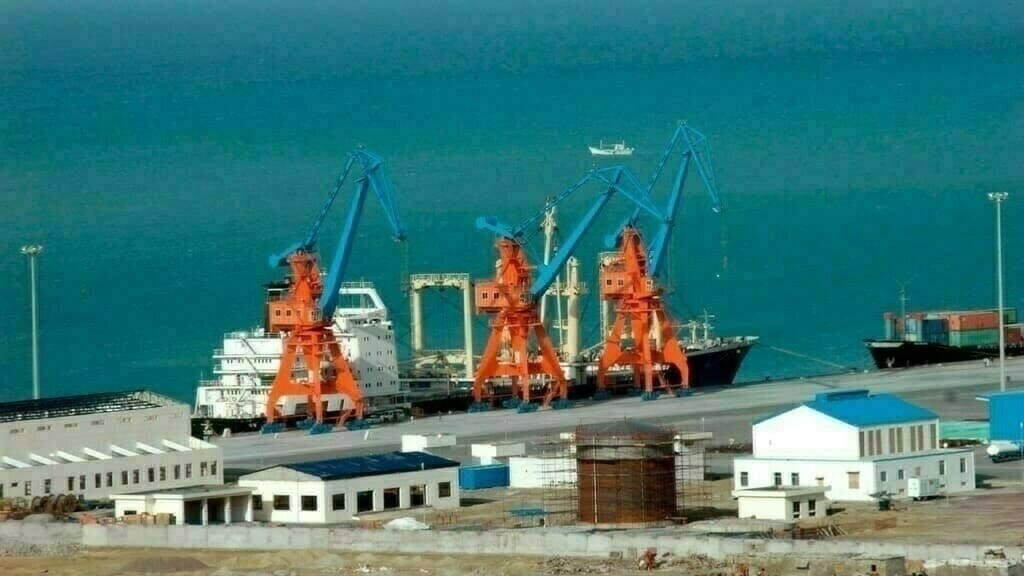
In 2023, scientists projected that sea levels at Gwadar could rise between 0.44 and 1.03 meters over the next 75 years. The report cited the IPCC’s Sixth Assessment Report, which indicated this range under intermediate and high emissions scenarios, making the 75-year projection a part of a larger, global outlook that affects Pakistan.
The range of 0.44 to 1.03 meters represents a likely rise under various greenhouse gas emission scenarios, but the potential for even greater rise cannot be ruled out due to uncertainties in ice sheet melt. In the low-lying port city, the danger from rising seas is intensified by local factors: A considerable portion of Gwadar City lies below sea level, geology is porous, a narrow land mass surrounded by the Arabian Sea on three sides, exposing a large portion of its landmass to coastal influences such as sea level rise, storm surges, and erosion, and a rapid rate of subsidence. These local conditions have pushed sea level rise to ten to fifteen times the global average.
Six major effects of climate-driven sea level rise have been noted in Gwadar City. First, sea erosion and saltwater intrusion raise the water table (the depth at which the ground holds water), which causes groundwater flooding in low-lying city wards. Flooding then leads to land degradation and saltier soils, which kill off local trees. Consequently, new wetlands with invasive reeds emerge, harming the ecosystem. All these changes, when combined, damage infrastructure, cause ground settling, and result in sewage overflows or backups from open cesspools.
Cracks have developed in the wall of a room in the Girls School Ward in Gwadar. The presence of these cracks is a common issue throughout Gwadar City, leading to a decreased estimated lifespan of properties in the port city. This situation contrasts with rural neighborhoods, where the water level is significantly low.
Heavy rainfall in February 2024 led to the saturation of shallow aquifers and a rise in groundwater, leaving a house behind and enabling enormous reeds to expand rapidly and take over.
To understand how sea level rise exacerbates groundwater issues in Gwadar, it is essential to examine human activities. These activities include the artificial recharge of the shallow aquifer via dams through cesspools and septic tanks, largely due to the absence of a comprehensive sewer system. Additionally, excessive groundwater pumping and changes in land use, such as unplanned urbanization and land reclamation, have disrupted the natural drainage system.
Groundwater is widely available in the old city, especially in urban areas, because dams replenish the aquifer (the underground water-bearing layer) through cesspools, and the aquifer itself is relatively uniform in composition. In some old town areas, large amounts of groundwater—8,000 to 10000 gallons per day—are pumped out.
Over-extraction of groundwater has already triggered seawater intrusion through inverse hydraulic effects: when groundwater drops below mean sea level, the hydraulic gradient reverses, causing seawater to move inland through the coastal shallow aquifer. This problem affects homes with large families, restaurants, hotels, mosques, schools, and water treatment companies. People also use groundwater to spray unpaved roads and reduce dust, tandoor bakers use it for dough, and greengrocers use it to wash vegetables. In recent times, demand for groundwater has gone up due to drought.
Hashim remembers a different Gwadar. “Before the dams were built—back prior to 1970—we used groundwater, but we would abandon a well after a month or two because of the high salinity,” he says. “Now, in recent years, the water is sweeter and easier to find. Dig just a few feet and you’ll reach it.
Additionally, the unchecked local wastewater and sewage disposal using cesspools is causing the water table to rise as waste water enters loose sand, with groundwater levels climbing at an alarming rate. With 80 percent of the city lacking a sewerage system, this contamination is a daily reality. The shallow coastal aquifer of Gwadar City, contaminated by human waste, poses considerable health risks. Changes in land use and cover have severely disrupted the city’s natural drainage, resulting in increased surface water pooling in low-lying areas, such as Mulla Fazul Chowk and Shaheen Chowk, TCC Colony and Bakshi Colony and Shambay Ismail areas.
Groundwater rise, “the upward movement of the water table,” is one of the most serious threats to low-lying coastal land and is caused by sea level rise and unsustainable human practices in Gwadar. In flat, low-altitude cities like Gwadar, it is triggering flooding from below.
Groundwater rise readings from 25 wells and boreholes across old Gwadar city reveal a rapid rise. In 2018, the average depth was 16.5 feet; by 2020, it had dropped to 14 feet, and by 2022, it had further decreased to 11 feet, ultimately reaching 6.5 feet in 2024. Over six years, groundwater has surged upward by an average of 10 feet. In the most extreme cases, the water table now stands a foot above the ground in places where, in 2018, it lay 12 to 16 feet below.
Rising groundwater levels in Gwadar City have led to the creation of new wetlands in several areas. Native plants and trees are dying and being replaced by fast-spreading invasive reeds such as Arundodonax. This shift goes beyond ecology, also eroding the city’s economic, social, and cultural fabric. The rising water table has impacted species of deep cultural significance, such as Neem, Gum Arabic Tree, Tropical Almond, Jujube, Jerusalem Thorn, Tamarind, and Sapodilla.
(To be continued)
Copyright Business Recorder, 2025
















Comments
Comments are closed for this article.