



Education is our identity, our promise, and the guarantor of a better tomorrow. Nations rise and fall with education, for education is not merely a preparation for life—it is life itself. Quaid-e-Azam Muhammad Ali Jinnah rightly said, “Education is a matter of life and death for our nation.” Indeed, the strength of a nation rests upon its education system, and its decline begins when learning falters.
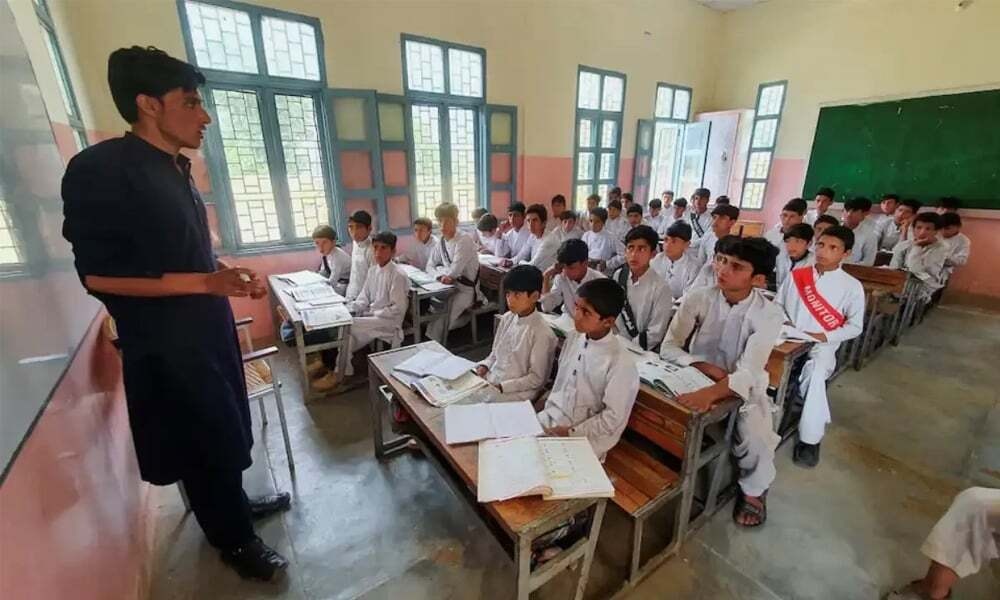
For me, and likewise for all friends of education, the recent paralysis of education in Sindh was deeply troubling. For ten long days, government-run schools and colleges remained locked, their classrooms silent and lifeless. The children of the poor were deprived of their right to education—not for any fault of theirs, but because teachers and other government employees were on strike. Demonstrations, sit-ins, and boycotts halted the process of instruction and froze administrative work across the province.
Thankfully, as reported by Business Recorder on October 4, the Sindh government finally realized the gravity of the crisis. The Sindh Employees Alliance’s threat to stage a sit-in at Bilawal House on October 6 drew attention of PPP Chairman Bilawal Bhutto—who calls all shots in Sindh—to direct the Chief Minister to hold talks. The ensuing negotiations led to the withdrawal of both the strike and the planned protest. Though the deadlock ended, it should never have been allowed to prolong for so long. The wasted teaching hours and suffering of ordinary citizens could easily have been avoided through timely engagement.
Education in Sindh already suffers from declining standards, poor infrastructure, and excessive holidays—it could least afford such a setback. Schools often close for the slightest excuse—rain, VIP movement, or local unrest—leaving students behind in a fast-moving world, shrinking the academic calendar, and dulling the spirit of discipline. The recent strike only compounded these challenges. To deny children their lessons except in the gravest emergencies is both unacceptable and unjustifiable—a colossal neglect, a crime against society, and an injustice to the nation’s children. Come rains or calamities, education remains undisturbed in the world.
History offers lessons of resilience. Even during Lebanon’s civil war, schools and universities continued functioning amid bullets and bombs—the fear of guns proved weaker than the power of learning. No cause, however genuine, justifies depriving children of their lessons.
Yet, the grievances of teachers and employees were not without merit. Their demands for fair pensions, uniform pay scales, and removal of disparities across provinces were long overdue. But the method of protest chosen by the disseminators of light was flawed and misplaced. Teachers—the torchbearers of learning—could have adopted a more responsible and dignified course. Wearing black armbands as a mark of protest, they could have attended classes on time, conducted academic activities without losing a single minute of instruction, and then staged peaceful demonstrations or symbolic hunger strikes after school hours. This would have conveyed their demands without halting the learning process.
Teachers have to spend merely five to six hours on working days—each minute precious enough not to be wasted. The sanctity of education must never be compromised. To suspend teaching is, in essence, an unforgivable wrong against education and society itself, for children belong to the state and cannot be punished for disputes between employees and the government. This lesson should serve as a future guideline whenever teachers find it necessary to agitate for their rights.
It is heartening that teachers returned to classrooms on October 4, a day ahead of World Teachers’ Day, falling on October 5—a symbolic moment reminding us that teachers are the true nation-builders lifting societies from darkness to light. Across the world, this day is celebrated to honour those who are the true architects of nations—the ones who raise societies from ashes to excellence. The progress, refinement, and moral fabric of a people reflect the quality of their teachers.
In Pakistan, however, where power, privilege, and elite capture dominate public life, much remains to be done to acknowledge the role of teachers. They deserve due recognition, respect, fair incentives, and special welfare packages that elevate their social and professional status. A nation that undervalues its teachers condemns its future to mediocrity.
Teachers, on their part, must uphold discipline and commitment. Absenteeism, ghost schools, and ghost teachers have severely tarnished Sindh’s educational image. Strict biometric verification for all—regardless of union affiliation or position—must ensure 100 percent attendance of both teachers and students.
Educators should focus their energies on shaping efficient, creative, and productive individuals equipped to meet the demands of a rapidly changing world. The Sindh government, too, must take uncompromising steps to eradicate corruption and inefficiency from its educational apparatus.
The recent strike also disturbed the lives of ordinary citizens. Its impact extended far beyond classrooms. Provincial offices across Sindh wore a deserted look. Poor villagers travelling long distances to resolve routine matters returned home disappointed. In public hospitals, doctors and paramedics—already notorious for absenteeism—attended only emergencies, leaving women and children in desperate need of care to suffer in silence. Meanwhile, private hospitals and clinics thrived, exploiting the misery of the poor. The contrast was painful and revealing.
The Sindh government must now act decisively. Employees’ demands for parity in pay, pensions, and allowances must be addressed on priority with sincerity—not with hollow promises or lollipops of consolation. The sense of deprivation and frustration that fuels such protests can only be removed through building trust between government and employees. Prolonging deadlocks not only punishes workers but also inflicts suffering on millions of children and citizens who depend on public services.
At the same time, the falling standards of Sindh’s public education demand urgent reforms. To improve falling standards of education, the provincial legislature may consider enacting a law requiring all government employees—especially those in education and literacy departments—to enroll their children in government schools. This will restore public trust and revive these institutions. Public schools showing outstanding performance must be recognised and rewarded with national awards. Such measures will narrow the gulf between elite private schools and government institutions, ending double standards and discrimination, and enabling public schools to flourish with renewed unity, excellence, and pride.
Needless to emphasize, public resentment in Sindh remains intense. The disillusionment against the provincial government is growing with each passing day due to crippling inflation, massive corruption, rising poverty, and a pervasive breakdown of law and order. The province groans under crumbling infrastructure, unemployment, disease, and insecurity. Fear and frustration dominate daily life; the threat to life, property, and honour is palpable, as if the state’s protective institutions no longer exist. The belief that “no file moves without currency or connection” has eroded public confidence. Extravagance at the top—bloated cabinets, unchecked bureaucratic spending, and corruption—stands in sharp contrast to the deprivation of the poor.
Instead of taking a harsh stance towards employees, the Sindh government must put its own house in order, curb wasteful expenditures, and restore financial discipline and good governance.
Education, health, and governance are the pillars upon which societies stand. Sindh cannot afford to let these crumble. Teachers must honour their noble calling, and the government must respond with empathy, fairness, and reform. The future of our children—and indeed the dignity of Sindh itself, hangs in the balance.
Copyright Business Recorder, 2025
The writer is a Shikarpur-based retired civil servant. The views expressed in this article are not necessarily those of the newspaper




















Comments
Comments are closed for this article.