


LCCI, PIAF for tax base expansion to achieve high tax-to-GDP ratio
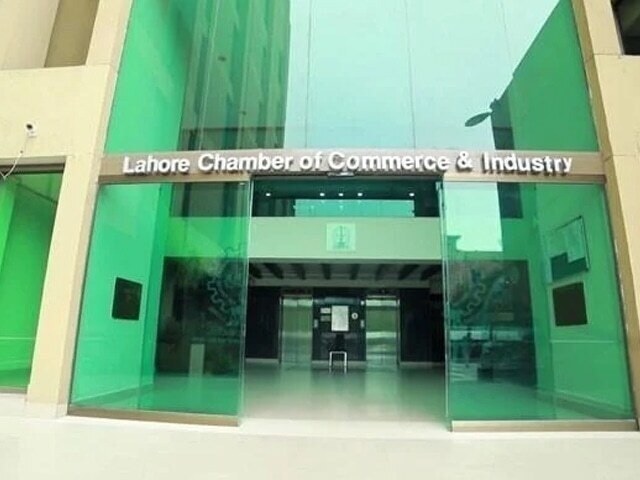

LAHORE: The Lahore Chamber of Commerce and Industry (LCCI) and Pakistan Industrial and Traders Associations Front (PIAF) have said that the government’s target of lifting the tax-to-GDP ratio to 11 percent can be best achieved through genuine expansion of the tax base rather than imposing additional pressure on the already taxed sectors.
The LCCI newly-appointed President and PIAF Chairman Faheemur Rehman Saigol said on Sunday that while the government’s commitment to improving revenue performance is encouraging, the approach must remain growth-friendly and equitable to avoid discouraging economic activity.
Faheem observed that the recent revenue shortfall highlights structural weaknesses in Pakistan’s taxation framework, where the burden continues to fall on a narrow group of compliant taxpayers.
“The government must recognize that increasing the tax ratio is not just a matter of enforcement or rate hikes it is about widening the net. Sustainable growth in revenue requires inclusion of untaxed and under-taxed sectors, including agriculture, wholesale and retail trade, and real estate,” he said.
He noted that these sectors together account for a significant portion of Pakistan’s GDP but contribute only marginally to the total tax receipts. “Agriculture alone contributes nearly one-fifth of the economy yet remains outside the effective tax framework. If this imbalance continues, it will be impossible to achieve fairness or fiscal sustainability,” Saigol warned.
He urged the Federal Board of Revenue (FBR) to shift its focus from short-term collection drives and repeated audits toward long-term reforms that encourage voluntary compliance.
“The FBR’s transformation plan must prioritize simplification, automation, and consistency. Taxpayers need confidence that the system is predictable and corruption-free,” he said, adding that a stable policy environment would encourage more individuals and businesses to register and file returns.
PIAF senior vice chairman Nasrullah Mughal said that improved coordination between federal and provincial authorities could also help enhance tax efficiency and transparency. “Many provincial taxes overlap or remain weakly enforced, especially in property and agricultural income categories. Integrating databases and digital records will create a clearer picture of actual incomes and assets,” he said.
PIAF vice chairman Tahir Manzoor Chaudhary suggested that the government should avoid excessive reliance on indirect taxes and super taxes, which increase the cost of production and fuel inflation. “The emphasis should shift toward direct taxation based on income and profits, not consumption. This will ensure fairness and promote industrial competitiveness,” he said.
Commenting on the ongoing fiscal reforms, Saigol said that greater transparency in governance would strengthen the credibility of Pakistan’s economic program. “Digital disclosure of asset declarations for senior officials and civil servants is a good step toward accountability, provided it is implemented uniformly across all institutions. A culture of transparency will restore public trust and encourage compliance,” he added.
The LCCI president said that the private sector was ready to cooperate with the government to achieve fiscal goals but stressed that reforms must not penalize those already contributing to the exchequer.
“It is unfair to expect the same limited taxpayer base to bear the entire weight of the country’s fiscal adjustment. Broadening participation is the only sustainable way forward,” he said.
The PIAF chief pointed out that rising energy tariffs, inflation, and high borrowing costs have already eroded business margins.
“Further tax hikes on industries or exporters will only reduce competitiveness and hurt job creation. The focus should be on expanding the pie, not slicing it thinner,” he remarked.
Copyright Business Recorder, 2025




















Comments
Comments are closed for this article.