


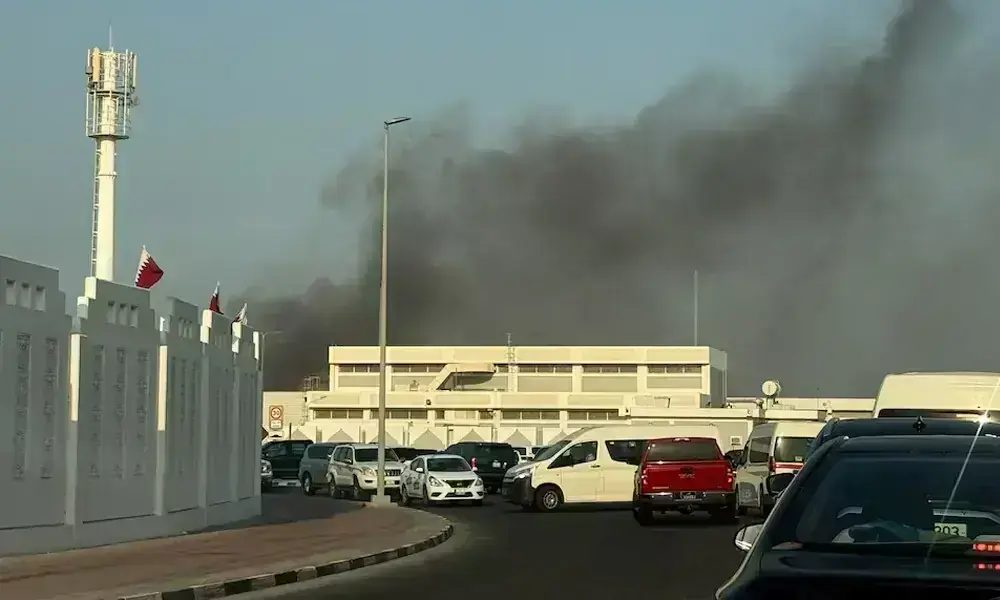
Israel’s September 9 drone attack in Doha, which aimed to target Hamas leaders in the capital of a key US ally and ceasefire mediator, has stirred the hornet’s nest for Israel. US allies, who were once assured of security, quickly realized that Washington cannot control its own client state anymore.
What has resulted is a cascading tale of unintended consequences: the September recognitions that Israel sought to prevent, coupled with Gulf states abandoning American security guarantees for regional alternatives. Israel’s strategic faux pas in bombing its mediator has catalyzed the very outcome it feared.
The immediate aftereffect of the Doha attack culminated in the Arab-Islamic Summit convened in Doha, with Pakistan calling for Israel’s UN suspension and creation of a task force to counter what Deputy PM Ishaq Dar called Israel’s “rogue mindset.” The Summit sent a strong signal of solidarity, reminding Israel that its defiance was eroding regional trust and the diplomatic channels Washington had depended on, setting the stage for broader diplomatic consequences.
These consequences became clear in September, a crucial month for Israel. Many Western countries had proposed to recognize the State of Palestine this month. Israel’s myopic strategy of conquering Gaza and eliminating Hamas leaders (residing in allied territories) aimed to eliminate the possibility of recognition by leaving no Palestine to recognize.
This, however, was a miscalculation. The UK, Australia, and Canada have acted in coordination, recognizing Palestine on Sunday. France, too, has announced it will follow at the UN. What compelled these states to act was the mounting pressure that had been building rapidly.
The pressure crystallized when a recent resolution by the International Association of Genocide Scholars, a body of nearly 500 members including Holocaust experts, drastically shifted public opinion in favour of Palestine’s recognition. The IAGS voted by an 86 percent margin, citing that Israel’s actions in Gaza meet the legal definition of genocide.
The scale of devastation is unprecedented. Since October 2023, when the war first started, all of Gaza’s 2.3 million residents have been displaced. Over 90 percent of the housing infrastructure lies in ruins. Hospitals, schools, and universities have been destroyed.
For permanent members of the UNSC, continued arms transfers carry immense legal and moral costs. For Washington in particular, the accusation of complicity grows heavier as it continues to support Israel’s actions. This has catalyzed the recognitions Israel had sought to prevent. This humanitarian collapse also widened the diplomatic fracture.
Israel’s strategic miscalculation has united countries from Pakistan to Malaysia to Egypt. Patience with Washington has worn thin. The Doha attack dismantled years of diplomatic groundwork laid by successive US administrations; most GCC states had trusted American guarantees for decades, but that reliance now looks misplaced.
Saudi Arabia has been the first to look for alternatives amid the high tensions around the Middle East. As a result, it has now signed a mutual defence pact in Riyadh with Pakistan. The pact reinforces the claim that aggression against either will be treated as aggression against both.
Pakistan’s defense minister has said the kingdom can count on Pakistan’s nuclear deterrent if required, the first open hint of a nuclear umbrella for Riyadh. This pact is a vote of no-confidence in Washington’s guarantees, deepening security options outside the U.S. frame.
The nuclear dimension makes the crisis sharper. Asked if Pakistan could be Israel’s next target, Deputy PM Dar replied: “We have strong army, air force and navy. And we can beat if we are challenged.” His reference to nuclear deterrence shows the level of escalation risk. He also claimed Israel has supported India in recent conflicts. Muslim countries now see a pattern, not an accident.
Something strikingly similar unfolded in Europe at the same time as the Doha attack; Russian drones entered Polish airspace, directly testing NATO’s integrity. On September 21, the UK deployed RAF Typhoon jets to Poland in response, with Defence Secretary John Healey stressing that NATO skies would be defended. Polish Prime Minister Donald Tusk warned this was the closest Europe had come to open conflict since World War Two.
Yet Donald Trump, when asked about the incursions, suggested they “could have been a mistake,” a remark swiftly rebuked by Warsaw as dangerously dismissive. Romanian and Estonian airspace has also been violated, and Czech President Petr Pavel urged NATO to shoot down Russian aircraft if they cross again. Zelensky has called for tougher sanctions ahead of his meeting with Trump.
NATO members have already triggered Article 4 of the North Atlantic Treaty, forcing formal consultations on threats to collective security. But the episode reveals the deeper problem: Washington cannot restrain Moscow any more than it can restrain Israel; in both Europe and the Middle East, US authority is weakening at the very moment it is most needed.
Russian aggression has already driven European rearmament. NATO members have pledged a $1.3 trillion annual defence budget by 2035. Germany is reversing decades of pacifism. The UK’s deployment to Poland marks the first allied combat response to Russian drones since the war began. Europe is bracing for life where US resolve cannot be assumed.
GCC countries, unlike Europe, hold extraordinary leverage over US relations. Qatar, Saudi Arabia, and the UAE manage sovereign wealth funds exceeding $3 trillion and vast holdings of US Treasuries.
These assets underpin the dollar’s strength and fund Washington’s deficits. Trump has built his political capital on Gulf investment pledges; yet Netanyahu openly contradicted him on Qatar, exposing how little control Washington retains. Saudi Arabia’s new defence pact with Pakistan only reinforces the message: America’s allies in the Middle East are hedging and Washington stands to lose the most.
This moment recalls the Suez crisis of 1956, when Britain discovered it could no longer dictate Middle Eastern affairs. The Doha attack marks a similar turning point for Washington. For seventy years, the US tied together Israel, Europe, and the Gulf under one security umbrella.
Today, the world order is under immense pressure. Europe is rearming because Russia tests NATO with impunity; the Gulf is forging new guarantees outside the US frame; the Global South views Gaza as a moral test America has failed. The United States risks isolation, bound to a single ally whose actions accelerate its decline.
(The writer is an economist and an educationist)
Copyright Business Recorder, 2025
















Comments
Comments are closed for this article.