


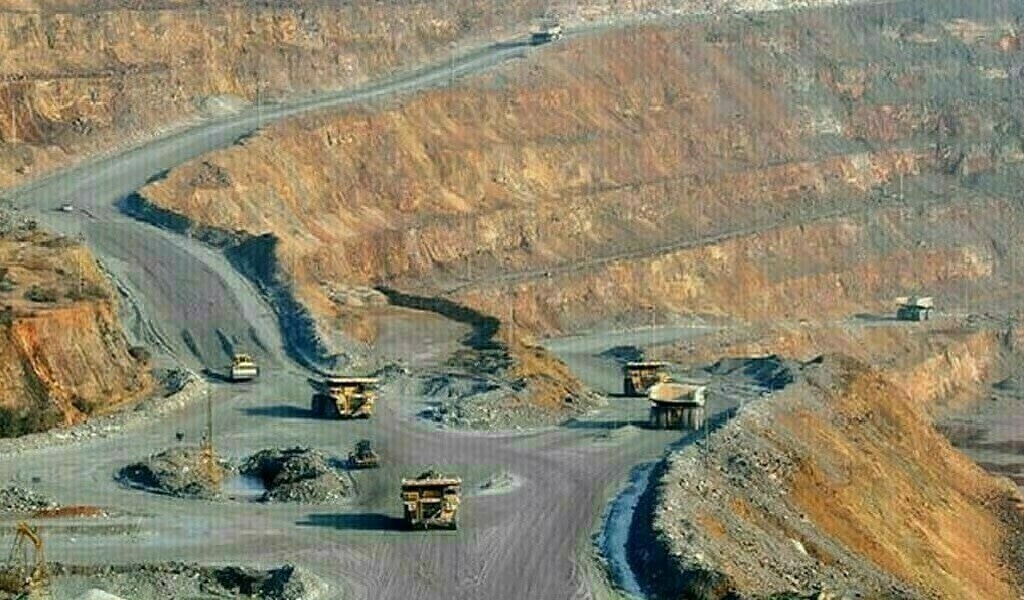
EDITORIAL: Recent developments in Pakistan’s mining sector — from the minerals deal with the US to rising interest from China and the Middle East – underscore that the country stands on the cusp of a transformative moment, with its vast untapped mineral wealth holding the key to significantly reshaping its economic future.
Participants at the recently held Natural Resources and Energy Summit 2025 echoed this view, with the keynote speaker stressing that the sector could quadruple its revenues over the next five years, from the current USD 2 billion to as much as USD 8 billion if Pakistan effectively develops its woefully underutilised mineral resource base.
The country lies atop one of the world’s richest mineral belts — home to the fifth-largest copper reserves, gold deposits worth billions of dollars, the second-largest salt mine, and significant reserves of coal, gypsum, chromite, lithium and rare earth elements. Despite this abundance, however, the sector contributes a paltry 0.15 percent to global mineral output and only 2-3 percent to the country’s GDP.
Even a brief overview of Pakistan’s mining landscape reveals staggering potential: Reko Diq alone promises USD 4-5 billion in revenue annually in the coming years or USD 70 billion over a 37-year period, with Siah Diq adding up to USD 2 billion, Thar coal USD 200 million, and barite, lead and zinc another USD 100 million annually. Given such prospects, the lethargy and incompetence of successive governments in treating mining as an afterthought, and not as a cornerstone of the economy, is nothing short of criminal, and the country can no longer afford such complacency.
A key theme at the summit was the urgent need to expand local investment in mining operations. While foreign investment remains indispensable, given Pakistan’s gaps in technology, capital and expertise, domestic investment offers stronger assurance that Pakistanis remain the primary beneficiaries of this immense natural endowment, and reduces the risk of exploitative arrangements that could arise if the sector were left entirely in external hands. Global partners must indeed be welcomed, but local investors must also step forward.
This requires vision and confidence from domestic stakeholders, who must shed the notion that the sector lies beyond their reach, and for policymakers to foster an enabling environment through fiscal incentives, access to credit and capacity building.
Done right, mining could then become a driver of industrialisation, job creation and sustainable growth, while safeguarding strategic interests and ensuring that its gains are widely shared, not only swelling state coffers but also uplifting the communities that sit atop these deposits. For militancy-ravaged Balochistan and Khyber-Pakhtunkhwa, where much of this wealth lies, such inclusion could provide a long-denied path to stability and prosperity, and provide a solid foundation for peace and development.
Ultimately, building investor confidence — both foreign and domestic — remains central to lifting the sector onto a higher growth trajectory. At the forefront is the need for a clear, coherent governance framework. Since the 18th Amendment’s passage, provinces have gained significant autonomy in managing mineral resources, but this has also created ambiguities regarding jurisdictions, and layers of bureaucratic red tape.
Unless these governance and regulatory bottlenecks are addressed with urgency and without fuelling federal-provincial discord, foreign direct investment may likely remain subdued. Equally important are investments in human capital, modern technology and the ability to confront entrenched challenges, such as policy inconsistency, security concerns and climate vulnerabilities.
Finally, it is also vital to avoid the kind of setbacks that plagued the Reko Diq project, where years of litigation, weak contract management and prolonged uncertainty stalled development and drained the economy of billions in lost opportunities. If approached with foresight and resolve, the country’s mineral riches could yet be transformed into the bedrock of a stronger economy and a more secure future for its people.
Copyright Business Recorder, 2025

























Comments
Comments are closed for this article.