


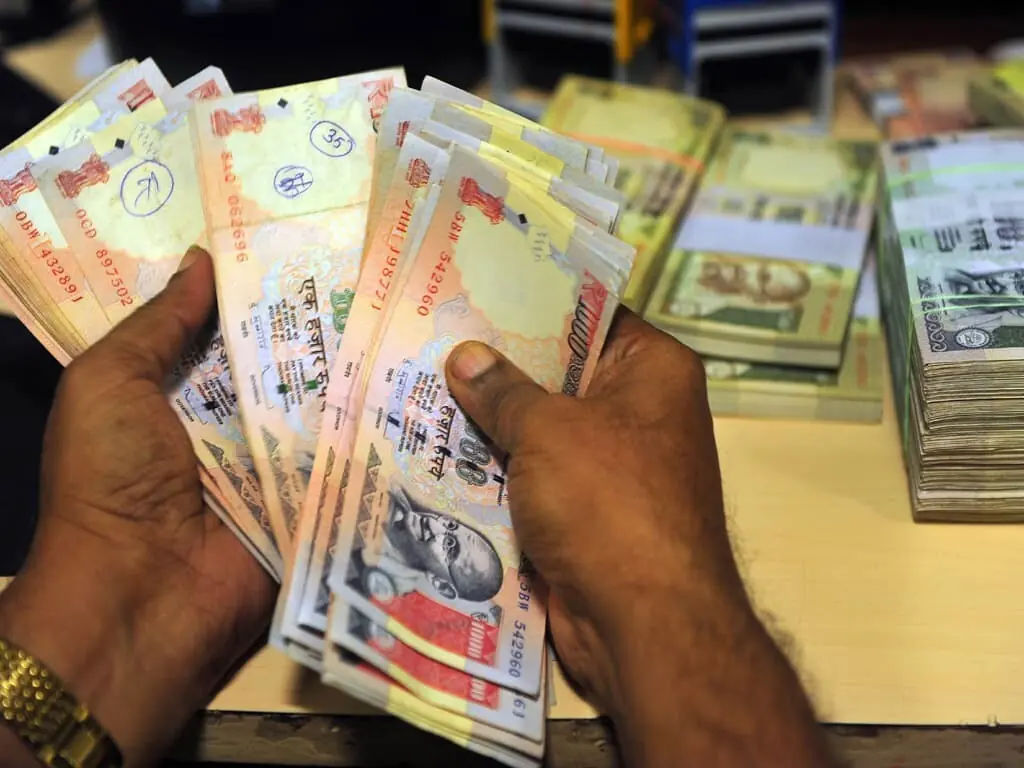

MUMBAI: The Indian rupee dropped to an all-time low against the U.S. dollar on Thursday, in a slide that reflects the mounting strain of U.S. tariffs on Asia’s third largest economy.
The rupee closed 0.39% lower at 88.4425 against its previous close of 88.1000. The currency had hit its previous record low of 88.36 last Friday.
Punitive U.S. tariffs on Indian goods, which kicked in last month, are denting investor confidence, making the rupee one of the most vulnerable Asian currencies. Foreign investors have withdrawn a net of $11.7 billion from India’s debt and equity markets so far this year.
Washington’s steep tariffs have hurt India’s growth and trade outlook and clouded the path for currency.
To curb the impact of the levies, Indian Prime Minister Narendra Modi has rolled out consumption tax cuts. Both U.S. and India are also looking at resuming negotiations to address the trade barriers.
For now, Indian exporters face uncertainty over order flows, while importers are forced to hedge their forex exposure more aggressively, distorting the demand-supply balance in the currency market.
“While importer dollar demand is persistent, exporter flows, and foreign portfolio flows seem to be muted, which is leading to pressure on the rupee,” said Dilip Parmar, a foreign exchange research analyst at HDFC Securities.
The USD/INR pair is likely to continue following a pattern of consolidation for a few days before breaking higher, Parmar said.
The Reserve Bank of India has stepped in frequently to temper the pace of the rupee’s decline. Market participants say the central bank has been selling dollars to prevent large swings.
The interventions are not aimed at defending any particular level, bankers say, but are intended to keep the slide “measured” and to prevent unease among companies and investors.
The rupee’s weakness is in contrast to its regional peers, most of which have been buoyed by expectations of a Federal Reserve rate cut next week.
Weakness in the rupee is likely to persist in the near term considering the impact of the U.S. tariffs on labour-intensive sectors, Abhishek Goenka, founder & CEO of IFA Global, said.
Most Asian currencies fell on Thursday while the dollar index =USD inched higher, as investors awaited U.S. inflation data due later in the day.




















Comments
Comments are closed for this article.