


Homegrown economic model, not international aid, needed to rebuild flood-hit Pakistan
- Small agriculture loans should be waived, suggests one expert
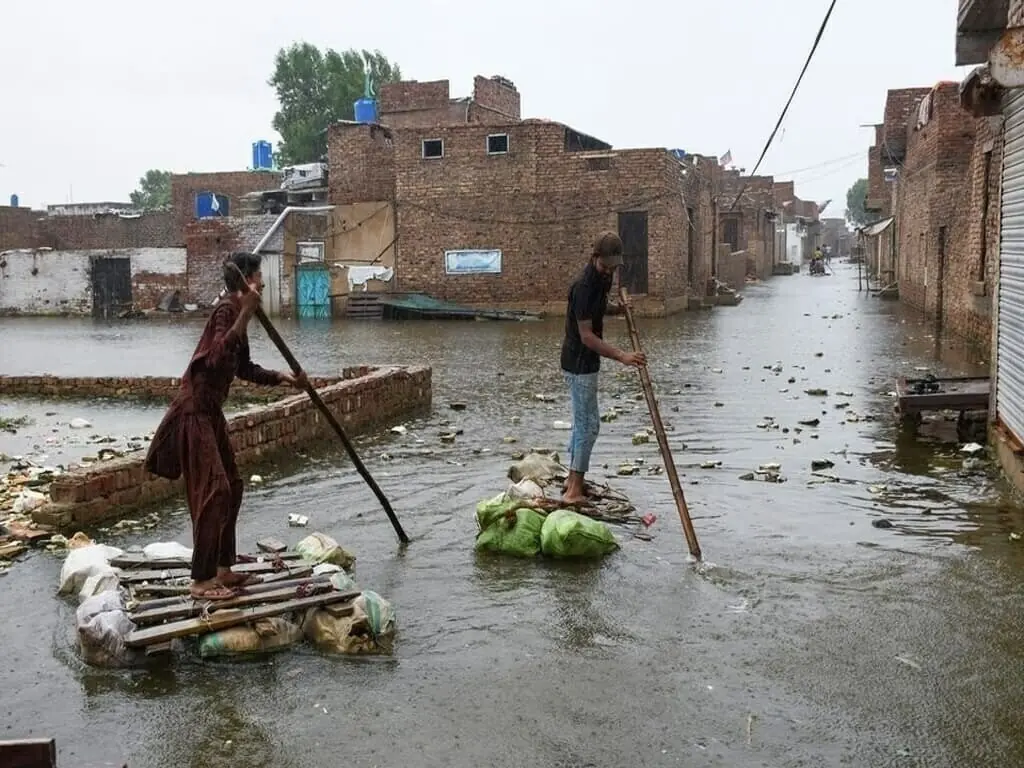

KARACHI: Instead of appealing to international donors, a workable economic model can generate funds from within Pakistan to help flood-stricken victims, experts told Business Recorder.
Devastating floods and torrential rains have annihilated the agroecosystem, the rural economy and food security, while exceeding $50 billion in estimated losses and reducing GDP growth to an estimated 1.5% to 2%. At the same time the prices of basic commodities are on the rise, pushing up food inflation.
Farmers’ bodies demand Pakistan govt announce ‘revival package’
Economic strategist and regional expert Dr Mehmoodul Hassan Khan explained that according to the State Bank of Pakistan (SBP), by April 2025, total assets for the entire financial sector grew to Rs51 trillion.
The banking system’s asset base specifically had grown to Rs53.7 trillion by the end of December 2024, indicating continued expansion into early 2025. This should be utilized for the restoration of local economies, communities and enterprises in the form of interest free loans for fertilizers, seeds and other expenses.
SMEs, microfinancing institutes, waqf (Islamic charitable endowment), Bait-ul-Mal (state-administered welfare institution) and other religious charity collections should be channelized towards the betterment of flood-stricken people.
Furthermore, all funds collected for the beautification of Lahore and other metropolitan cities should be diverted towards financial assistance of affected people, he said. The same should be done with projects relating to development and urban infrastructure.
Dr Khan believes Pakistan can look to the Chinese community development model - a blend of state-led governance, collective welfare, and grassroots participation.
Aurangzeb briefed on Acumen’s $90mn climate-focused agriculture fund for Pakistan
Moreover, housing societies built on the banks of rivers should incur massive regularization charges (fees paid to a government authority in order to legalize a property) rather than be demolished.
Money can also be collected by asking government employees to donate one day of their salaries.
He said political leaders should ask the nation to donate Rs10 every day for the respectful resettlement of displaced people, following the examples of Egypt and Ethiopia.
Meanwhile small agriculture loans should be waived. All chambers of commerce, exporters, manufactures and industrialists should come forward to provide much-needed relief to affected people.
Floods: budget deficit and/or mini-budget
Financially, provincial governments should chalk out a road map to provide vital funds to affected farmers from domestic Islamic and commercial banks for the re-cultivation of crops at zero rates.
Economically, all annually politically motivated development funds must be banned and the money diverted to a new provincial setup to create strategic cushion for the affected population.
Charity foods centres, distributions and non-governmental organizations (NGOs) should also be mobilized for this effort.
Scope of Punjab Emergency Service Rescue 1122 must be further expanded on a permanent basis to include fleets of electric boat, building of cattle shelter houses and mosquito nets, hygiene and dignity kits to support basic sanitation and personal care, basic medical assistance and safe drinking water purification/filtration in every village for easy rescue in case of floods in the future on cooperative farming and rural development models.
The Patron-in-Chief of the All Pakistan Fruit and Vegetable Exporters Association (PFVA) Waheed Ahmed said in a statement: “Pakistan’s floods call for an urgent action to save agriculture. Floods in the country can no longer be treated as temporary misfortunes. They are recurring national emergencies. The government must act with urgency: build dams, finance farmers, promote climate-smart orchards, and harness technology for early warnings.
Every year of delay means another harvest lost, another orchard destroyed, another farmer broken. The time for promises has passed — the time for action is now.”




















Comments
Comments are closed for this article.