


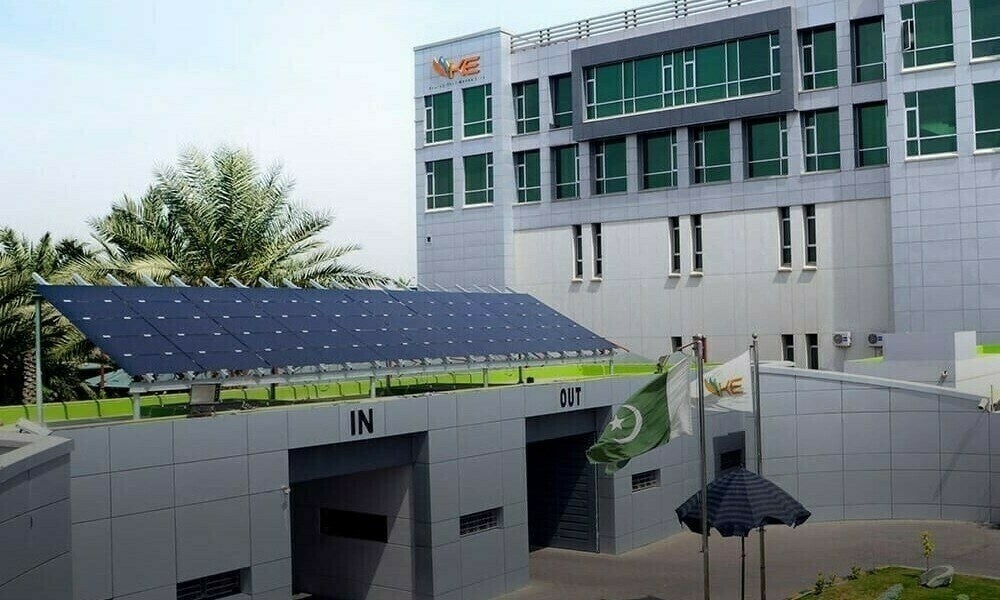

ISLAMABAD: K-Electric has proposed several amendments to the Indicative Generation Capacity Expansion Plan (IGCEP) 2025–35, including the grant of a competitive supplier licence, policy-making rights within its service area, a mechanism for stranded cost recovery, and adjustments to NEPRA-approved performance benchmarks in tariffs. These changes are intended to ensure fair treatment of KE and other DISCOs in Pakistan’s evolving and competitive electricity market, sources in NEPRA told Business Recorder.
The amendments have been proposed in a letter addressed to the Power Division, copies of which have also been shared with the entire NEPRA Authority, including Chairman Waseem Mukhtar. The Regulator has sought comments on the IGCEP 2025–35, which was submitted by the Power Division after formal approval by competent forums.
The letter, written by KE’s Chief Executive Officer, Syed Moonis Abdullah Alvi, states that KE considers the establishment of an appropriate legal and regulatory framework crucial for the efficient functioning of the envisioned liberalized electricity market. In this context, KE highlighted the following key considerations and requested the Power Division’s support for their resolution:
IGCEP 2025-35: Power generation capacity may surge 49pc to 64,035 MW
- Grant of Competitive Supplier Licence and Electric Power Trader Licence to SoLR: KE argued that the current regulatory framework—particularly Strategic Directive 48 of the National Electricity Plan 2023–2027 and Rule 4(3) of the Power Division-notified Eligibility Criteria (Electric Power Supplier Licences) Rules 2023—unfairly restricts a Supplier of Last Resort (SoLR) from competing in the open market, even beyond its licensed territory.
KE, privatized in 2005 as a Vertically Integrated Utility (VIU) with an exclusive service territory in Karachi and its adjoining areas, believes that excluding it from market participation is unjust and contradicts the spirit of privatization. The restriction not only limits competition and consumer choice but could also negatively affect the valuation of state-owned DISCOs being considered for privatization, since international precedents show higher valuations when bundled with competitive licences.
KE also pointed out that network and supply are licensed separately, with defined performance standards monitored by NEPRA. This ensures non-discriminatory open access and negates concerns of preferential treatment. Furthermore, international examples support the presence of group companies in both regulated and non-regulated markets through ring-fenced subsidiaries.
Therefore, KE requested an amendment to the regulatory framework to allow DISCOs and SoLRs to participate in the competitive market by establishing separate, ring-fenced subsidiaries. This, KE argues, would enhance fair competition and improve asset valuation for ongoing privatization efforts.
- KE as Regional System Operator and Planner for Its Service Area: As per KE’s existing Transmission Licence—protected under Sections 25 and 50 of the NEPRA Act—KE is designated as the System Operator for its service area. KE has emphasized that the goal of unified central dispatch through a single Energy Market Operator (EMO) will be achieved via an agreed SOP between KE and ISMO, which is currently in advanced stages.
KE noted that its system is unique, with assets owned by KE as a private entity. Transferring system operation to another body raises accountability concerns, as no mechanism exists to indemnify KE in case of technical failures or outages.
The utility raised these concerns in various forums, including consultations on the National Electricity Plan, regulatory proceedings, and a review motion filed with NEPRA regarding KE’s CTBCM Integration Plan. KE requested that the regulatory framework, including the Grid Code 2023, be amended accordingly.
KE further stated that shifting the role of Generation and Transmission Planning to ISMO undermines KE’s Transmission Licence and removes planning authority from a private utility still responsible for reliable supply in its service area.
During the recent IGCEP 2025–35 iterations, KE’s input—including concerns about impractical assumptions (e.g., interconnection capacity enhancement by 2028), under-integration of its 640 MW renewable projects, and load forecasts—was not considered. This unilateral planning, KE argues, could materially impair its ability to meet demand.
Accordingly, KE requested regulatory amendments to formally recognize its planning authority for its service area, as per its existing licence, with coordination to share the approved plan with ISMO for national-level consolidation.
- Mechanism for Stranded Cost Recovery: Amendments to Strategic Directive 87 of the National Electricity Plan 2023–2027 and Rule 5(2) of the Eligibility Criteria (Electric Power Supplier Licences) Rules 2023 mandate the development of a mechanism to recover stranded costs due to market liberalization and open access.
Based on discussions at various forums, KE understands that stranded costs might be determined via an auction mechanism. However, in Pakistan’s current surplus capacity scenario—with committed capacity costs at Rs. 16.32 per unit (as per NEPRA’s June 23, 2025, decision)—non-recovery of stranded costs could result in an annual loss of approximately Rs. 80 billion. This would unfairly burden regulated consumers through higher tariffs, as seen with net metering.
KE emphasized that ensuring full cost recovery is essential for sector sustainability and failure to do so could negatively impact DISCOs’ operational KPIs and financial viability.
Additionally, KE cautioned that the regulatory framework for market liberalization must avoid skewed policies that disrupt the balance between regulated structures and consumer incentives—such as the proposed amendment allowing consumers to be partly regulated and partly under bilateral arrangements.
KE urged the Power Division to conduct thorough consultation and impact analysis to avoid unintended consequences, such as those seen with net metering.
- Adjustment Mechanism for NEPRA-Approved Performance Benchmarks in Tariff: KE argued that with the migration of Bulk Power Consumers (BPCs) to the open market, there will be changes in the sales mix, affecting distribution and recovery losses. Since these units will no longer be part of KE’s or DISCOs’ sales under the SoLR role, the benchmarks need to be adjusted accordingly.
KE proposed an appropriate mechanism for annual adjustment of allowed distribution and recovery loss targets. Without such a mechanism, DISCOs and KE risk under-recovery of prudent costs.
“We are confident that the Power Division will thoughtfully consider these points. We look forward to continued collaboration and open discussions to reach informed decisions together. We remain fully committed to supporting the government of Pakistan in achieving the goals of the ongoing power sector reforms.” Alvi concluded.
Copyright Business Recorder, 2025




















Comments
Comments are closed for this article.