


‘Exceptionally high floods’ in Ravi, Sutlej, Chenab rivers expected
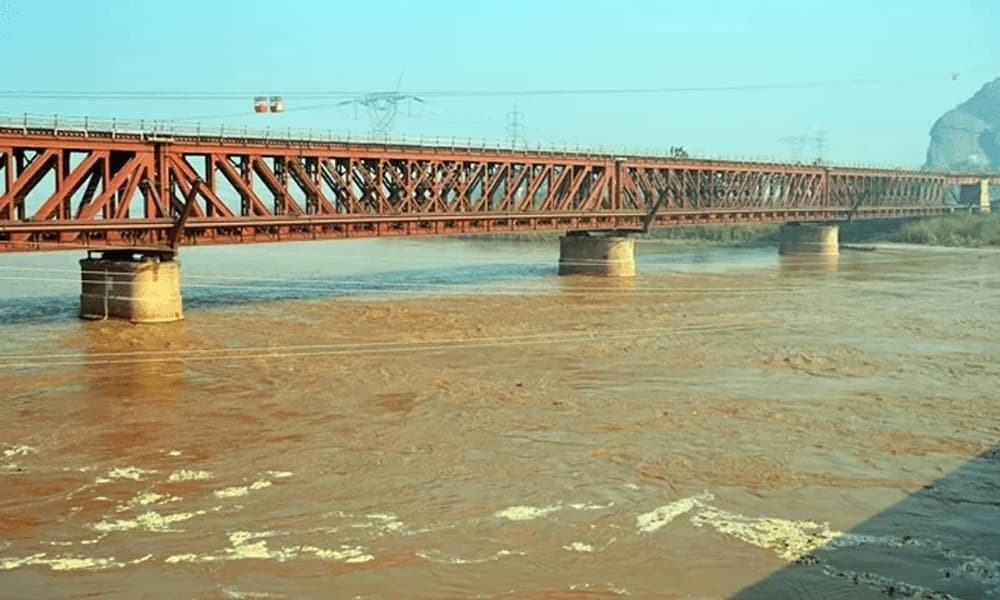

LAHORE: Punjab sees no relief from the recent floods after the Provincial Disaster Management Authority (PDMA) Punjab has warned of very “high-level to exceptionally high floods” in Sutlej, Ravi and Chenab between September 2 and 5, while urban flooding is expected in Lahore, Gujranwala and Gujrat divisions during the next 72 hours.
In its latest alerts issued on Monday, it noted that the Flood Forecasting Division has informed that a well-marked monsoon low is present over southwest Haryana and adjoining areas, while a strong trough of a westerly wave lies over the northern parts of the country.
As a result of the combined effect of these significant weather systems, widespread heavy to very heavy rainfall, along with torrential downpours at scattered places, is expected over the upper catchments of Rivers Sutlej, Beas (upstream of Ganda Singh Wala), Ravi and Chenab, along with their tributaries/nullahs. Moreover, scattered thunderstorm rain with heavy to very heavy rainfall is also expected in the upper catchments of the River Jhelum and the Gujrat division during the period.
“Hence, very high to exceptionally high flows (subject to releases from Indian reservoirs) in rivers Sutlej, Ravi, and Chenab are expected, along with the associated nullahs of rivers Ravi and Chenab during September 2 to 4 (then continue downstream onwards). Moreover, exceptionally high flood levels will continue in the River Sutlej at Ganda Singh Wala,” it observed.
It pointed out that the River Chenab at Panjnad is expected to attain very high to exceptionally high flood levels during September 4 to 5. The PDMA advised that in order to maintain a high level of preparedness and mitigation of the disaster, the district administrations of all the districts and line departments are requested to take immediate precautionary and relief measures to minimise potential damage. Due to the continuously rising water levels in Punjab’s rivers, the province was in a dire flood situation, with thousands of villages submerged and over 2 million people affected. At least 33 people have also died in floods.
Meanwhile, according to the flood forecasting division, a very high flood level persisted at Head Trimmu where the flow of water reached 550,965 cusecs after India released water in the Chenab River. There has also been an increase in the water inflow at Head Panjnad, but the situation remains under control. However, water levels at Head Khanki and Qadirabad have decreased, and the flood situation is moderate.
The floodwaters from the Chenab River have passed through Sialkot, Wazirabad, and Chiniot, and have now entered Jhang, where many villages have been submerged and hundreds of homes have been inundated.
At Head Balloki, water levels in the Ravi River have begun to decrease with the flow now at 156,180 cusecs, but it still qualifies as a very high flood level. There is a moderate-level flood at Shahdara, where the inflow and outflow have been recorded at 66,020 cusecs. Meanwhile, the provincial ministers and senior government officials remained in the field to monitor the relief work. Punjab Finance Minister Mujtaba Shuja-ur-Rehman visited the flood-affected areas in Lahore and Sheikhupura, where he inspected relief camps and interacted with displaced families.
On this occasion, he said the entire provincial machinery is currently focused on ensuring the safe evacuation of residents from flood-hit areas and protecting lives and property.
“Emergency relief operations are in full swing, with uninterrupted supplies of food and medicines being delivered to the affected population,” he added.
Highlighting the broader challenge, he said floods have been inflicting severe damage on the national economy for years, while this year’s devastation has been far greater, largely due to the impact of climate change.
He emphasised that a comprehensive framework will be developed to provide a permanent solution, ensuring that rehabilitation efforts are more effective, structured, and sustainable.
Punjab Housing and Urban Development Minister Bilal Yasin visited flood-hit areas of Nankana Sahib, including Haft Madar, Jag Da Kot, Jani Da Thatta, and other affected localities.
The Deputy Commissioner, while briefing the Minister, said that six relief teams had rescued over 5,000 stranded people and more than 15,000 animals, relocating them to safe places.
“Nine relief camps and nine tent villages have been established, while over 2,000 officials are engaged in relief efforts,” he added.
On the occasion, the minister stated that water inflow at River Ravi near Head Balloki has reduced, though the threat still exists. He added that through 50 food distribution camps, food supply to the victims is being ensured.
“Relief activities have been accelerated and government machinery has been instructed to assess damages in flood-hit areas; no individual will be left alone; we fully understand our responsibility as a state,” he added.
Commissioner Lahore Marryam Khan visited Talwar Post Kasur to review the flood situation, rescue, relief and evacuation operations in the Sutlej River. The DC Kasur and other officers of the district administration were also present on this occasion.
The district administration, while briefing the Commissioner Lahore about the flood situation, informed that there are currently 240,000 cusecs of water in the Sutlej, which has been flowing continuously for the last seven days.
Copyright Business Recorder, 2025




















Comments
Comments are closed for this article.