


Crisis management, corp leadership: Ghaznavi’s new book stands out for its dual focus
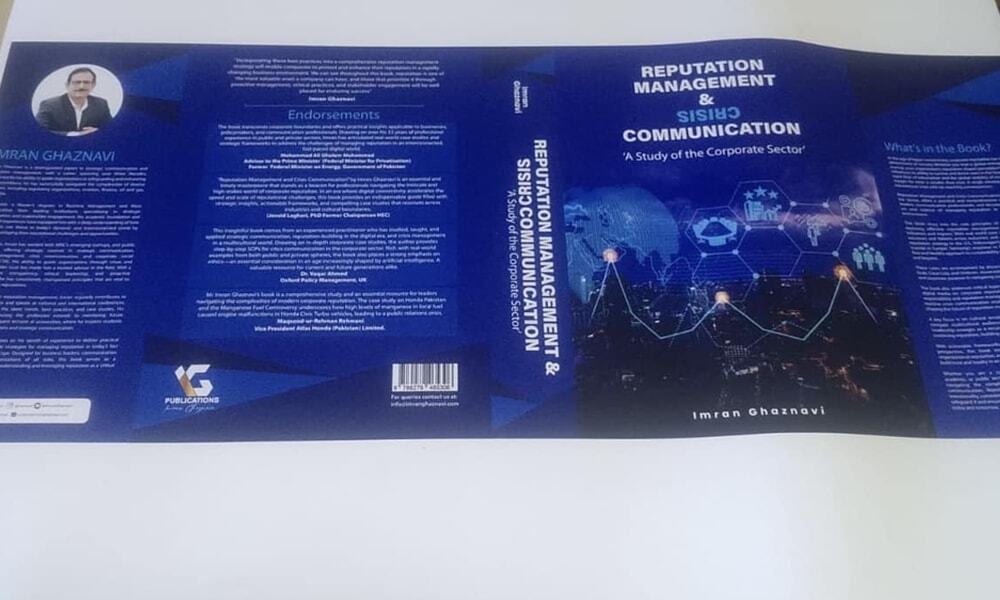

ISLAMABAD: The book review of “Study of the Corporate Sector by Imran Ghaznavi” revealed Reputation Management and Crisis Communication in Pakistan.
Recently, a Study of the Corporate Sector has been launched by Imran Ghaznavi on Saturday.
The Book Review: Reputation Management and Crisis Communication: A Study of the Corporate Sector by Imran Ghaznavi revealed that in today’s hyper-connected world, where information flows instantly and public perception shifts within moments, reputation has emerged as one of the most valuable yet vulnerable corporate assets.
Imran Ghaznavi’s book Reputation Management and Crisis Communication: A Study of Corporate Sector is both timely and insightful, offering a comprehensive exploration of how organizations can safeguard, sustain, and leverage their reputational capital.
The book stands out for its dual focus. On one hand, it grounds the reader in the theoretical underpinnings of reputation management and crisis communication, drawing on established global frameworks.
On the other, it situates these lessons within the unique challenges faced by corporations in South Asia, particularly Pakistan, where governance structures, regulatory frameworks, and socio-political pressures intersect in complex ways. This contextual anchoring makes the book especially valuable for corporate leaders, policymakers, and academics seeking practical insights tailored to emerging markets.
Ghaznavi emphasised that reputation is not an abstract or symbolic asset but a measurable and strategic resource with direct implications for corporate survival and growth. He illustrates how a strong reputation attracts investment, secures customer loyalty, enhances employee commitment, and builds stakeholder trust. Conversely, reputational crises—whether triggered by governance failures, regulatory breaches, ethical lapses, or social media disinformation—can erode years of credibility within days.
A key strength of the book lies in its detailed examination of corporate governance and its intersection with reputational capital. Ghaznavi argues convincingly that boards and senior executives must treat reputation as a central element of governance, not as a peripheral public relations issue.
Copyright Business Recorder, 2025


























Comments
Comments are closed for this article.