


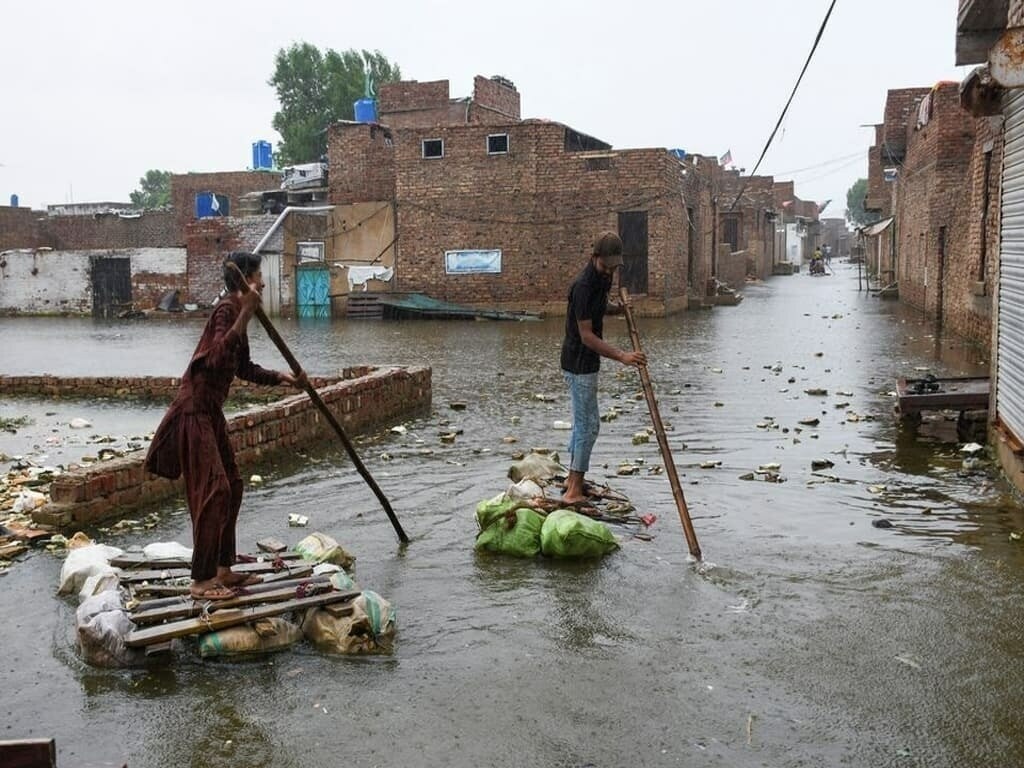
EDITORIAL: That three of Punjab’s rivers – the Chenab, Ravi and Sutlej – have been seen simultaneously in ‘super flood’ for the first time in recorded history is a fact. The floods triggered by the overflowing of the three trans-boundary eastern rivers have wreaked massive havoc in terms of loss of life, crop, livestock and civic infrastructure across vast swathes of Punjab. According to Punjab PDMA Director-General Irfan Ali Khathia, for example, never in the history of Pakistan and Punjab have three rivers been in ‘super flood’ at the same time.
Hundreds of thousands of people have been displaced, while millions of acres of fertile agricultural land – the backbone of Punjab’s, and in fact Pakistan’s, economy – lie devastated. According to the United Nations Office for the Coordination of Humanitarian Affairs (UN-OCHA), the death toll from this monsoon season is indeed much higher than during the same period last year.
The scale of the disaster has prompted the government to deploy the Army to assist with relief operations across eight districts. What makes this tragedy more concerning is that it occurred despite early warnings about torrential rains and rising river levels. Continuous monsoon downpours in the catchment areas of the three rivers led to the release of excess water from Indian dams, contributing to the surge.
However, even without such external factors, Pakistan’s internal vulnerabilities have significantly compounded the impact. The floods have exposed glaring deficiencies in the country’s infrastructure, which remains woefully inadequate to cope with increasingly erratic monsoon patterns.
Unplanned urbanisation has made matters worse. Natural waterways and floodplains have been encroached upon for housing schemes and commercial projects, obstructing the natural flow of rainwater. Unchecked deforestation has further reduced the land’s ability to absorb and regulate runoff, accelerating downstream flooding and triggering landslides in mountainous areas. These man-made failures have turned what might have been manageable floodwaters into full-blown disasters.
A fundamental shift is needed, from reactive crisis management to proactive, long-term disaster risk reduction. Governments at both the federal and provincial levels must urgently strengthen planning, infrastructure, and institutional capacity to manage future disasters, particularly in view of the fact that the Pakistan Meteorological Department has predicted more heavy showers over the upper catchments of the Sutlej, Beas and Ravi rivers on September 2-3, which would certainly add to the human misery.
Copyright Business Recorder, 2025




















Comments
Comments are closed for this article.