


USD 3.5bn financing needed to replace ‘inefficient’ fans in Pakistan
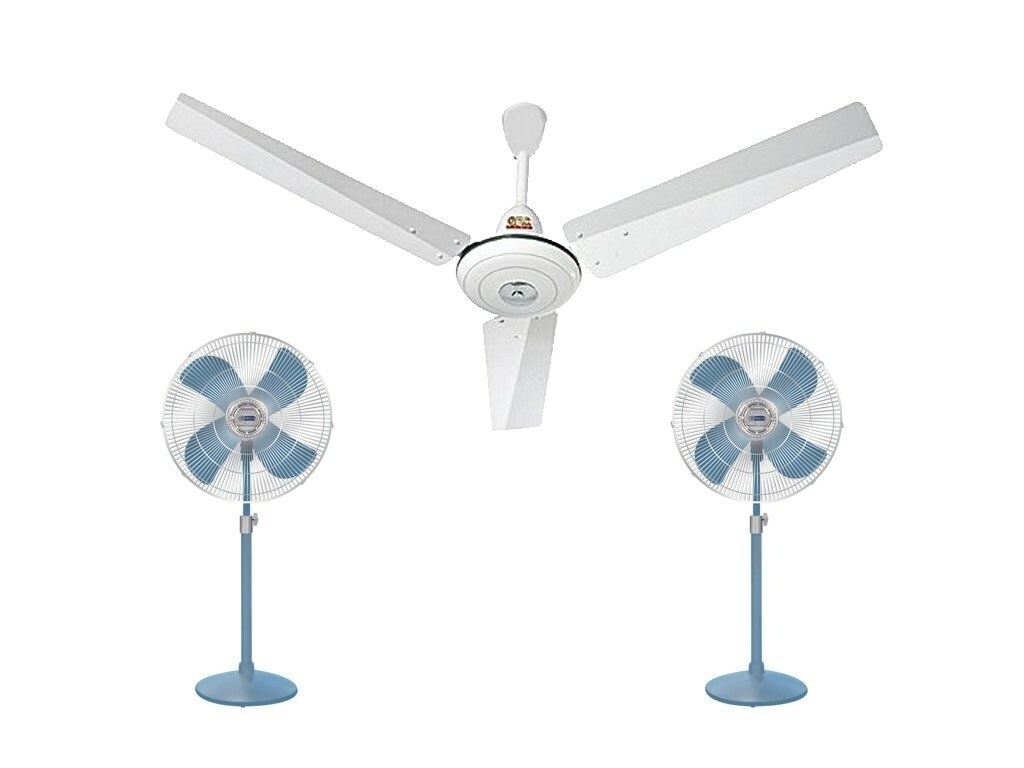

ISLAMABAD: Pakistan reportedly requires financing of USD 3.5 billion to replace 88 million inefficient fans— 50 million in rural households and 38 million in urban households—under various financing arrangements, sources in the National Energy Efficiency and Conservation Authority (NEECA) told Business Recorder.
The government recently approved Prime Minister’s Fans Replacement Program for which Finance Division will extend Technical Supply Grant (TSG) of Rs2 billion in a phased manner commensurate with the needs.
The program envisions replacing 88 million inefficient fans out of a total estimated 147 million over the next ten years across Pakistan. This transition is expected to reduce peak electricity demand by up to 5,000-MW, significantly easing the burden on the national power grid during summer peak.
PM’s Fan Replacement Programme: Aurangzeb orders launch preparations by month-end
Using an on-bill financing model, consumers can purchase energy-efficient fans through monthly instalments added directly to their electricity bills. Participating banks will offer financing at KIBOR + 2 percent, with tenure of up to 18 months. The fan financing will range from Rs 10,000 to 30,000. To encourage banks’ participation, the government has allocated Rs 1.5 billion as a risk guarantee.
The entire financing model is based on the Islamic principle of Musawamah, mutually agreed upon by all participating banks. Ministry of Finance and State Bank of Pakistan (SBP) played a pivotal role in on-boarding financial institutions and shaping inclusive eligibility criteria, primarily based on a consumer’s timely electricity bill payment history.
The program remains entirely voluntary, allowing consumers to apply via the NEECA Online Portal (NOP) through web and mobile applications. Fan manufacturers are responsible for timely installation of Five-Star efficient fans, after sales service, and proper dismantling of old fans.
The term-sheet jointly prepared by all the stakeholders including NEECA, SBP, banks; etc., is based on the Draft Tripartite Agreement.
Key aspects of the Prime Minister’s Fans replacement are as follows: (i) electricity consumers having electricity bills/ meters; (ii) end-to-end digital product including loan initiation, processing, approval, delivery of fans and disbursement of loan proceeds to fan manufacturers, inclusion of on-bill financing; (iii) recovery of the loan instalment at-source through electricity bills of Discos. Banks to deduct the instalment amount from the bills collected and credit the balance in the Discos account; (iv) loan mark-up rate will be KIBOR+2 percent with 10 percent first loss government guarantee. The rate will remain unchanged for the loan period, once the loan is booked; (iv) NEECA to ensure that the retail price of the fan offered by the certified fan manufacturers is equal or less than the market retail price of the fan; (v) NEECA, Power Division and PITB get portal development and onboard Discos and fan manufactures; (vi) SBP to facilitate the on-boarding of banks and launch of the loan product; (vii) Discos and PITC to provide consumer details to check eligibility and later instalments will be reflected in the bills; and (viii) government will provide 10 percent first loss guarantees to keep the financing rate at KIBOR + 2 percent. Estimated cost for FY 2025 will be Rs 1.5 billion assuming disbursement of Rs 15 billion during the financial year.
Pakistan’s summer total power demand reaches 30,154 MW while winters experience only 12,500 MW. This suggests that around 17,610 MW of cooling load driven by expanding domestic sector fans and air-conditioners. This is a non-productive load for the economy for which huge investments in capital and operating costs in power supply are expended.
Compared to air-conditioners, fans are widely used and available with domestic consumers approx. 11,799MW (67percent), out of 17,610MW cooling demand.
Copyright Business Recorder, 2025




















Comments
Comments are closed for this article.