



As someone representing LSM industry and the various burdens it is made to carry, a need arose to understand the existing power tariff and its architecture/design.
As the Power Sector is duly regulated by NEPRA, it was also important to understand the various regulations controlling the determination of power tariffs and the possible effects these could have on the power consumers in general and on the Pakistani industry in particular.
A brief foray into the regulations led to the understanding that basically the electricity tariff is required to be based on the specific cost of service for a particular category of electricity customers and nothing else. This basis is correct by all means and nearly unassailable. It is understandable that there can be no one tariff for all categories of electricity consumers when the cost of service for each category is different due to obvious reasons.
The government then has the hegemony and authority to notify the tariff after determination by the Regulator. The powers to notify tariff is understood and also accepted generally.
However, this acceptance only revolves around the fact and requirement that the government may desire to subsidize venerable segments of society from any untoward increase in electricity tariff and as such should retain the powers to notify the electricity tariff. The low tariffs for the protected domestic consumers fall in this subsidized class.
The legacy of WAPDA tariff structure, on the other hand, had an inbuilt mechanism that considered cross-tariff subsidy mechanism as Kosher. WAPDA had used this tool to arrange for what was known then as the lifeline tariff – specially, for users of up to 50 units of electricity and then for the 100 units per month category. Along this cross-tariff subsidy was used to lower the agricultural tube-well tariffs.
It was because of this that the original NEPRA Act, 1997 listed the requirements of doing away of this practice as soon as possible. Unfortunately, instead of phasing out this distortion, it seems that the various amendments in the Act since the last five years or so have buffeted the earlier sin of provision of cross-tariff subsidies for some classes of consumer categories at the cost of others.
On the other hand, neither the law in the country nor our constitution allows anyone to start robbing Peter to pay Paul. This is so because this dictum can be rephrased as taking from one to gift to another or shifting resources or redistributing wealth in a stealthy manner.
It can also be described as solving one problem by creating another monster, or as a temporary fix that ultimately leads to further grave issues. This issue can be highlighted as the movement of assets from one area to another, often without addressing the underlying problem. This further emphasizes the transfer of resources, potentially implying a lack of equity or fairness.
In short: a simple shortsighted solution. Strangely, but very aptly, this also describes a deceptive practice where grave distortions are hidden through shifting resources from one category of electricity consumers to another to cover-up a serious problem. Here, we are talking about the cross-tariff subsidies which both the Regulator and the government employ in order to, on the face of it, fulfill the socio-economic issues of the country, which in fact are more of political shenanigans.
Looking back, we see that cross tariff subsidies were frowned upon and also castigated originally through section(s)31.5 of the NEPRA Act. However, recently through amendments in the Act, some space seems to have been created for cross-tariff subsidies cleverly labeled as socio-economic needs of the government. However, still the amended Act/relevant clause too in a way bars any cross-subsidization for obvious reasons. These are enumerated as below:
31(2)(e)The economic and socio policy objectives of the Federal Government, and31(2)(f)“The elimination of exploitation and minimization of economic distortions”31(3)(h)“Tariffs should, to the extent feasible, reflect the full cost of service to consumers categories with similar service requirements”.
Unfortunately, no one knows about any specific socio-economic policy of the government which allows for the implementation of a strategy whereby any class of electricity/power consumers will be subjected to a burden forcing them to pay heavily for subsidizing some other categories of consumers.
And if at all any policy is there, it cannot be ever allowed to be put in place mindlessly and that too for burdening of industrial consumers in Pakistan. It has to be remembered that industry and its prowess makes or breaks any country’s economy. Consequently, there is no reason that compels the regulator or the government to do so ever. Besides, the constitution too bars any such act whereby any specific category of people is made to pay for others.
According to calculations in our case, it is seen that a hefty cross tariff subsidy of nearly Rs 150 billion is placed on the shoulders of industrial customers of Pakistan. This translates into an illegal burden of over Rs 7/Kwh of industrial users for the FY viz. 2024-25. And the strange part is that still the industry is required to increase exports, be efficient and be an engine of growth, arranging for employment in Pakistan, etc.
This issue was highlighted last year, whereafter, reportedly, it had been proclaimed that the industry will not be made to suffer anymore and that the weight of cross subsidies to meet with the socio-political requirements of the government will either be funded from the yearly budget or will be diverted towards other unsuspecting consumer categories.
Unfortunately, nothing of the sort happened and the current electricity tariff carries on with the same distortions as ever. As presently, the industry has been forced to transit from gas to the grid through the grid transition levy, the situation requires correction of all distortions in the power tariff.
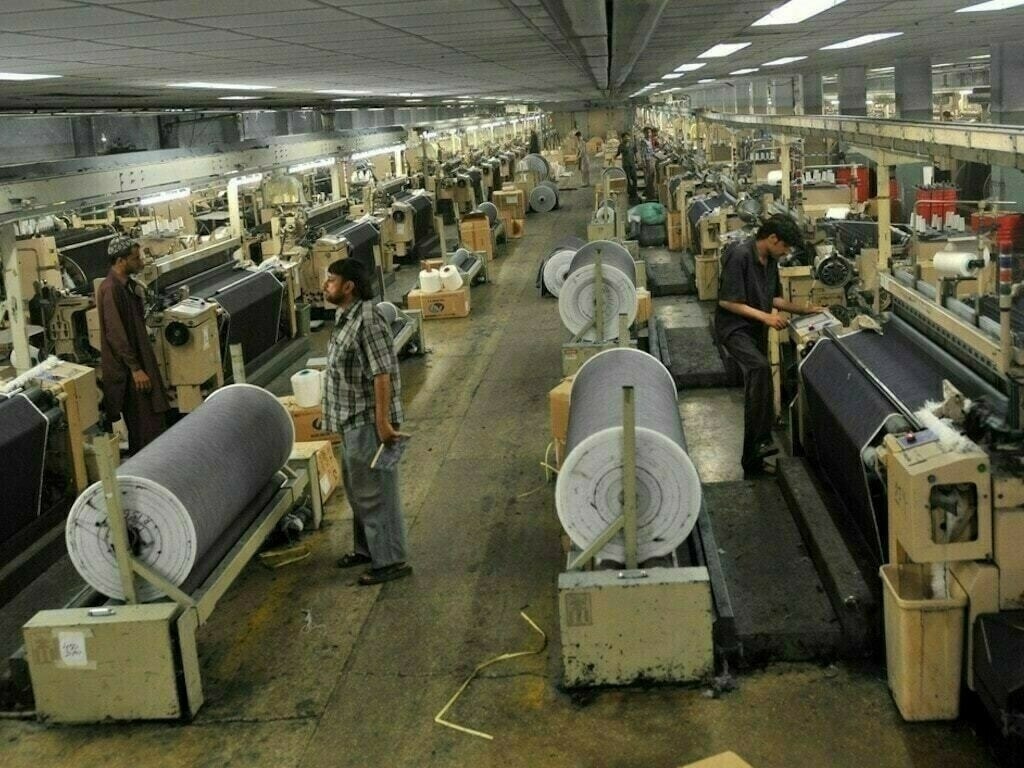
What are the implications of this distortion and undue burden on the industrial sector of Pakistan? The first and most major of the issues is that the Pakistani industry has lost its competitiveness and thus is unable to export to its fullest. It is also unable to compete with comparative economies and consequently is losing its traditional markets. It is actually on the death path.
During the last five years at least 100 textile mills in the country have shut, leading to a loss of 60,000 direct jobs, half a million of tangential jobs and a great dent in the national GDP. Another serious issue is the sad demolishment of the industrial clusters created and matured after five decades or so in areas around Lahore, Gujranwala, Faisalabad and Multan in the Punjab and in Hyderabad and Karachi in the South. Even if the shut mills somehow get resurrected, the most important clusters will need at least 1-2 decades to reconstruct.
As all of this has happened solely on account of the inordinate power tariff, hence things can only be sorted out if the most unjust and illegal cross tariff subsidy of over Rs 150 billion is removed from the industrial tariff.
The government can always resort to dolling out direct subsidies to whichever class it classifies to be fit to receive subsidies, through the national budget/BISP. This will not only do away with the present distortions but also ensure industrial revival in the country and in extension improvement in the national economy. Besides, its revival will result in a robust economy — making space for the monies needed to take care of those who need any special support.
Copyright Business Recorder, 2025
The writer is Chairman APTMA— North Zone. The views expressed in this article are not necessarily those of the newspaper




















Comments
Comments are closed for this article.