


NEOC for kids’ vaccination against poliovirus as two new cases detected
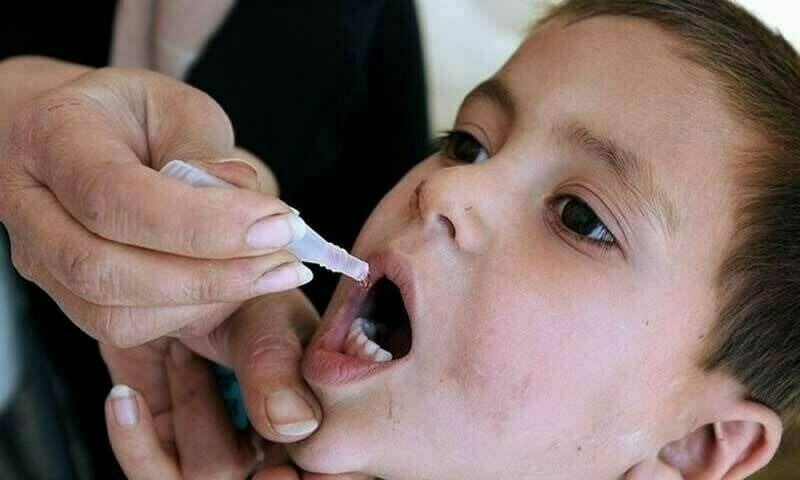

ISLAMABAD: Following the detection of two fresh poliovirus cases the National Emergency Operations Centre (NEOC) has urged parents to get their children vaccinated against the disease.
The Pakistan Polio Eradication Programme (PPEP), Monday, reported two more poliovirus positive cases in the country as regional reference laboratory for polio eradication at the National Institute of Health (NIH) has confirmed one case from District Kohistan Lower, Khyber Pakhtunkhwa (KPK), and the other from District Badin, Sindh.
According to the PPEP, the latest cases involve a six years old girl from Union Council Pattan in District Kohistan Lower and a 21-month-oldgirl from Union Council Matli-2 in District Badin.
With these detections, the total number of polio cases in Pakistan in 2025 has reached 21 with 13 from KPK, six from Sindh, and one each from Punjab and Gilgit-Baltistan.
This year, three cases each have been reported from District Bannu and Lakki Marwat, two each from Tank and North Waziristan districts; one each from Torgha, DI Khan and lower Kohistan. In Sindh, two cases have been reported from Badin; while one each case from Larkana, Kambar, Thatta, and Umer Kot districts, while one case was reported in District Mandi Bahauddin of Punjab, and one case was reported from District Diamer of G-B.
In 2024, Pakistan has reported a total of 74 polio cases, of which, 27 in Balochistan, 23 in KPK, 22 in Sindh, and one each in Punjab and Islamabad Capital Territory (ICT).
According to health professionals, to eradicate poliovirus from the country, the federal and provincial authorities besides, polio vaccination drive should start cleaning sewerage as wild poliovirus is spreading through the sewerage. It is crucial for communities to understand that poliovirus can re-emerge wherever immunity gaps persist. Every unvaccinated child remains vulnerable and can also contribute to the spread of the virus.
Polio is a highly infectious and incurable disease that can cause lifelong paralysis. The only effective protection is through repeated doses of the oral polio vaccine (OPV) for every child under five during each campaign, along with the timely completion of all essential immunisations. Despite significant improvements in the quality of polio vaccination campaigns nationwide, the southern districts of KPK remain a key area of concern due to restricted access and operational challenges in conducting house-to-house vaccination. These barriers continue to hinder immunisation efforts in southern KPK, leaving thousands of children unvaccinated.
It is crucial for communities to understand that repeated vaccination is essential to protect every child against poliovirus. Multiple doses are needed to build and maintain immunity. Every unvaccinated child remains at risk and may contribute to further transmission of the virus.
The government has announced of launching a sub-national polio vaccination campaign starting from September 1 to 7, 2025, targeting more than 28 million children under the age of five in 99 districts across all provinces and regions.
The campaign in southern KPK will be conducted from 15 September. The goal is to ensure every child in these districts receives the vaccine to protect them from the lifelong consequences of polio.
This campaign is part of ongoing efforts to quickly strengthen immunity among children and close existing protection gaps. Parents and caregivers are strongly urged to ensure their children receive the polio vaccine during this and every campaign.
Polio eradication is a shared responsibility. While frontline health workers continue to deliver critical vaccines to children, parents and caregivers play an important role by ensuring their children receive all recommended doses of the polio vaccine and complete their routine immunisations. Communities can protect their children by actively supporting vaccination efforts, countering misinformation, and encouraging others to vaccinate.
Copyright Business Recorder, 2025


























Comments
Comments are closed for this article.