




Bawany Air Products Limited (PSX: BAPL) was incorporated in Pakistan as a public limited company in 1978. The company is engaged in the production and trading of oxygen gas, nitrogen gas and dissolved acetylene.
Pattern of Shareholding
As of June 30, 2024, BAPL has a total of 7.503 million shares outstanding which are held by 816 shareholders. Individuals have the majority stake of 66.43 percent in the company which includes 30.98 percent shares held by the company’s directors, CEO and their spouse. This is followed by 11.56 percent shares held by the weaving companies and 9.64 percent shares held by the joint stock companies.
Around 4.96 percent of BAPL’s shares are held by charitable trusts and 3.85 percent by insurance companies. Financial institutions account for 2.80 percent shares of the company. The remaining shares are held by other categories of shareholders.
Historical Performance (2019-2024)
During the period under consideration, the company registered sales only in 2019 and 2020. The bottomline stayed in the negative zone in all the years except 2023 where hefty other income saved the day for BAPL. The detailed performance review of the period under consideration is given below.
In 2019, BAPL’s net sales slid by 41.73 percent to clock in at Rs.51.91 million. In 2013, the company suffered breakdown of a major component of its plant which was still not repaired and hence the company’s operations were limited to only compressing and re-gasification. To add to ado, during the year, Pak Rupee depreciation and general economic uncertainty took its toll on the ship breaking industry which also resulted in demand destruction for BAPL.
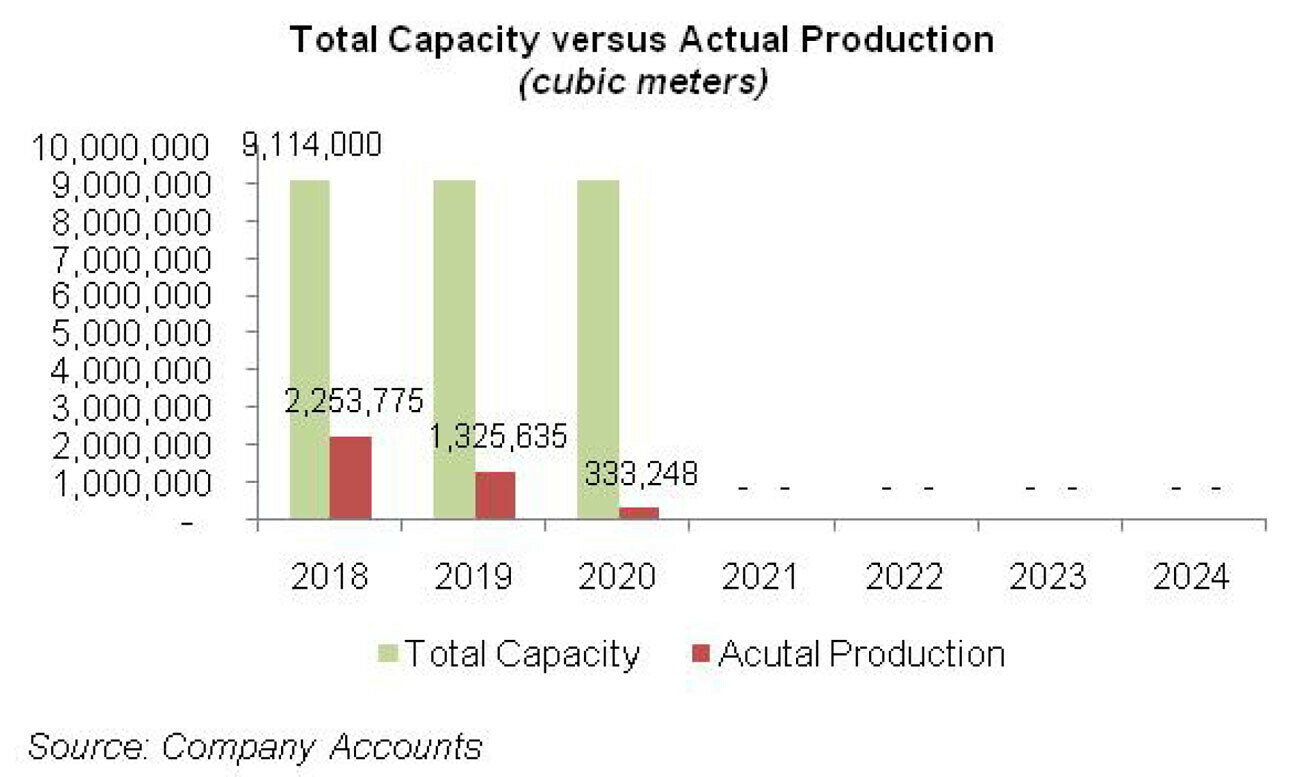
In 2019, the company’s sales volume posted year-on-year decline of 41.18 percent to clock in at 1,325,635 cubic meters. Due to lower demand, the company operated its plant at 14.55 percent capacity in 2019 versus capacity utilization of 24.73 percent recorded in 2018.
Restricted sales resulted in 91.28 percent thinner gross profit in 2019 with GP margin drastically falling down from 4.93 percent in 2018 to 0.74 percent in 2019. This was due to lesser absorption of fixed cost as well as higher prices of raw materials due to depreciation of local currency and high inflation. Lower sales volume pushed down distribution expense by 10.97 percent in 2019.
Administrative expense also shrank by 24.97 percent in 2019 due to lower payroll expense, utility expense as well as legal & professional charges incurred during the year. BAPL streamlined its workforce from 23 employees in 2018 to 16 employees in 2019. Other income mounted by 422.64 percent in 2019 and stood at 13 percent of the company’s net sales versus its standing of 1.45 percent of net sales in 2018.
Higher other income was due to liabilities worth Rs.6.742 million written back during the year. Other expense surged by 194.45 percent in 2019 due to loss recorded on the disposal of assets, trade debts written off during the year as well provisioning done for doubtful debts. BAPL recorded operating loss of Rs.19.02 million in 2019, up 31.98 percent year-on-year.
Finance cost ticked down by 14.86 percent in 2019 on account of liabilities written back during the year. Due to continuous loss, the company was not able to pay off its financial obligations and faced litigations from banking and leasing companies.
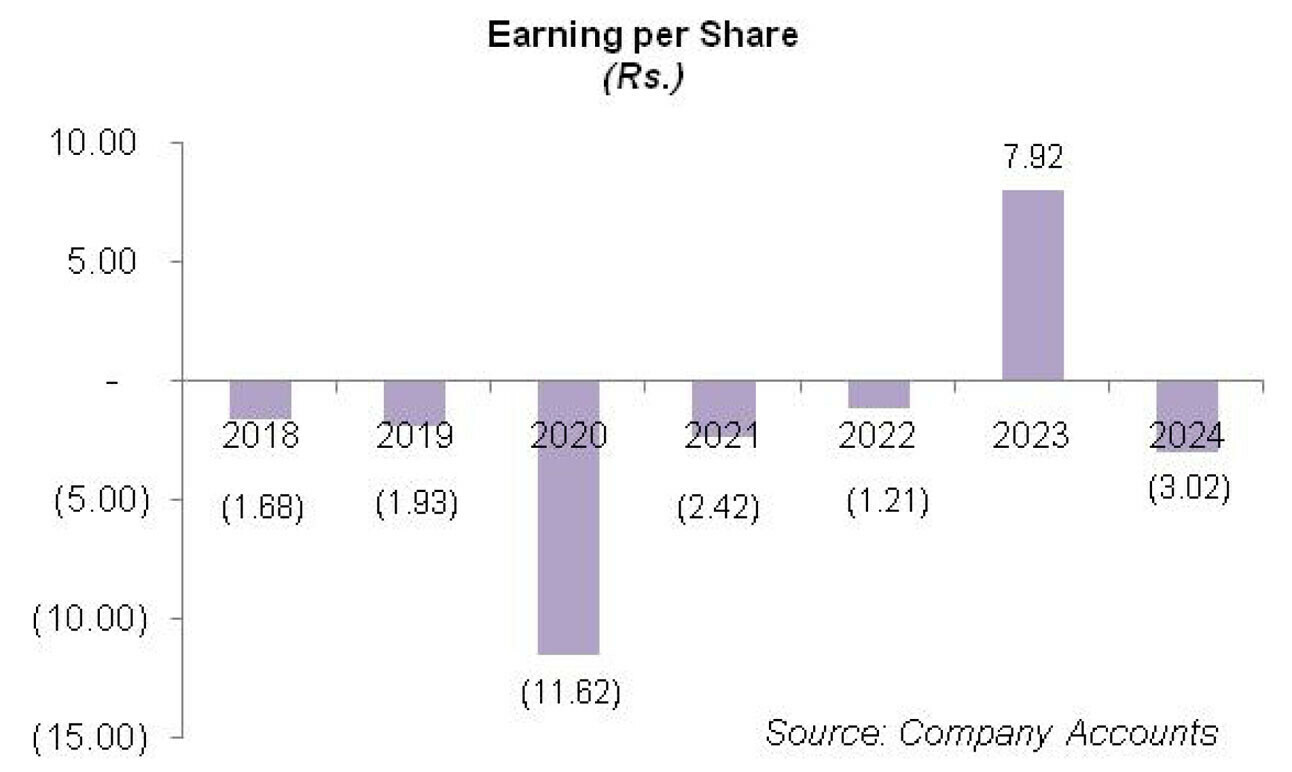
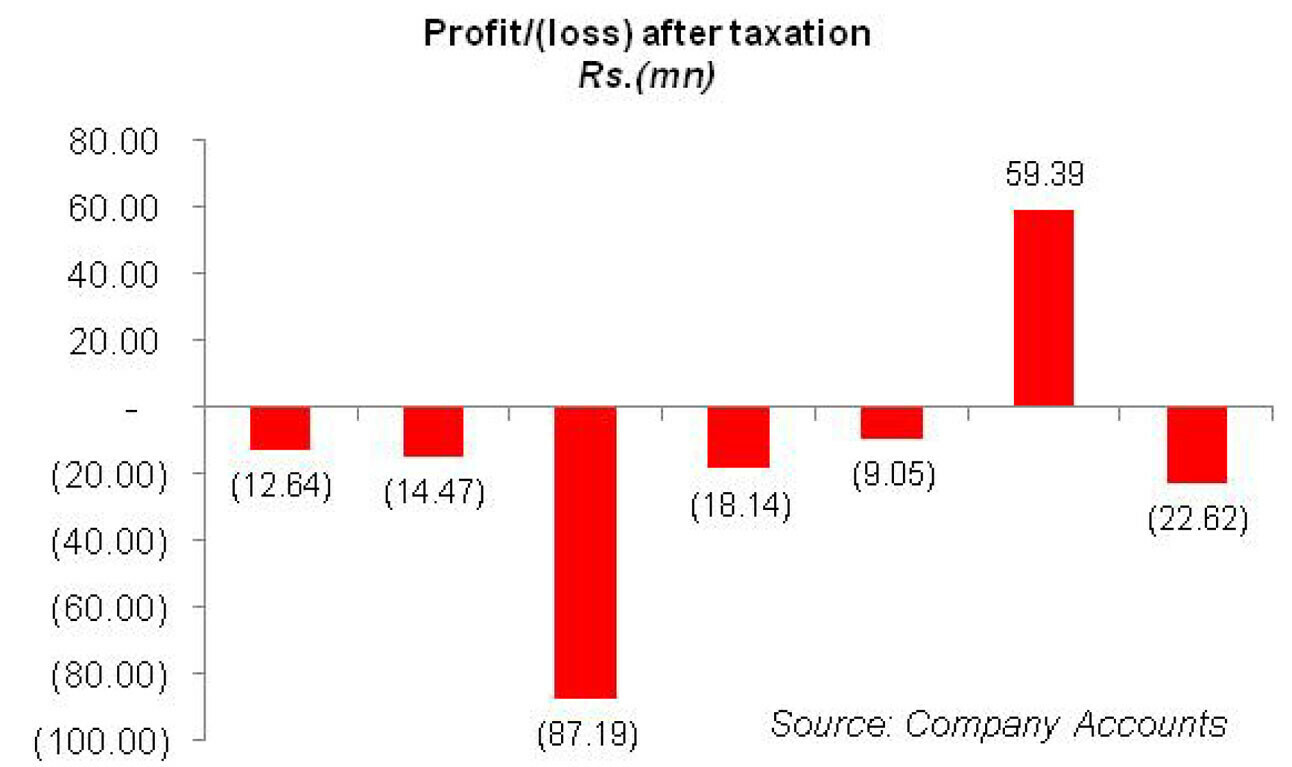
BAPL recorded net loss of Rs.14.47 million in 2019, up 14.45 percent year-on-year. This translated into loss per share of Rs.1.93 in 2019 versus loss per share of Rs.1.68 recorded in 2018.
In 2020, the company recorded 73.35 percent curtained net sales to the tune of Rs.12.80 million. BAPL’s sales volume which was already suffering due to plant breakdown and the slowdown of ship breaking industry was hit hard by COVID-19. Sales volume dropped by 75.64 percent to clock in at 326,874.37 cubic meters.
The company operated its plant at a minimal capacity of 3.66 percent. Higher fixed cost per unit due to lower capacity utilization was further exacerbated by Pak Rupee depreciation and soaring inflation, resulting in gross loss of Rs.3.35 million in 2020. Selling & distribution expense plunged by 52.48 percent in 2020 due to thin sales volume.
The company further rationalized its workforce to 13 employees in 2020. However, higher legal & professional charges, utility expense as well as fee & subscription charges allowed the company to record only 12.29 percent lower administrative expense in 2020.
While the company recorded gain worth Rs.1.16 million on the disposal of its property, plant and equipment in 2020, higher base effect provided by liabilities written back in 2019 resulted in 64.27 percent decline in other income in 2020. BAPL booked impairment of Rs.68.62 million on its idle plant in 2020. This resulted in 426.36 percent spike in other expense in 2020.
The company recorded operating loss of Rs.84.59 million in 2020, up 344.72 percent year-on-year. Finance cost slid by 20 percent in 2020 as the company settled mark-up pertaining to unpaid provident fund at the year end.
Net loss increased by 502.66 percent to clock in at Rs.87.187 million in 2020. This translated into loss per share of Rs.11.62 in 2020. During the year, the company received a public offer from Fossil Energy Private Limited to acquire 51 percent of BAPL’s shares. The agreement also included the obligation of the company to dispose all of its assets to settle its liabilities.
In 2021, Fossil Energy Private Limited withdrew its intention to acquire the company. However, the company successfully paid off the outstanding liabilities of all of its creditors. Hence, the assets of the company were released from any charge. However, the company couldn’t sell off its assets as intended in 2021.
Since 2021, BAPL has recorded no sales. The company didn’t conduct any production operations during the four-year period.
The number of employees, which was 13 in 2021 was reduced to 3 in 2022 and in the subsequent years all the employees were laid off. Administrative expense continued to climb from Rs.8.22 million in 2021 to Rs.22.46 million in 2024 owing to fixed charges and inflationary pressure. In 2021, other expense fell by 84.46 percent due to high-base effect as the company recorded impairment on idle plant in 2020.
Since 2021, the company started recording expense related to idle plant, machinery and factory as well as impairment on stores & spares and non-financial assets. These expenses continued to decline over the years resulting in no other expense in 2024 versus other expense of Rs.11.56 million recorded in 2021.
The company sold off its assets worth Rs.150 million in 2022 and Rs.215 million in 2022 and continued to pay off its long outstanding liabilities. One notable development during this four-year period was recording of net profit worth Rs.59.39 million in 2023.
While the company made no sales during the year, net profit was the result of other income of Rs.71.67 million recognized in 2023. This was due to gain on disposal of assets held for sale. BAPL registered EPS of Rs.7.92 in 2023.
In 2024, the company registered net loss of Rs.22.62 million and loss per share of Rs.3.02. During 2024, the company made a resolution to increase its share capital from Rs.150 million to Rs.12 billion. It also signed a share purchase agreement to acquire 100 percent shares of Alman Seyyam Sugar Mill (Pvt.) Ltd. (ASSM) for Rs. 12 billion. For this, BAPL proposed to issue 600 million shares.
Recent Performance (9MFY25)
During the nine-month period of the ongoing fiscal year, BAPL made no sales. Operating expenses were curtailed to cut down net loss.
BAPL recorded net loss of Rs.6.43 million in 9MFY25 with loss per share of Rs.0.86. This was against the net loss of Rs.10.35 million and loss per share of Rs.1.38 posted in 9MFY24.
Future Outlook
As per an announcement published on the PSX on July 02, 2025, BAPL resumed its operations in accordance with its principal line of business.
On July 08, 2025, the company also announced the intention of a potential acquirer (Mr. Mohabat Khan & others) to acquire 600 million shares (representing 98.76 percent of the issued and paid-up capital) and control of the company.
On July 31, 2025, BAPL was restored from non-compliant to normal counter of PSX as it resumed its operations. All these developments pave way for BAPL to record sales from the last quarter of FY25.


























Comments
Comments are closed for this article.