


China tests spacecraft it hopes will put first Chinese on the moon
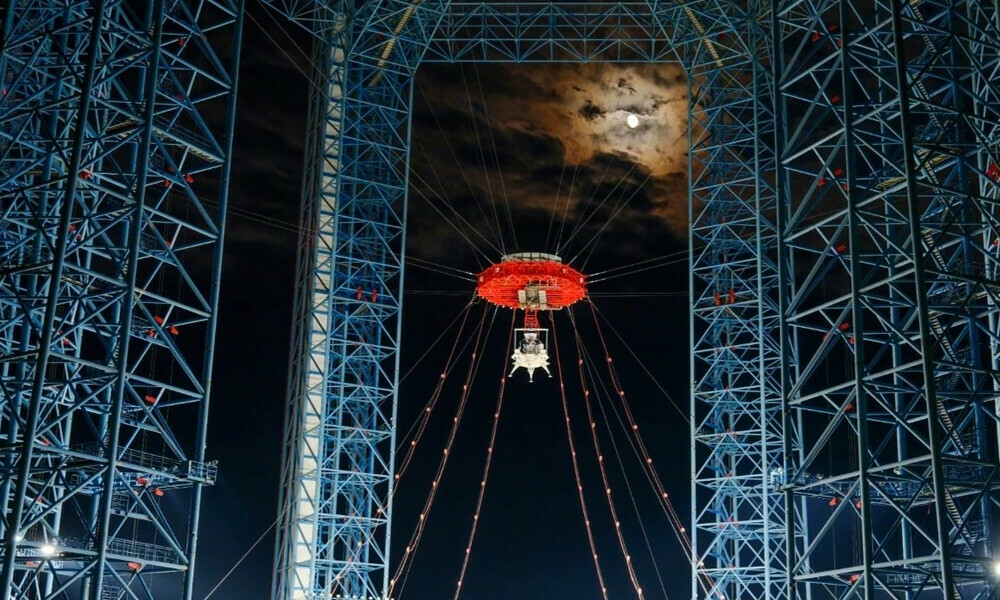

China conducted its first test on Wednesday of a lunar lander that it hopes will put the first Chinese on the moon before 2030, the country’s manned space program said.
The lander’s ascent and descent systems underwent comprehensive verification at a site in Hebei province that was designed to simulate the moon’s surface. The test surface had special coating to mimic lunar soil reflectivity, as well as being covered with rocks and craters.
“The test involved multiple operational conditions, a lengthy testing period, and high technical complexity, making it a critical milestone in the development of China’s manned lunar exploration program,” China Manned Space (CMS) said in a statement posted on its website on Thursday.
The lunar lander, known as Lanyue, which means “embrace the moon” in Mandarin, will be used to transport astronauts between the lunar orbit and the moon’s surface, as well as serving as a living space, power source, and data center after they land on the moon, CMS added.
India launches NASA-ISRO satellite to track climate threats from space
China has kept details closely guarded about its programme to achieve a manned landing on the moon, but the disclosure about the test comes at a time when the United States is looking to stave off the rapid advances of China’s space program.
NASA plans for its Artemis programme to send astronauts around the moon and back in April 2026, with a subsequent moon landing mission a year later.
China’s uncrewed missions to the moon in the past five years have allowed the country to become the only nation to retrieve lunar samples from both the near and far side of the moon.
Those missions have drawn interest from the European Space Agency, NASA-funded universities, and national space agencies from Pakistan to Thailand.
A successful manned landing before 2030 would boost China’s plans to build a “basic model” of the International Lunar Research Station by 2035. This manned base, led by China and Russia, would include a nuclear reactor on the moon’s surface as a power source.




















Comments
Comments are closed for this article.