


‘Ethics should be taught to everyone, not just to minority students,’ says Sindh MPA
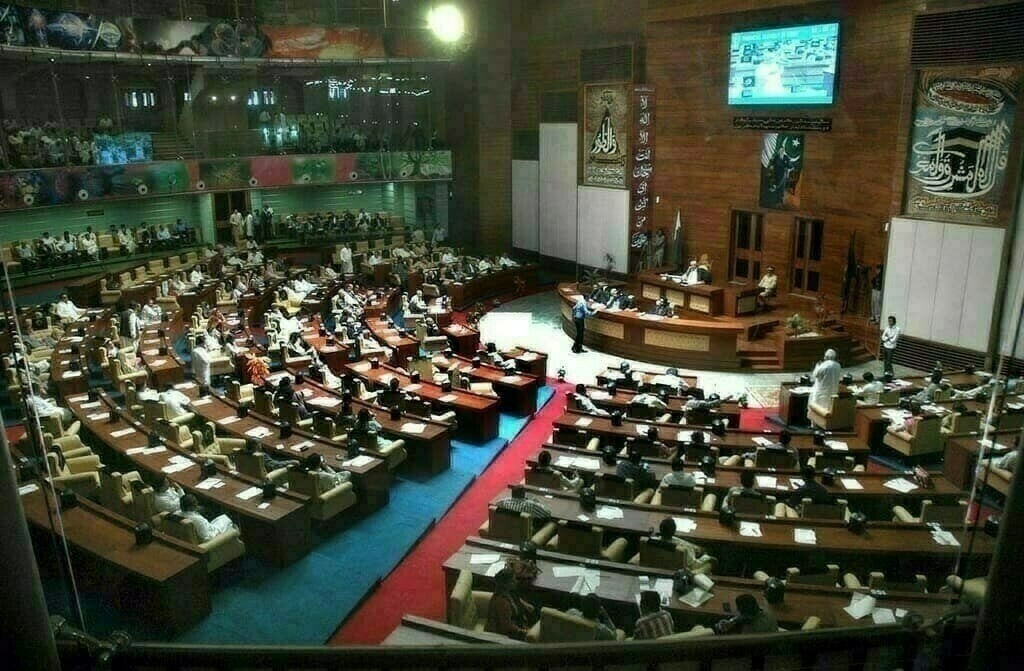

KARACHI: Concerns over minority education rights, illegal construction in Karachi, and transport reforms dominated the latest session of the Sindh Assembly on Friday, highlighting a growing demand for inclusive policymaking and transparent governance across multiple sectors.
Minority legislator from MQM, Mahesh Kumar Hasija drew the House’s attention to the controversial allocation of the Ethics subject exclusively for non-Muslim students in the official curriculum.
“Ethics should be taught to everyone, not just to minority students,” said Hasija, urging the government to replace it with an alternative subject for non-Muslims, noting that minority students have never objected to the presence of Islamic Studies in the curriculum. He also demanded a separate board to cater to the educational needs of the Christian community.
Responding to the notice, Sindh Education Minister Sardar Shah acknowledged the flaws in the current curriculum, which was introduced during the Pakistan Tehreek-e-Insaf government under a single national framework.
“We reviewed the curriculum in 2022 and recognize that further improvements are necessary,” he said, adding that curriculum development is an ongoing process that must evolve with global standards. He noted that most non-Muslim students in Sindh belong to the Hindu community, underscoring the historical roots of Hinduism in the region.
Multiple attention notices were also raised during the session on pressing civic issues. MQM MPA Fauzia Hameed expressed concern over the unchecked proliferation of illegal constructions in Karachi, blaming the Sindh Building Control Authority (SBCA) for systemic corruption and negligence.
“There are over 15,000 illegal structures, especially in areas like Gulshan-e-Iqbal, Orangi, Liaquatabad, and Korangi. If SBCA didn’t grant approvals, how did these buildings emerge?” she questioned.
Parliamentary Secretary Qasim Siraj Soomro responded that action has been taken against responsible individuals and that the government is committed to curbing unauthorized developments.
In response to a separate notice by MQM’s Najam Mirza concerning the Centralized Admission Policy (CAP), Sardar Shah clarified that the policy has now been extended province-wide, and the admission process is entirely computerized to eliminate human interference. He emphasized that admissions are merit-based, prioritizing students with A1 and A grades. Shah pointed out that some institutions like PECHS College receive disproportionately high application volumes, and it is not feasible to accommodate everyone’s preferences. He also highlighted faculty shortages in key areas such as computer science despite rising student interest.
Law Minister Ziaul Hasan Lanjar tabled various audit reports in the house, which were subsequently referred to the Public Accounts Committee. He also introduced an amendment to the Sindh Civil Servants Act, which was unanimously passed. Under the new law, government employees can now retire after 25 years of service or at the age of 55, whichever comes first. Additionally, a provincial motor vehicles amendment bill was introduced and sent to the relevant standing committee for review.
Meanwhile, Sindh’s Senior Minister for Information and Transport, Sharjeel Inam Memon, shared updates on ongoing transport projects. He said the government remains committed to improving mobility for all citizens, noting that the People’s Bus Service is currently serving 110,000 passengers daily.
New electric buses and scooters are expected by the end of August, with electric scooters to be distributed free of charge to women. Memon emphasized that the province was the first in Pakistan to introduce EV buses and that work is underway to link all BRT corridors for greater efficiency. Karachi will also see the development of two new bus terminals, with funds allocated in the current budget.
He added that route permits, once manually issued, are now digitized and that the entire transport department will be digitalized by 2026, marking a significant administrative overhaul.
The session, presided over by Speaker Awais Qadir Shah, also reflected a festive mood as female members wore green outfits and white dupattas in celebration of the upcoming Independence Day. The Assembly will reconvene on Monday at 1:30 p.m.
Copyright Business Recorder, 2025


























Comments
Comments are closed for this article.