


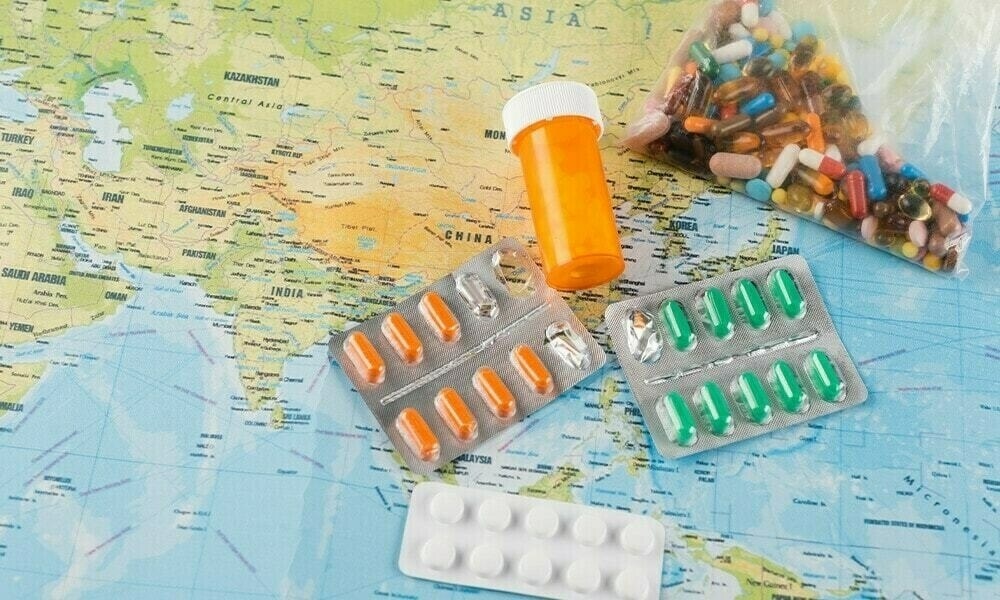

“The global pharmaceutical market is in a state of flux due to major restructuring, both in terms of the demand and supply. This presents a unique opportunity for the sector in Pakistan to take timely action by positioning itself strategically to enter the global drugs market. Pakistan is well poised to gain from opportunities provided under these shuffling global patterns of demand and supply”. International Trade Centre study titled Pakistan Export Strategy – Pharmaceuticals 2023-2027.
The Pharmaceutical market in Pakistan is estimated at over PKR 1.10 trillion, growing at a rate of over 15 percent according to analysts. There are over 700 pharmaceutical companies from Karachi to Khyber. In Pakistan, 80 percent of the domestic need for medicine is fulfilled by local manufacturing, whereas the other 20 percent is through imports. Most of the imports are essential and crucial drugs that cannot be manufactured locally, and at the present moment not licensed for manufacturing for specific reasons. Pakistan’s pharmaceutical exports growth hit a two-decade high of 34 percent in the fiscal year ended June 30, 2025, hitting sales of USD 457 million, whereas in 2024 the exports were USD 341 million.
Although the pharma sector is commended for its export performance, nevertheless, Pakistani companies should endeavour to seek new export markets. The pharma exports growth trajectory requires close liaison between the manufacturers and the regulator. The main destinations for Pakistan’s pharmaceutical exports are Afghanistan, the Philippines, Uzbekistan, Sri Lanka, Cambodia and recently Iraq. Formidable efforts must be made to carve out a substantial share of the African, Middle East and Central Asia markets. In the same manner as other Pakistani products, the menace of illicit exports of pharma products which in many cases lack quality assurance, use substandard raw material, and are unethically counterfeit, while bringing in undocumented foreign proceeds, result in creating a negative image of the pharma sector. It is recommended that a pharma oversight Council be formed consisting of representatives from SIFC, Anti-Narcotics Force, Army Corps X1 and Corps X11 based in KPK and Balochistan, as well as from the Pakistan Pharmaceuticals Manufacturers Association that would identify those in this illicit trade, seal their premises, and prosecute the owners or perpetrators. This illicit trade is estimated to be around USD 90-100 million annually and is growing every year.
It is an accepted fact that exports of pharmaceutical products require compliance with world-class quality assurance standards, maximum focus on health safety standards, and investment in modern technologies, including use of Artificial Intelligence. A solid foundation is imperative in order to claim a stake in the export regime, as this would enable the companies to enhance their competitiveness in the global market. According to Arshad Rahim Khan, an old pro in the pharma industry who has been appointed as TDAP Consultant on pharmaceuticals, “currently, the sector is underdeveloped, non-compliant with international regulations (cGMP, PICs, ISO, WHO, EU, UK, US), low performing, and hence at a low entry valuation”. Haroon Qasim, a leading pharmaceutical company owner and advocate of instilling the concept of new technology in manufacturing, highlighted the role of digital technologies in revolutionising drug development, patient engagement, and pharmacovigilance. Enlightened entrepreneurs are adopting AI rapidly and are well aware of its importance in new drugs development, in improving safety of consumers, and making a well-intentioned paradigm shift in the healthcare landscape.
The Institute of Chartered Accountants of Pakistan, in its study of the pharma sector, stated that “over 90 percent of the raw material used in making of drug is imported.” Only 12 percent of API is produced in Pakistan. Specialized finished dosage form and biologicals such as vaccines, oncology, etc., continue to be imported. The current practice of importing 95 percent of the raw material, compounding active ingredients with excipients, coating the pills, and packaging the drugs, cannot continue to be the long-term goal of the sector. Heavy import dependency of active ingredients from China and India also poses significant concentration risk. Reliance of local pharmaceutical industry on India was estimated at 50 percent — 60 percent before the recent Indo-Pak conflict.
Pakistan Business Council, in a study “Unleashing the Potential of Pharmaceuticals in Pakistan”, advised that “Drug Regulatory Authority of Pakistan should continue its reforms for quality regulation and enforcement, for example, by achieving international standards, clearing certifications as per WHO Global Benchmarking Tool, and attaining the Pharmaceutical Inspection Corporation Scheme membership, which could allow market access to Stringent Regulatory Authority countries”. The depressing situation is that only four foreign companies have manufacturing facilities in the country. Ayesha T. Haq, Executive Director of Pharma Bureau, emphasized the issues impeding the growth of foreign pharmaceutical companies in Pakistan. “The regulatory environment in Pakistan is a major obstacle to the growth of foreign pharmaceutical companies. The DRAP Act 2012, Drugs Act 1976, and Drug Pricing Policy 2018, contain numerous anomalies, including overlapping powers, unclear standard operating procedures, and irrational pricing of essential drugs. These issues have led to a lack of confidence among foreign investors.”
In a transformative step aimed at modernizing trade and enhancing the global competitiveness of Pakistan’s pharmaceutical sector, the Pakistan Single Window, in collaboration with DRAP, officially launched the Digital Certificate of Pharmaceutical Product. This Digital Certificate is designed to streamline cross-border pharmaceutical trade by meeting the documentation and regulatory requirements of importing countries. It replaces traditional paper-based systems with a secure, verifiable, and fully digital solution.
The pharma industry must continue the momentum of export growth. A comprehensive and holistic approach is crucial, and this is possible when manufacturers are successful in lobbying and advocating the removal of challenges that hinder rapid growth and are determined to meet the high quality standards of international organizations. Pakistan lacks Bioequivalence Centers that are approved or partnered with major regulatory authorities. An Executive of a leading pharma company disclosed in an email that “countries like Uzbekistan, Bangladesh, and India provide financial support to their pharmaceutical companies for conducting Bioequivalence studies from internationally accredited or approved centres, enabling faster product registration compared to Pakistani companies”. He further added that “inconsistent supply and high cost of physical infrastructure, no incentives for companies to upgrade technology by importing the latest machines and equipment, exchange rate volatility, high financial costs, challenges in remittances, and frequent border closures with Afghanistan create significant challenges for export logistics to Afghanistan and CIS regions”.
Most of the nearly 700 pharma manufacturers in Pakistan are focused on domestic sales, including to private and public hospitals. They do not have the critical mass to enter the export market. A number of these companies do toll manufacturing for large companies and also may not have any products registered in their names. It is now imperative that these smaller companies are encouraged to enter the export market. One suggestion floated by this writer is that a Collective be formed, initially consisting of around fifty manufacturers. The management of the Collective would be in the hands of technocrats who have in the past served in the pharma sector. The Collective would undertake steps to make these companies compliant with all conditionalities, help in procuring quality certificates, upskill their work force and managerial cadre, liaise with DRAP and other agencies, be the focal point for common procurement of raw material, and create a mutual pool of financial resources for any contingencies.
The Collective will procure export orders and farm out these orders as per the facilities available in these enterprises. The pharmaceuticals would be exported under one brand and logo (say, Dawaa-Pak). However, the name of the unit could be mentioned in the packaging.
The administrative expenses should be less than seven percent of the net profit, ten percent would be deposited in an escrow account in case of future needs, while eighty percent would be deposited in the member company accounts. If the enterprise has excess capacity to do toll manufacturing or direct selling, these should also be encouraged. The Collective can organize single country, single brand exhibitions in different countries such as Sri Lanka, in Africa, and in Central Asian States. An annual export target must be decided and TDAP should facilitate the project. If the idea of the Collective catches on, more enterprises who desire to enter exports could be inducted. It is imperative that smaller companies get on the bandwagon so that together, along with large manufacturers, they can soon achieve the target of USD 1 billion in national pharma exports. Over five centuries ago, Swiss physician and alchemist Paracelsus said, “Medicine is not only a science; it is also an art. It does not consist of compounding pills and plasters; it deals with the very processes of life, which must be understood before they may be guided.”
(The writer is a former President, Karachi Chamber of Commerce and Industry)
Copyright Business Recorder, 2025
The writer is an industrialist

























Comments
Comments are closed for this article.