


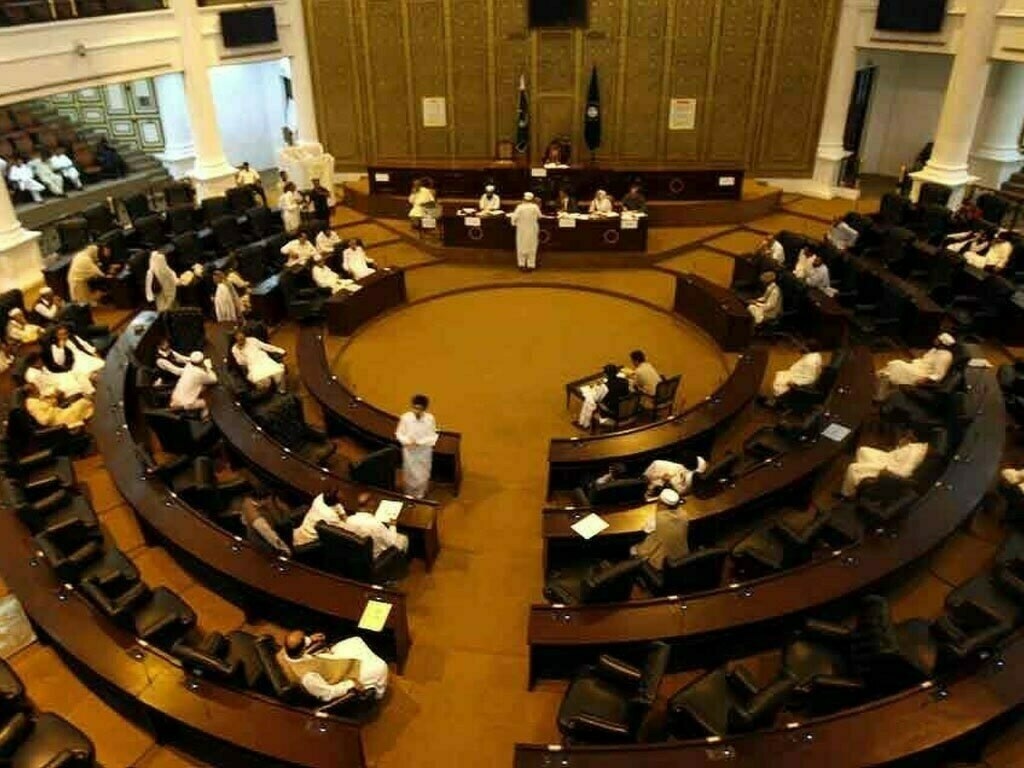
EDITORIAL: There was little suspense in the Senate elections in Khyber Pakhtunkhwa. The outcome had already been stitched up in backchannels before a single vote was cast. Six seats for the PTI, five for the Opposition – a split that would’ve raised no eyebrows had it not come at the cost of everything the PTI once claimed to stand for.
On the face of it, this looked like politics functioning as it should: rival parties reaching across the aisle, bargaining, compromising, defusing the threat of horse-trading, and producing a stable result. But that is a deeply cynical reading. The truth is, this wasn’t about democracy or representation. It was about control. About engineering a win by limiting the contest. And for all the talk of pragmatism, the process revealed the broken state of Pakistan’s political parties, especially the one that once promised a break from this very way of doing business.
The PTI, with its two-thirds majority in the KP Assembly, should have had no trouble securing most, if not all, of the Senate seats in play. But chaos within the party, fuelled by disputes over nominations and the fallout from the Supreme Court’s reshuffling of reserved seats, forced Chief Minister Gandapur into a corner. The compromise deal, he claimed, was to avoid horse-trading. But that excuse wore thin as the internal dissent spilled out in public. Party loyalists cried foul. A faction revolted. And in the end, some were silenced, while others simply gave up. The deal might have plugged one crisis, but it exposed a bigger one.
Still, there’s something to be said about the result. That bitter rivals could come together, however reluctantly, and cut a political deal instead of fighting it out through boycotts, street protests, or legal warfare is, in this environment, an improvement. It might not be clean, and it’s certainly not ideal, but it’s a flicker of the consensus-building that is also supposed to sit at the heart of parliamentary democracy.
Because while party leaderships trade blows on television and posture endlessly for their respective bases, the actual business of governance has been paralysed. For years now, there has been little legislative progress, no political settlement, and zero appetite for cross-party collaboration. If the KP deal signals a shift, however narrow or tactical, toward talking instead of shouting, it should be encouraged. Because something has to give. And soon.
Pakistan’s democracy has been walking wounded since long before the last election. Every institution has been dragged into the political fight, and every election is now followed by more instability, not less. In that context, even transactional deal-making is preferable to the scorched-earth tactics that have become the norm.
But if parties are capable of negotiating seat shares in the Senate, they can and must do the same for matters of national importance. Economic policy, judicial reform, electoral integrity, and internal security – these cannot remain hostage to polarisation forever. The system won’t survive it. Voters are disillusioned. Institutions are strained. And without a baseline of political stability, no recovery is possible – economic or democratic.
So while this week’s Senate election might look like just another elite bargain – and to a large extent, it is – it also contains the smallest sign of political evolution. That deal-making, when grounded in mutual interest, can create space for function. What matters now is what the parties do with that space.
The real test is not whether they can agree on who gets a seat. It’s whether they can agree on what to do with the seats they already hold. If they can reach deals behind closed doors, they can reach them on the assembly floor. And for a democracy this battered, that would be a step forward.
Copyright Business Recorder, 2025




















Comments
Comments are closed for this article.