


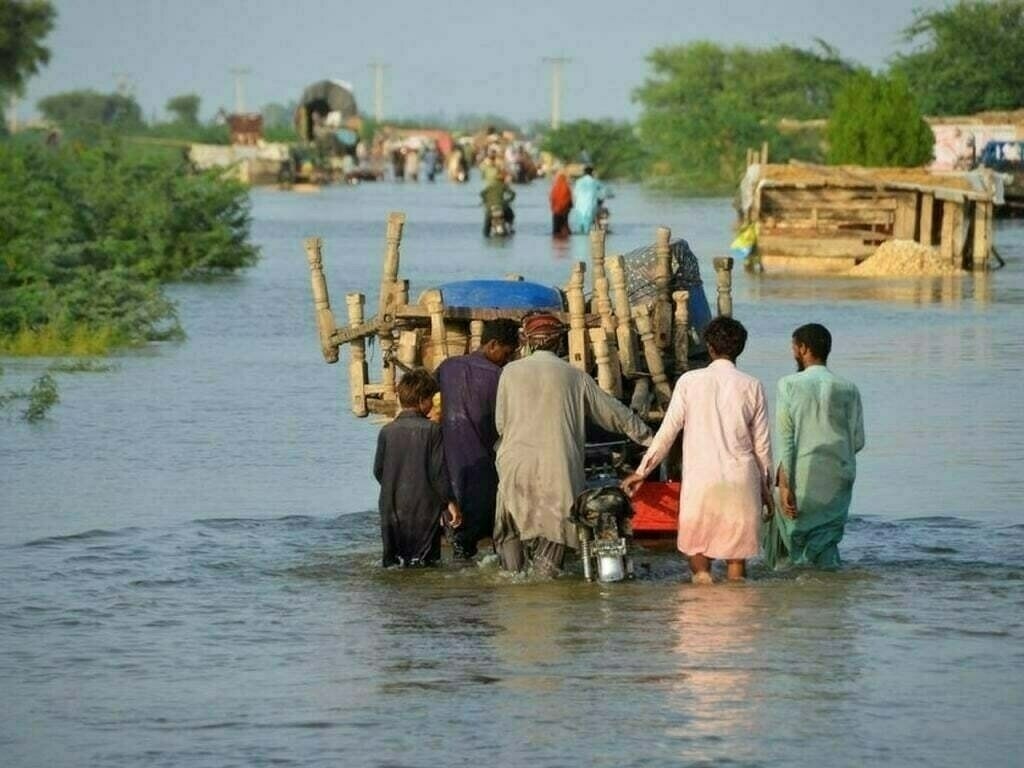
EDITORIAL: The ongoing monsoon season has already claimed over 265 lives since June, and the worst may not be over. Meanwhile, a recent study published in the leading scientific journal Nature warns that Pakistan is likely to face more frequent and severe floods in the years ahead. This, the authors argue, may become the “new normal” — driven by both extreme rainfall events and human development encroaching on natural floodplains.
Monsoon-related flooding has increased in intensity, frequency, and unpredictability during the recent years. Urban centres, rural communities, and agricultural lands alike have suffered heavy losses, with the poorest hit the hardest, as seen during the unprecedented 2022 floods that submerged a third of the country and killed over 1,700 people. Some of the worst-hit areas in rural Sindh have yet to fully recover from that devastating event.
The Nature study calls the 2022 floods a “forewarning of elevated future flood risks.” Following a multiyear drought, pre-monsoon rainfall that year was 111 percent higher than the long-term average (1951–2021), increasing soil moisture by 30 percent across the Indus Basin floodplains. The result: river water levels surpassed even those recorded during the catastrophic floods of 2010 and 2015.
To mitigate these risks, the study makes three critical recommendations: restore natural floodplains, improve drainage infrastructure, and relocate populations living in high-risk zones. All three require long-term vision and political will — not a strong strength point of our policymakers.
Restoring floodplains is essential. Years of unregulated construction and encroachment have blocked natural rainwater paths and diminished the land’s capacity to absorb floodwaters. Allowing rivers space to overflow unhindered would reduce disaster risk and restore ecological balance.
Equally urgent is the need for modernising our urban drainage systems. Almost all of our cities rely on outdated, inadequate, and poorly maintained infrastructure that cannot handle heavy downpours. Provincial governments (local governments either do not exist or the ones that do are powerless) must invest in durable drainage solutions, both in urban and rural areas.
Nature-based solutions like rain gardens, already operational in parts of Lahore, should be expanded nationwide to reduce surface runoff and improve groundwater recharge. The most difficult yet necessary task is relocating vulnerable populations from flood-prone areas along riverbanks.
This needs to be done with proper planning, offering affected families with dependable alternative housing, employment opportunities, and essential services in safer areas. Conducted carefully, relocation can save lives and reduce the long-term costs of repeated disaster response.
Needless to say, climate change is no longer a distant threat, it is already upon us. With rising temperatures, shrinking glaciers, and what the study calls the “compounding effects of rain-on-snow,” Pakistan must shift from reactive crisis management to proactive planning. Flooding may become the new normal, but devastation and loss must not. The time to act is now.
Copyright Business Recorder, 2025

























Comments
Comments are closed for this article.