


India, UK trade deal signals Modi’s priorities as New Delhi eyes EU, US pacts
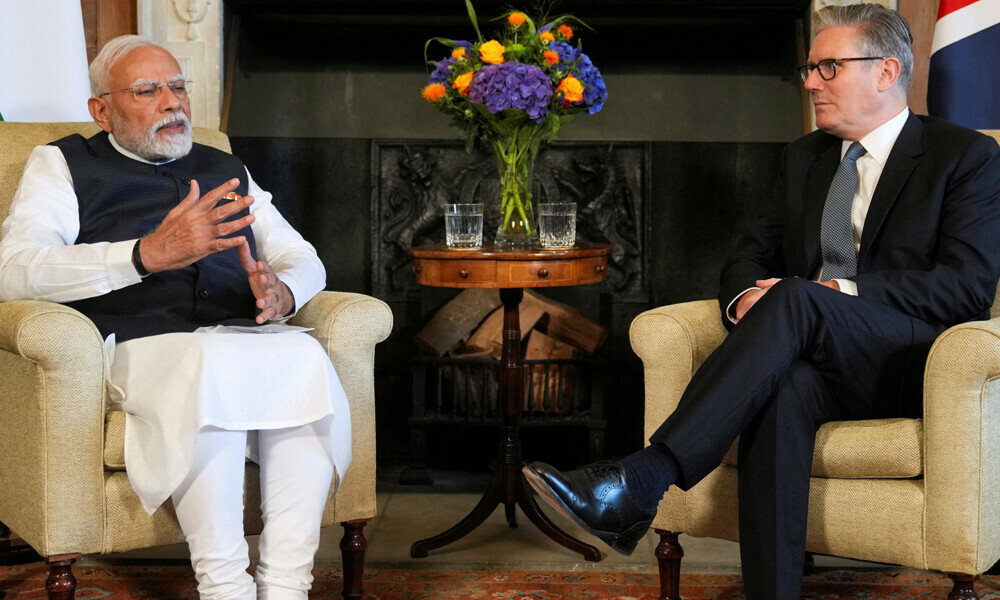

NEW DELHI: India’s trade deal with Britain is a sign of New Delhi’s new gradual shift to opening up its markets while shielding crucial sectors from competition and could be its template for future agreements, government officials and analysts said on Friday.
Signed on Thursday and hailed by Prime Minister Narendra Modi as “a blueprint for our shared prosperity”, the deal with the UK represents India’s biggest ever strategic partnership with an advanced economy.
It comes at a time rising global trade tensions and at a pivotal moment for India’s historically protectionist trade strategy, as the Asian giant looks to strike similar deals with partners including the EU, U.S., and New Zealand.
Under the pact, India notably agreed to cut tariffs on imported British vehicles, opening up competition for a domestic industry that makes up nearly 7% of the Indian economy.
“This is a policy shift, especially as India has long used high tariffs to protect domestic manufacturers,” Ajay Srivastava, founder of Global Trade Research Initiative and a former Indian trade negotiator, told Reuters.
India’s Modi and UK PM Starmer ink trade deal
The easing of its protectionist stance also applies to government procurement and pharmaceuticals and will likely be replicated in deals with Brussels and Washington, he added.
But it remains a cautious shift.
Under the UK deal, auto imports will be capped under a quota system to shield local manufacturers, and tariff reductions will be gradual. India has committed to reducing auto tariffs from over 100% to 10% over 15 years, within an annual import quota starting at 10,000 units and rising to 19,000 in year five.
Tariff reductions on whisky and other goods will also be phased over several years to allow domestic industries to adjust.
Red lines
India has stuck to its red lines in the deal, making no concessions on agricultural items such as apples and walnuts or dairy products including cheese and whey.
“There is no question of opening up the agriculture or dairy sector in any trade negotiation — be it with the EU, Australia, or even the U.S.,” a senior Indian official said.
India, US interim trade deal prospects dim ahead of tariff deadline, sources say
The calibrated strategy aims to leverage trade for economic growth, the official said, but the government will continue to shield millions of Indians dependent upon subsistence farming and low-margin work.
Indian farmers are eyeing broadened access to the UK’s $37.5 billion agriculture market under the deal. And Indian exporters will benefit from zero tariffs on goods including textiles, footwear, gems, furniture, auto parts, machinery, and chemicals.
“With zero tariffs, India’s garment exports to the UK could double in three years,” said N. Thirukkumaran, general secretary of the Tiruppur Exporters Association.
“This also paves the way for the EU agreement, which could bring even bigger gains,” he added.
But the strategy could face a major test in negotiations with U.S. President Donald Trump’s administration, which has used the threat of steep tariffs to pressure trading partners into making concessions.
Trade Minister Piyush Goyal told Reuters on Thursday that India is also hopeful of reaching a trade agreement with Washington that includes “special and preferred treatment”.
But the U.S. is pushing for greater access to India’s agricultural and dairy markets.




















Comments
Comments are closed for this article.