


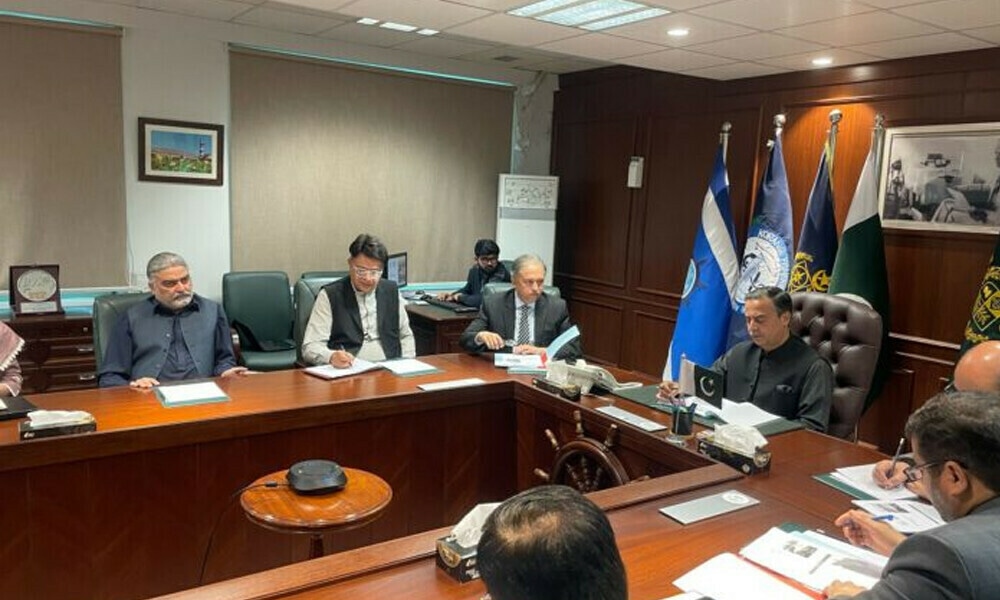

KARACHI: Federal Minister Muhammad Junaid Anwar Chaudhry has issued a stark warning over the growing threat of marine pollution, stressing its far-reaching impacts on Pakistan’s blue economy, climate, biodiversity, and public health.
Chairing the fifth meeting of the Marine Pollution Control Board here, the first in 15 years, the minister emphasized that unchecked pollution is not only degrading marine life and coastal ecosystems but also undermining fisheries, tourism, and the livelihoods of coastal communities. Marine Pollution Control Board works under the Maritime Ministry.
The high-level meeting was attended by representatives from all relevant ministries, departments, and organizations. Minister Chaudhry took strong notice of the board’s prolonged inactivity and directed that its meetings now be held on a regular basis.
Coastal communities: Impact of climate change highlighting
“Land-based pollution, particularly the discharge of untreated sewage and solid waste, accounts for nearly 90 percent of marine pollution. If targeted effectively, this can be reduced significantly,” the minister stated. He highlighted the cascading effects of marine degradation, including contaminated seafood, economic losses, increased coastal erosion, and damage to harbor infrastructure, and the potential extinction or migration of marine species.
In response to the worsening crisis, the minister formed two committees to accelerate progress on key wastewater treatment initiatives. The first will focus on the long-delayed Sewage Treatment Plant-III (STP-III), and the second will address issues with the Combined Effluent Treatment Plant (CETP), designed to handle industrial wastewater. Both committees are expected to submit comprehensive reports to the board within 20 days.
During the session, officials revealed that Karachi generates over 472 million gallons of sewage daily, including nearly 100 million gallons of industrial effluent, which is largely discharged untreated into the Lyari and Malir rivers and eventually into the Arabian Sea. The city’s stormwater drains also carry significant quantities of solid waste, including plastics, directly into coastal waters.
To counter this, the board discussed various mitigation strategies such as installing nets on stormwater drains, fencing riverbanks, deploying trash removal systems in harbors, and expediting the completion of treatment facilities in critical areas like Manora, Baba Bhit, and Kalri and Phitti nullah catchment zones.
The minister also called for stronger enforcement of environmental laws. He proposed invoking strict penalties under the Pakistan Environmental Protection Act and the Merchant Shipping Ordinance against polluting vessels and industries. He further urged for empowering the Sindh Environmental Protection Agency (SEPA) with enhanced operational authority to implement environmental safeguards more effectively.
The meeting additionally addressed sea-based sources of pollution — estimated to contribute 10 percent — including ballast water discharge, ship breaking activities, fishing operations, and offshore drilling. The Karachi Port Trust and other maritime authorities were urged to enforce regulations stringently to curb these practices.
Copyright Business Recorder, 2025























Comments
Comments are closed for this article.