


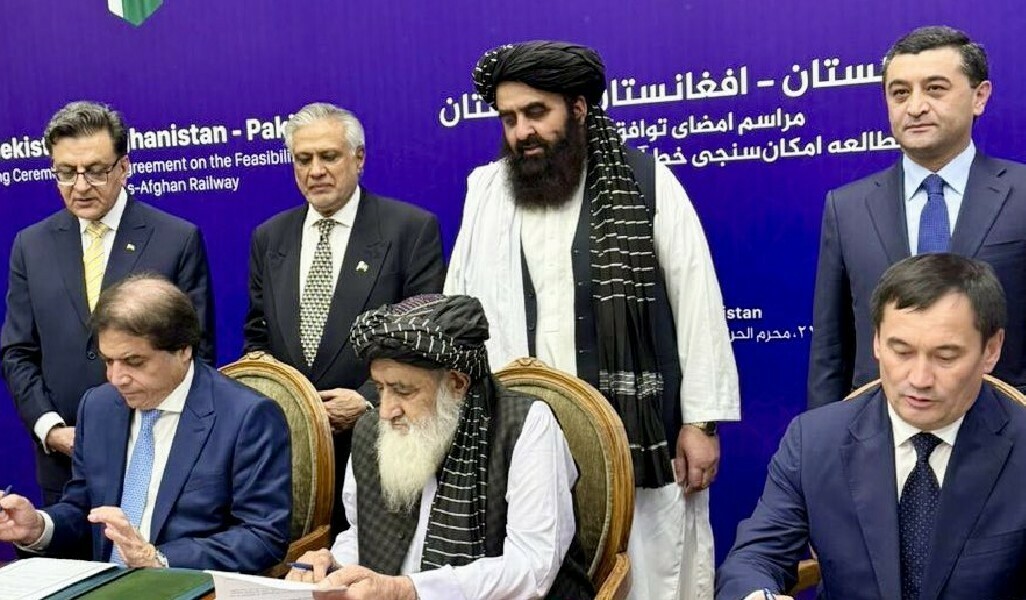

Pakistan, Afghanistan, and Uzbekistan on Thursday signed a framework agreement for the joint feasibility study of the Naibabad-Kharlachi rail link, marking a significant step forward in the Uzbekistan-Afghanistan-Pakistan (UAP) Railway Corridor project.
Deputy Prime Minister and Foreign Minister Senator Mohammad Ishaq Dar represented Pakistan at the signing ceremony held in Kabul.
FM Dar to visit Kabul today to sign feasibility framework of tri-nation rail project
He was accompanied by a high-level delegation including the Minister for Railways, the Special Representative for Afghanistan, and senior officials from the Ministry of Railways.
In a post on X, Dar congratulated the governments and peoples of the three countries, describing the UAP Railway Corridor as a “major milestone in advancing regional connectivity and economic integration.”
He said the corridor would connect Central Asian countries to Pakistani seaports through Afghanistan, boosting trade and transit across the region.
Dar also thanked Uzbekistan’s Foreign Minister Bakhtiyor Saidov and Afghanistan’s Acting Foreign Minister Amir Khan Muttaqi for their “support and commitment” during the negotiation process.
“The signing of today’s agreement is a result of the leadership and commitment of the last PDM Government (2022-23), under Prime Minister Shehbaz Sharif, when I was tasked as Finance Minister to lead this effort with our brotherly countries,” Dar added.
Inter-regional rail track finalized to connect Pak, Afghanistan, Uzbekistan
On the sidelines of the visit, the Deputy Prime Minister/Foreign Minister met with Acting Afghan Foreign Minister Amir Khan Muttaqi.
According to the Foreign Office, both sides called for strengthened efforts to maintain momentum in bilateral ties and expand cooperation in trade, transit, and security.
They also agreed to remain engaged to unlock the full potential of regional economic development, including through the realisation of trans-regional connectivity projects like the UAP Railway Corridor.


























Comments
Comments are closed for this article.