



Japanese rubber futures dipped on Tuesday, snapping a five-day winning streak, as easing rainfall in top producer Thailand normalised rubber tapping activity, while concerns over China’s electric vehicle demand weighed on sentiment.
The Osaka Exchange (OSE) rubber contract for December delivery ended daytime trade down 0.7 yen, or 0.22%, at 317 yen ($2.15) per kg.
The rubber contract on the Shanghai Futures Exchange (SHFE) for September delivery rose 90 yuan, or 0.63%, to 14,395 yuan ($2,006.50) per metric ton.
The most active August butadiene rubber contract on the SHFE fell 50 yuan, or 0.43%, to 11,535 yuan ($1,607.84) per metric ton.
Thailand’s meteorological agency warned of heavy rains and accumulations that may cause flash floods and overflows from July 19-21.
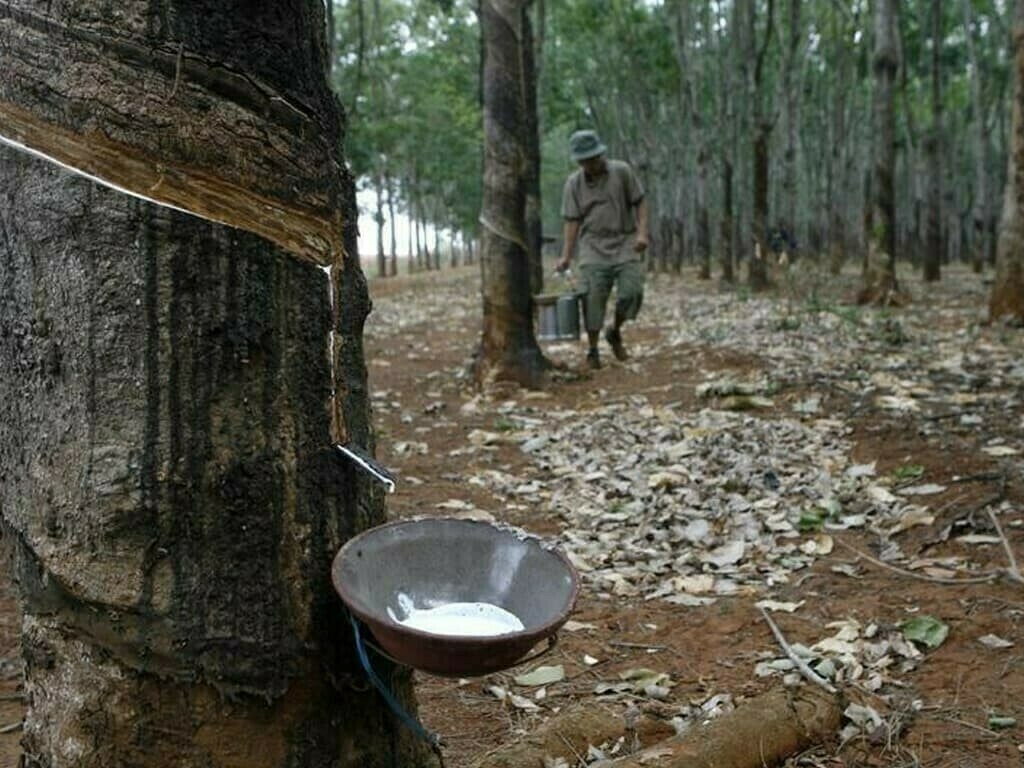
Despite this, rain in Thailand has weakened in line with seasonality, allowing rubber tapping activity to return to normal, said Chinese financial information site Tonghuashun Information.
Rubber crops usually undergo a season of low production from February to May, before a peak harvesting period that lasts until September.
Japanese rubber futures firm on weather woes
Global sales of electric vehicles jumped 24% in June, with sales in China up 28% from the same month last year to 1.11 million vehicles.
However, reports of a possible slowdown in China due to some cities running out of subsidies continued to weigh.
sales could influence the intensity of automobile manufacturing, which involves using rubber-made tyres.
Elsewhere, oil prices fell on U.S. President Donald Trump’s pressure on Russia to end the Ukraine war.
Natural rubber often takes direction from oil prices as it competes for market share with synthetic rubber, which is made from crude oil.
The front-month rubber contract on Singapore Exchange’s SICOM platform for August delivery last traded at 166 U.S. cents per kg, up 0.5%.


























Comments
Comments are closed for this article.