


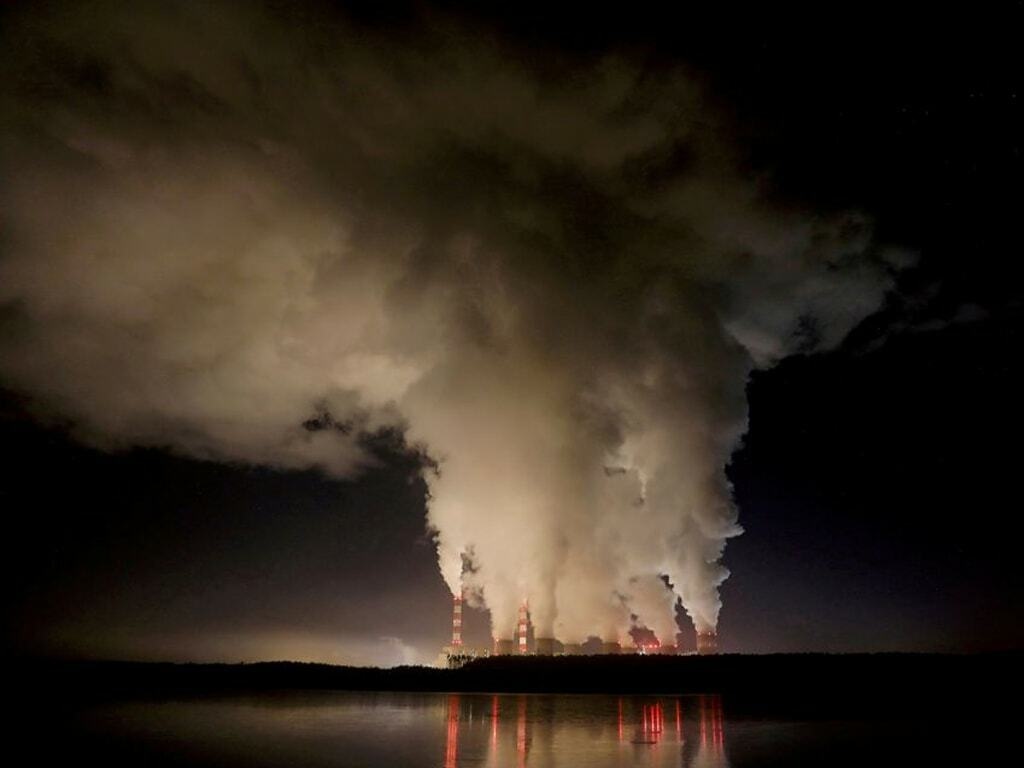

FRANKFURT: Climate disasters such as droughts, wildfires, floods and storms could slash up to five percent off the eurozone’s GDP by 2030, economists warned Wednesday in an ECB blog post. Under a severe scenario, the 20-member eurozone would suffer an economic hit not only from a series of natural hazards at home but also those abroad that would hit its supply chains.
The total shock could be “a downturn similar in magnitude to the economic impact of the Global Financial Crisis”, the blog post said, warning that climate change was no longer a theoretical risk but “an imminent danger”.
The figure comes from modelling by the Network for Greening the Financial System (NFGS), a global coalition of over 140 central banks and financial regulators that promotes the management of climate risk in the financial sector.
The scenario is not billed as a forecast but a plausible warning of what could happen within the next five years, with the modelling including weather events that could be expected once every 50 years.
Under the most severe scenario, dubbed “Disasters and Policy Stagnation,” Europe would face back-to-back waves of extreme heat, droughts and wildfires starting in 2026, as well as destructive floods and storms.
Under a more optimistic path labelled “Highway to Paris” — a reference to the 2015 Paris Agreement, from which President Donald Trump withdrew the United States in January — Europe would be able to absorb transition costs and suffer no hit to growth. Supply chain disruptions could boost inflation and crimp growth, the blog post said, while extreme heat and disasters could directly impact workers, property and infrastructure.
























Comments
Comments are closed for this article.