


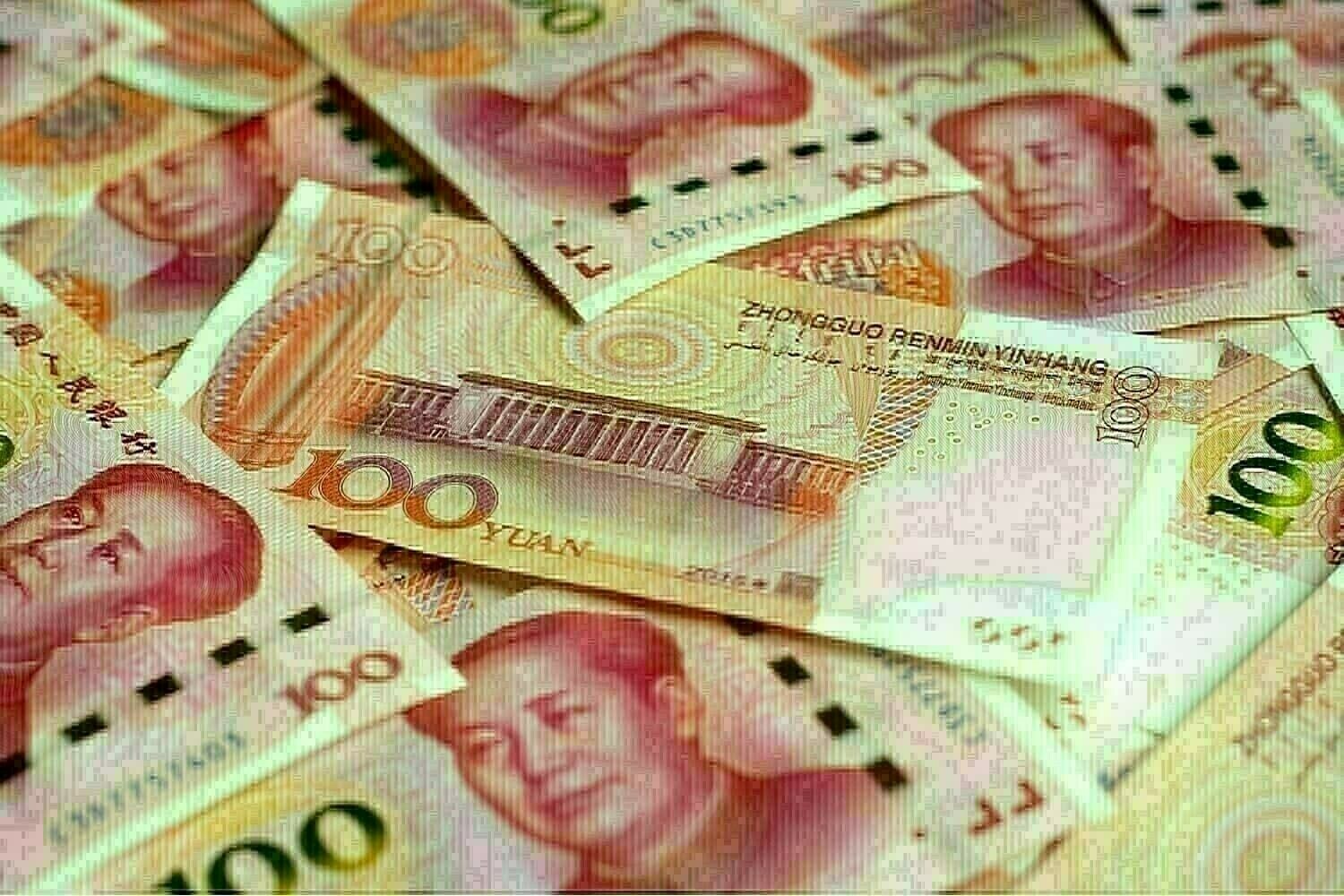

HONG KONG: China’s yuan held near a two-week low against the US dollar on Wednesday as US President Donald Trump’s renewed tariff threats and persistent deflation at home checked sentiment.
Trump said overnight he would impose a 50% tariff on imported copper and soon introduce long-threatened levies on semiconductors and pharmaceuticals, broadening a trade war that has rattled global markets.
On top of that, China’s producer deflation deepened to its worst level in almost two years in June, piling pressure on policymakers to roll out more support measures.
By 03:02 GMT, the yuan was 0.03% lower at 7.1798 to the dollar, hovering near the weakest level since June 23.
The offshore counterpart traded at 7.184 yuan per dollar , down about 0.04%.
“There are still quite large uncertainties around US policies and their implication on USD, and the PBOC could be monitoring those external conditions closely,” said Xiaojia Zhi, chief China economist at Credit Agricole.
Zhi added that the yuan lacks strong upward catalysts given the still-wide yuan-dollar rate spread, flush local currency liquidity and soft Chinese economic growth.
Chinese businesses and investors are also primed for the yuan to stay steady for now and eventually depreciate as US trade tensions drag on, and a string of measures and hints from monetary authorities suggest they may be on the money.
Prior to the market opening, the People’s Bank of China set the midpoint rate at 7.1541 per dollar, 265 pips firmer than a Reuters’ estimate, while hovering near levels last seen in November 2024.
The spot yuan is allowed to trade 2% either side of the fixed midpoint each day. Based on Wednesday’s official guidance, the yuan is allowed to drop as far as 7.2972.
The Chinese currency has strengthened 1.7% this year against a broadly weaker dollar, as uncertainties over Trump’s tariff policies have stoked investor concerns about the US economic outlook and dented confidence in the greenback.
Elsewhere, the Hong Kong Interbank Offered Rate (HIBOR) for offshore yuan dropped to 1.85409% on Wednesday, which is historically the lowest level since they began tracking this data.

























Comments
Comments are closed for this article.