


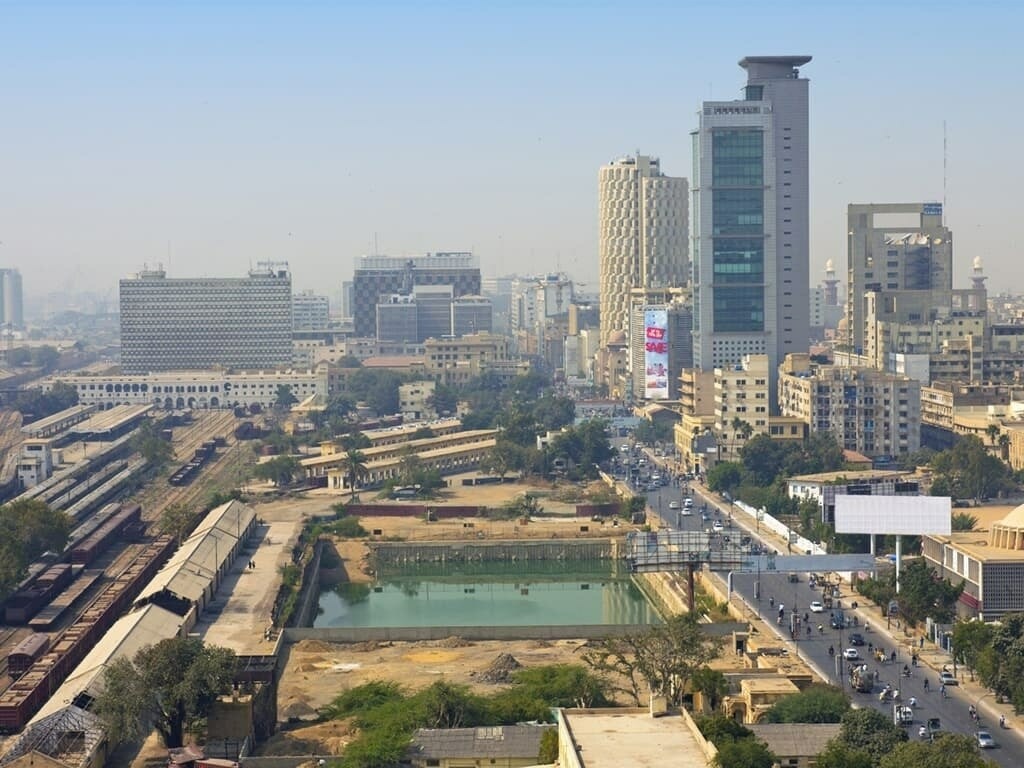
Karachi appears to be Pakistan’s orphaned child. Once the country’s capital, it now holds the dubious distinction of being among the most unliveable cities in the world.
Despite contributing over 20% to Pakistan’s GDP and hosting around 10% of the nation’s population, Karachi struggles significantly to complete critical projects like the BRT and K-4 water supply schemes. Videos highlighting its crumbling infrastructure became memes during the recent India-Pakistan clash, which speaks volumes.
For decades, Karachi has absorbed a continuous influx of migrants from various regions of Pakistan, expanding rapidly and without adequate planning, thus becoming a hub for crime and unrest. Despite these challenges, the city has remained Pakistan’s economic backbone, functioning as the nation’s industrial centre and sole significant link to the global supply chain for seven decades.
In short, Karachi has the potential to pull Pakistan out of its financial difficulties with minimal effort—provided it receives proper attention and prioritization. Instead, it consistently receives minimal support. Political parties routinely stage protests against the federal government for neglecting Karachi, yet minor changes.
Consider the energy sector, for instance. Karachi hosts the country’s only privatized power utility, K-Electric (KE). According to recent communications, KE has become the most improved DISCO since 2009 regarding transmission and distribution losses, reducing its aggregated technical and commercial losses from a staggering 43.2% to approximately 20.3% by 2024. Within Karachi alone, the exempted feeder network increased dramatically from a mere 6.6% to 70%. These achievements, supported by a complete management turnaround, have gained global recognition, including a Harvard Business School case study and positive World Bank reports.
However, despite these notable improvements, KE faced significant setbacks, such as delays in the Multi-Year Tariff determination, hindering its financial planning. The private utility, intended as a model for other DISCO privatizations, was inexplicably left in limbo, ultimately punishing Karachi residents more than the company itself.
Another example is the denial of Fuel Cost Adjustment (FCA) relief—a substantial amount of Rs4.69 per unit—to KE’s customers in a recent NEPRA hearing. The justification given was to maintain a uniform tariff across the country, exemplifying bureaucratic rigidity and the shortsighted decisions of temporary ministers.
Karachi is also burdened with inefficiencies from other DISCOs. For nearly two years, Karachi’s consumers have borne the Power Holding Limited (PHL) surcharge—debt repayment they did not contribute to or benefit from. Now, due to a new banking agreement, this surcharge is extended for another six years, meaning 72 more months of inflated electricity bills for Karachi residents.
Even if the government manages to find buyers for its other DISCOs—a considerable challenge—the current treatment of KE sends a negative message. Potential buyers witnessing such hurdles and neglect may reconsider their interest, fearing similar treatment.
Karachi deserves better.




















Comments
Comments are closed for this article.