


PUASA holds meeting to address critical funding & policy challenges
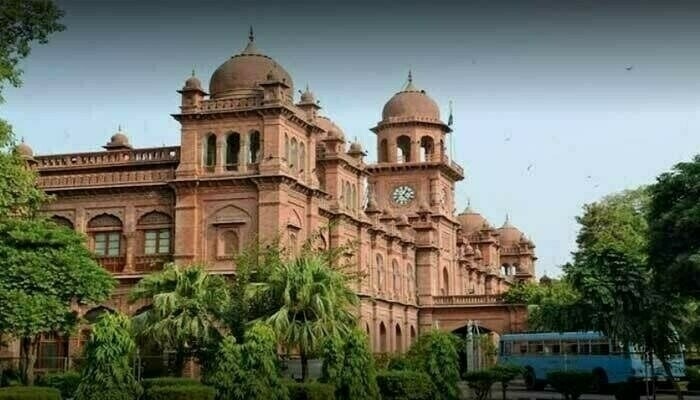

LAHORE: The Punjab University Academic Staff Association (PUASA) held an emergency meeting of its Executive Council on Tuesday at the University Club Committee Room to address critical funding and policy challenges facing higher education in Pakistan.
Chaired by PUASA President Prof Dr Amjad Abbas Khan Magsi, the council expressed grave concerns over the inadequate financial support for public universities and the potential withdrawal of tax benefits for educators.
The meeting unanimously passed a resolution urging the Punjab government to immediately revise its allocation of recurring grants for public sector universities, citing severe under funding that threatens academic and research activities.
The council highlighted that despite soaring inflation and expanding institutional needs, the federal government has frozen the higher education recurring grant at Rs 65 billion since 2018. According to IMF data, the Wholesale Price Index (WPI) has surged by 98 percent between the years 2017–18 and 2024–25, meaning the real value of the grant has effectively halved. Adjusted for inflation, the sector should have received at least Rs 130 billion this year to maintain its operational capacity.
A stark disparity was also noted in provincial allocations. While Sindh has earmarked Rs 42 billion in recurring grants for its 32 public universities, Punjab has allocated only Rs 18 billion for its 51 institutions. This gap becomes even more pronounced when comparing flagship universities: Punjab University, with over 54,000 students, has been granted a mere Rs 780 million, whereas the University of Karachi, with around 45,000 students, received Rs 3.5 billion. Such inequities, PUASA argued, hinder Punjab’s ability to sustain quality education and research.
Dr Magsi emphasized that recurring grants are vital for covering essential operational and research expenses, separate from development funding. The current allocations, he warned, jeopardize the functioning of universities and their global competitiveness. Punjab University, ranked among the top 5.2 percent of universities worldwide by the Centre for World University Rankings (CWUR), risks losing its standing without sustained investment in faculty, infrastructure, and student support systems.
The association also condemned the federal government’s proposal to revoke the 25 percent income tax exemption for teachers and researchers, cautioning that this would stifle innovation and knowledge production—key drivers of national progress. Furthermore, PUASA criticized the Punjab government for failing to provide the Disparity Reduction Allowance (DRA) to university and government employees, mirroring federal neglect and exacerbating financial strain on educators amid rising living costs.
“University teachers are among the nation’s most educated and skilled assets,” Dr Magsi stated. “Their economic marginalization not only weakens the academic environment but also erodes Pakistan’s intellectual and cultural growth.”
PUASA called on both federal and provincial authorities to urgently revise higher education budgets, retain tax incentives for educators, implement the DRA in Punjab, and adopt a forward-looking approach to align with global advancements, particularly in artificial intelligence and technology-driven education. The association warned that without immediate corrective measures, Pakistan’s higher education sector faces irreversible decline, undermining the country’s future development.
Copyright Business Recorder, 2025




















Comments
Comments are closed for this article.