


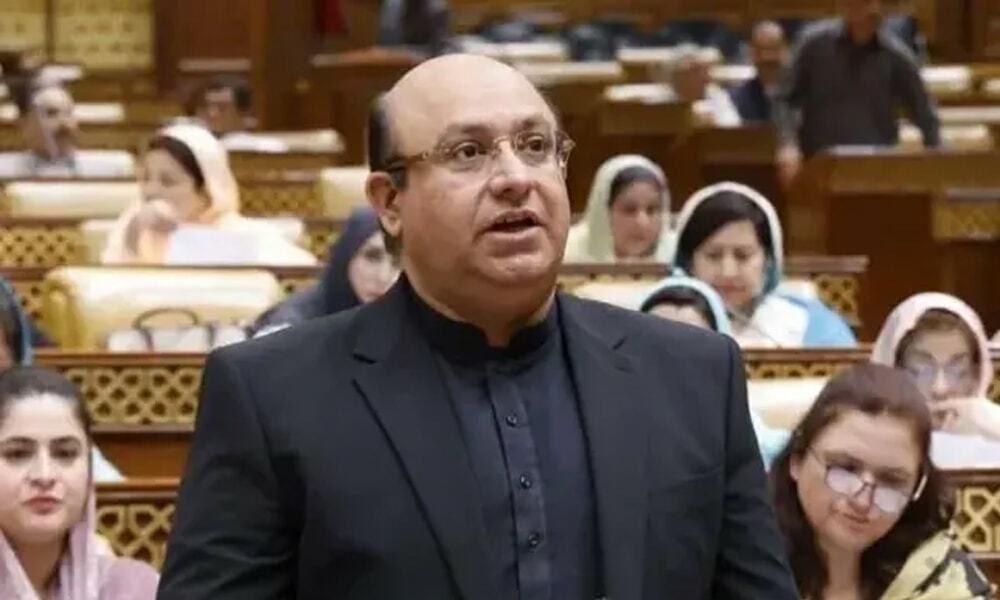
EDITORIAL: Punjab Finance Minister Mian Mujtaba Shujaur Rehman has presented a 5.33 trillion-rupees budget with a 740 billion-rupees surplus for next fiscal year. The surplus is 110.4 billion rupees higher than the amount pledged to the federal government/International Monetary Fund (IMF) as the federal budget earmarked 1217 billion-rupees provincial surplus with Punjab’s share of 51.74 percent amounting to 629.6 billion rupees.
It may be argued that the addition is to perhaps take account of the federal government traditionally overstating the collections under the divisible pool (understated by 126 billion rupees in 2024-25) or perhaps to provide the federal government/IMF with a comfort level that was severely compromised with the Sindh budget showing a deficit of 38 billion rupees next fiscal year (with its share of the provincial surplus estimated at 298 billion rupees). The Punjab budget anticipates Rs 4.062 trillion in federal transfers.
What must be a source of serious concern is that in the outgoing fiscal year there was a shortfall of 50.5 billion rupees in provincial tax collections from what was budgeted and realised, nearly 11 percent, which may compromise the capacity of the Punjab Revenue Department to generate 524.7 billion rupees next year. Non-tax revenue was estimated at 493.78 billion rupees in the revised estimates of the outgoing year while it is projected to generate only 303.44 billion rupees next fiscal year.
And what should be even more disturbing is that the budget for 2025-26 envisages a reduction in revenue (excluding federal transfers) from 853.5 billion rupees in the revised estimates to 798.6 billion rupees next year, or a decline of nearly 55 billion rupees.
Agriculture income tax, legislated earlier this year but with implementation to begin from 1 July 2025 effective from 1 January 2025, is budgeted to generate only 10.5 billion rupees in 2025-26. While the revenue from this source was budgeted at 3.5 billion rupees in 2024-25 with the revised estimates at 4 billion rupees, which makes the projected revenue from this source next fiscal year higher by an impressive 162.5 percent, yet the total is too low and one would be compelled to assume that the Punjab government expects resistance from the implementation of this tax (largely from parliamentarians across the aisle). In marked contrast, the Sindh government has budgeted 388 billion rupees from this source and one would hope that the Punjab government at least matches this amount in the first year of the implementation of this tax.
Urban immoveable property suffered a shortfall from what budgeted of 8 billion rupees (from 29 billion rupees to 21.96 billion rupees in the revised estimates) with the government projecting 32.54 billion rupees next fiscal year, which may not be achievable based on the past year’s performance.
The shortfall in sales tax on services — an indirect tax whose incidence on the poor is greater than on the rich — was 273.7 billion rupees less in the revised estimates of the outgoing year while the government has projected a rise to 333.5 billion rupees next fiscal year, or a rise of nearly 22 percent next year, which will fuel inflation in the province.
The pay rise incorporated in the budget may be largely responsible for the 57 billion rupees more budgeted for next year compared to the revised estimates of last year under employee-related expenses while sadly the pensioners were budgeted less and account for 22 billion rupees additional next year compared to the revised estimates of the outgoing year.
Where the Punjab far exceeded Sindh was in raising allocation for increasing the development budget for the year by a whopping 47 percent — from 842 billion rupees in the revised estimates of last year to 1240 billion rupees in 2025-26 though had he compared next year’s ADP (annual development plan) with the revised estimates the percentage rise would have been 11.9 percent.
However, the federal government had budgeted 2869 billion rupees under provincial ADPs and Punjab’s share (51.74 percent as per the National Finance Commission award) should have been higher at 1484 billion rupees or, in other words, it is 16.5 percent less than what was Punjab’s expected allocation in the federal budget.
Only time will tell whether the Punjab government like other provinces and the federal government will be able to successfully meet its budgetary targets, and if past precedents are anything to go by the chances of this are not really very optimistic.
Copyright Business Recorder, 2025




















Comments
Comments are closed for this article.