




Telecard Limited Company (PSX: TELE) was incorporated in Pakistan as a public limited company in 1992. The company along with its subsidiaries is engaged in the business of providing integrated telecommunication services which includes wireless telephony, long distance and international services and payphones.
Pattern of Shareholding
As of June 30, 2024, TELE has a total of 338.625 million shares outstanding which are held by 11,080 shareholders. General public has the majority stake of 58 percent in the company followed by joint stock companies holding 41.54 percent of TELE’s shares.
The remaining shares are held by other categories of shareholders.
Financial Performance (2019-24)
TELE’s topline followed an uphill journey over the period under consideration. However, its bottomline stayed in the negative zone until 2020. In the subsequent year, TELE posted net profit which strengthened in 2022. This was followed by a slump in net profit in 2023. In 2024, TELE’s bottomline posted a staggering rebound.
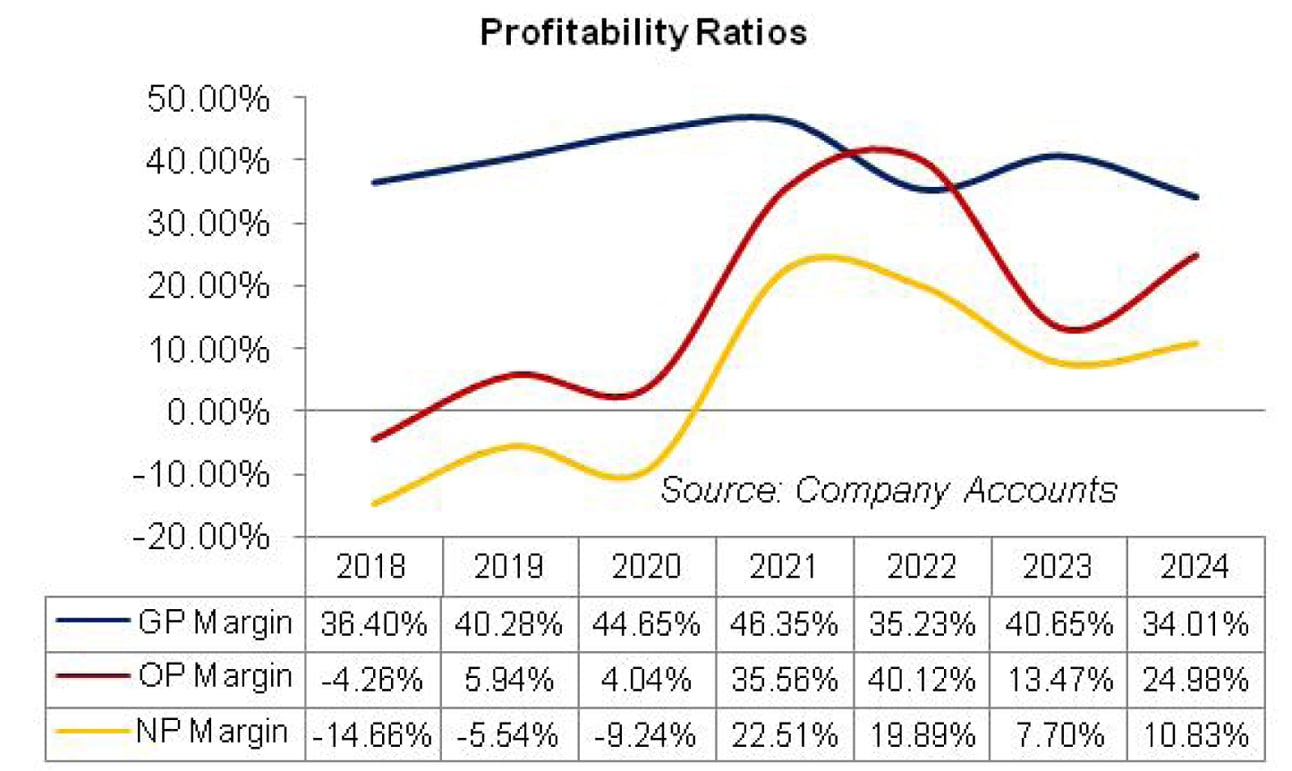
TELE’s margins portray an asymmetrical pattern over the period. Its gross margin which rode an upward journey until 2021 drastically fell in 2022 followed by a rebound in 2023. In 2024, gross margin drastically fell. Conversely, its operating margin which recovered from negative zone in 2019 dipped in 2020 followed by staggering growth for the next two years. In 2023, TELE’s operating margin posted a steep decline followed by an uptick in 2024.
TELE’s net margin which posted a positive figure in 2021 for the first time during the period under consideration started dropping thereafter until 2023. This was followed by an uptick in net margin in 2024 (see the graph of profitability ratios). The detailed performance review of the period under consideration is given below.
In 2019, the topline of TELE posted a tremendous year-on-year growth of 24.30 percent to clock in at Rs. 1091.18 million. This is attributable to a rebound in other revenue stream and Long Distance International (LDI) segment. Moreover, improved rates as well as favorable exchange rates also played their role in buttressing the topline. Cost of sales grew by 16.70 percent year-on-year in 2019 mainly on the back of network media charges.
Yet, TELE was able to register year-on-year growth of 37.58 percent in its gross profit in 2019 with GP margin climbing up from 36.40 percent in 2018 to 40.28 percent in 2019. Administrative and Distribution cost were 68.13 percent lesser than the last year level as the company booked loss allowance for Karachi relief rebate package and trade debts in 2018 besides writing off receivable on account of APC for USF in 2018.
TELE recorded other expense of Rs.101.32 million in 2019 versus other income of Rs.501.09 million in 2018. This was due to credit note issued to Supernet Limited as the full value of benefits envisaged in Inter operator agreement were not materialized and hence the amount booked in the previous years was reduced to reflect the value of benefits accrued to Supernet Limited. Moreover, unlike 2018, there was no reversal of loss allowance against WPS in 2019.
TELE recorded operating profit of Rs. 64.79 million in 2019 versus operating loss of Rs.37.42 million posted in 2018. Finance cost rose by 39.15 percent year-on-year on the back of higher discount rate and increased short-term financing. TELE’s gearing ratio ticked up from 34.57 percent in 2018 to 35.29 percent in 2019.
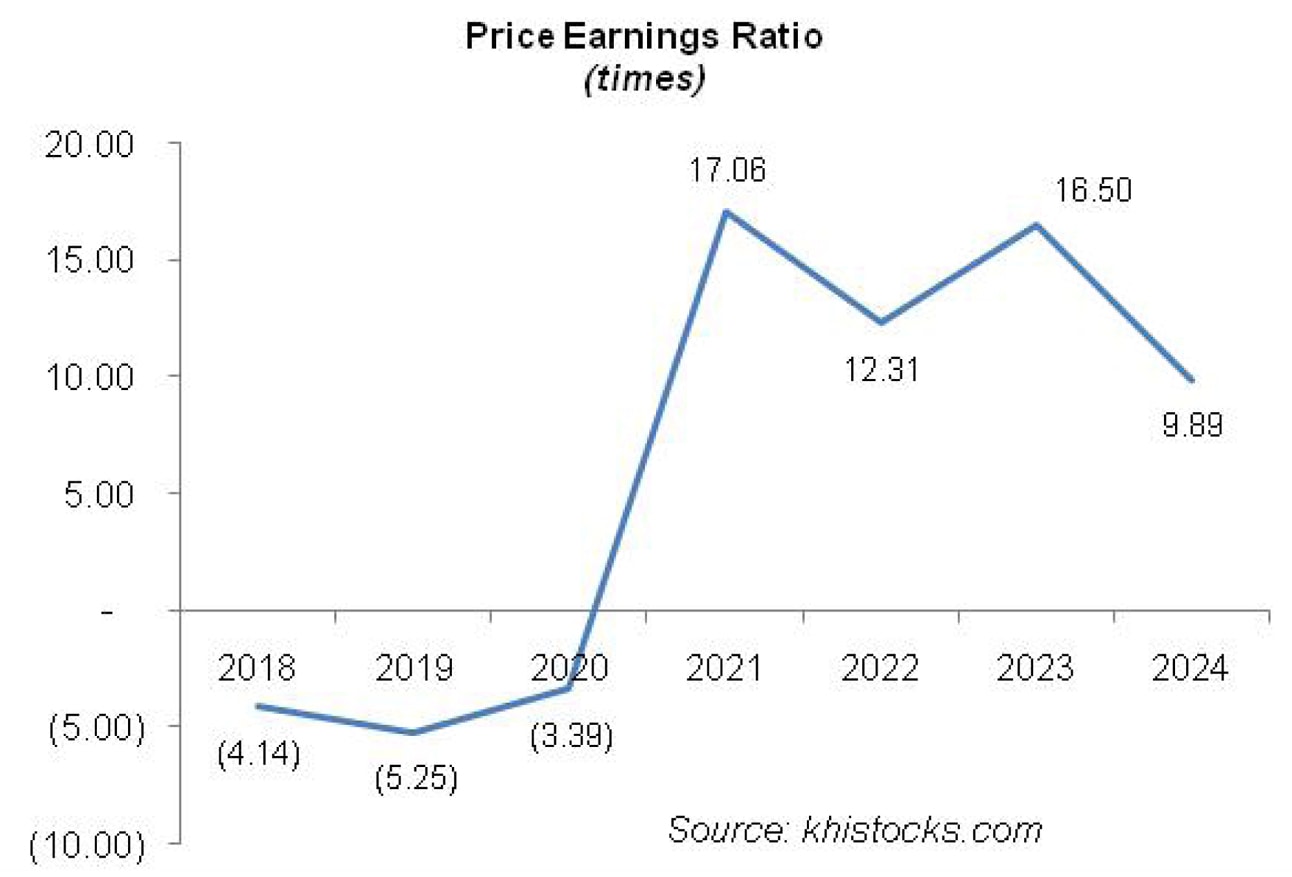
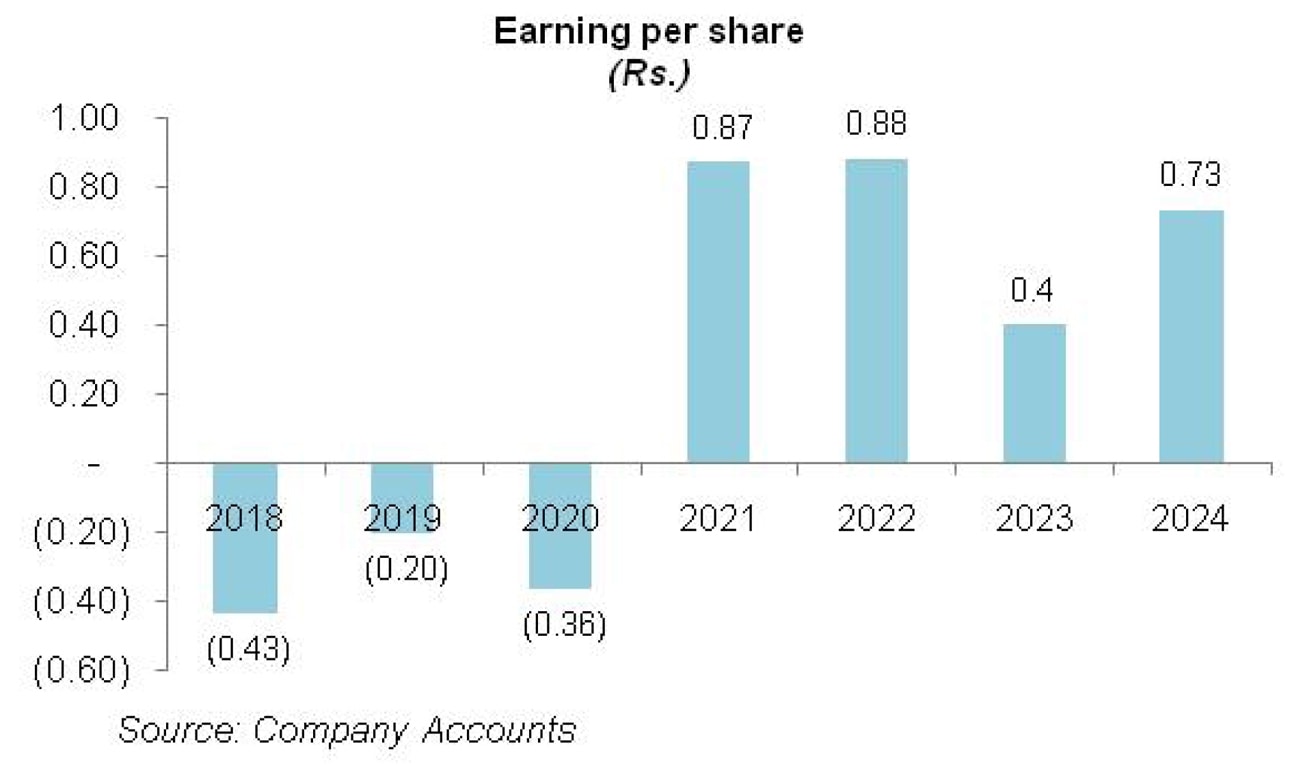
The company posted net loss worth Rs.60.469 million in 2019 as against net loss of Rs.128.687 million registered in 2018, signifying year-on-year drop of 53 percent. Loss per share clocked in at Rs. 0.2 in 2019 versus loss per share of Rs.0.43 recorded in 2018.
The subsequent years were comparatively slow for TELE in terms of revenue growth as its topline grew by 8.44 percent to clock in at Rs.1183.28 million and 2.57 percent to clock in at Rs. 1213.66 million respectively in 2020 and 2021. This was due to cutthroat competition in the telecom industry.
Tough competition not only put pressure on the service rates but also on the volume of service contracts. Cost of sales took a breather during these two years on the back of a drop in satellite bandwidth and communication charges. This buttressed the gross profit which posted growth of 20.19 percent and 6.48 percent respectively in 2020 and 2021.
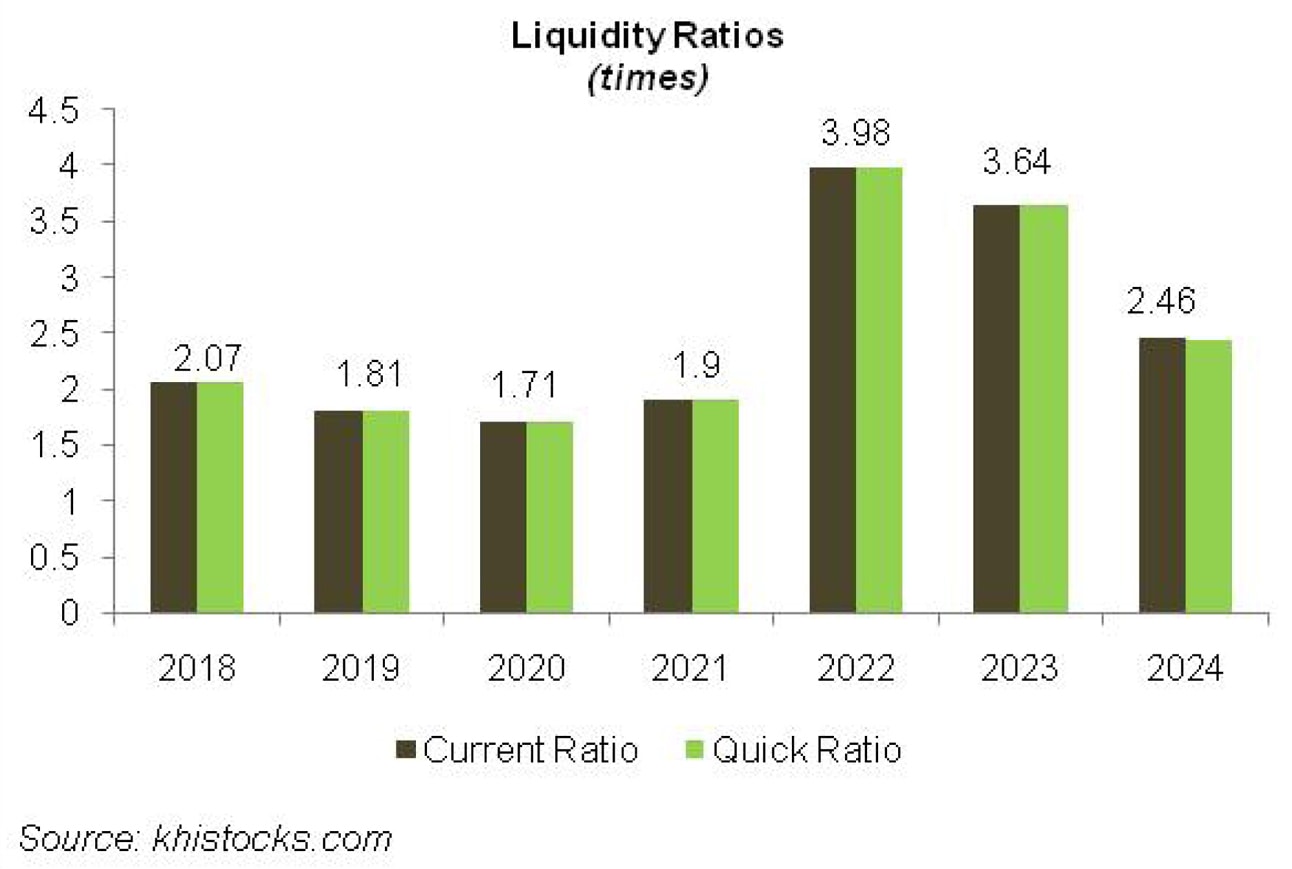
Administrative and distribution expense increased in both the years due to high payroll expense and rental expense. TELE enhanced its workforce from 124 employees in 2019 to 133 employees in 2021. The primary factors which enabled TELE to post net profit in 2021 as against a net loss in 2020 were handsome net other income of Rs.254.74 million recognized by the company in 2021 coupled with a drop in finance cost. Conversely, in 2020, the company recorded net other expense of Rs.148.82 million and 54.86 percent surge in finance cost.
Net other expense in 2020 was due to receivables from PTA against Access Promotion Contribution for Universal Service Fund (APC for USF) written off during the year. Moreover, the company also booked loss allowance against APC for USF from PTA in 2020. Conversely, in 2021, net other income posted by the company was the result of write off of provisions and liabilities that were no longer payable. In 2020, TELE’s operating profit plummeted by 26.21 percent with OP margin clocking in at 4 percent.
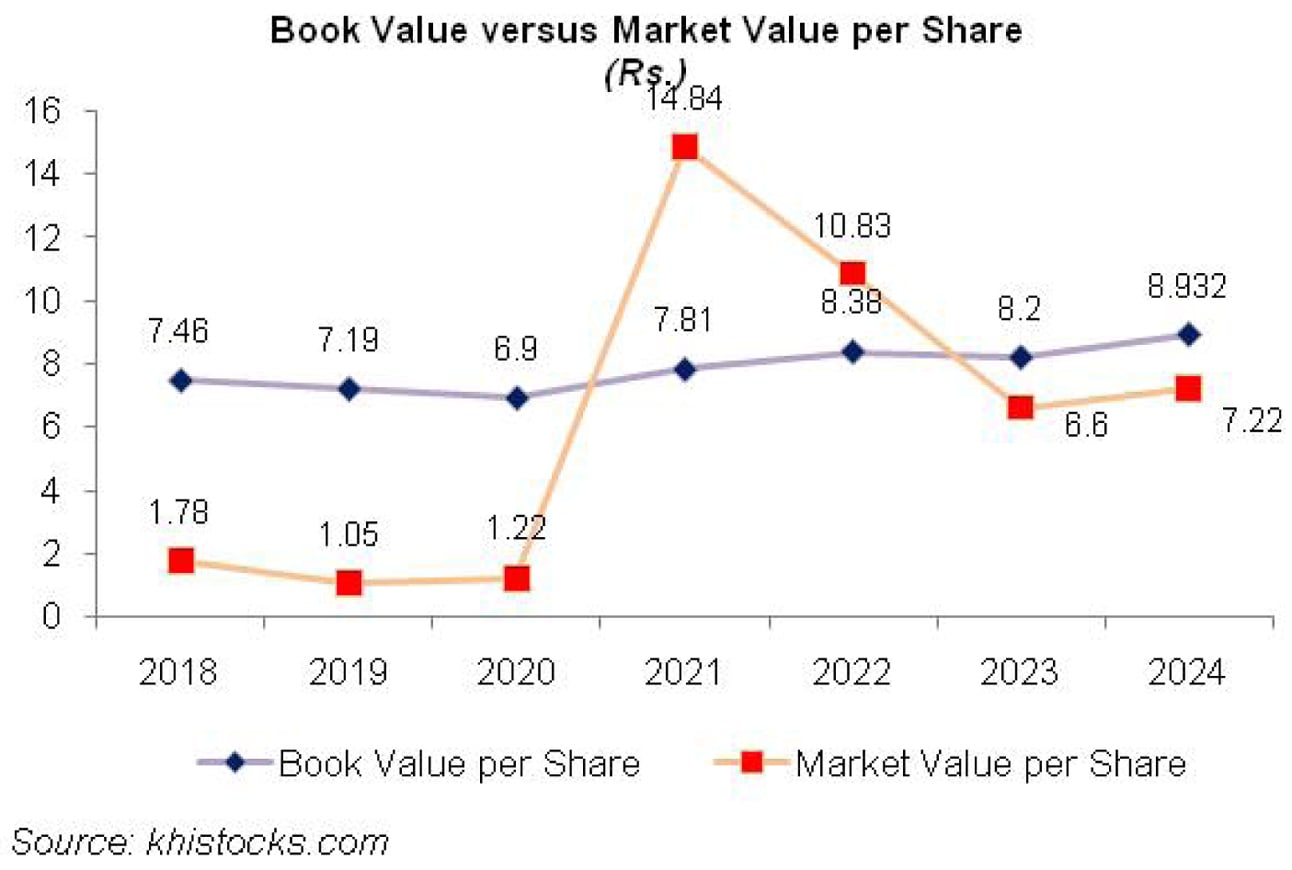
Conversely, in 2021, TELE’s operating profit mounted by 802.63 percent with OP margin climbing up to 35.56 percent. Discount rate dynamics played its role in increasing the finance cost in 2020 as discount rate was high during the first three quarters of 2020. Higher accumulated losses squeezed TELE’s equity and drove the gearing ratio up to 36.73 percent in 2020.
The company posted net loss of Rs. 109.288 million in 2020, up 80.73 percent year-on-year with loss per share of Rs.0.36. In 2021, TELE’s finance cost plunged by 42 percent year-on-year on account of monetary easing as well as reduced borrowings which along with lower accumulated losses drove down gearing ratio to 26.72 percent. TELE posted net profit of Rs. 273.188 million in 2021 with EPS of Rs.0.87 and NP margin of 22.5 percent. TELE had been making net losses since 2017 which upturned in 2021.
In 2022, TELE’s topline bagged 23.32 percent year-on-year growth to clock in at Rs.1496.74 million. Since the outspread of COVID-19, the dependence on E-commerce had increased. TELE and its subsidiaries took advantage of this opportunity and offered connectivity and beyond connectivity enterprise and business solutions.
The company spread its wings in support enhancement in broadband coverage, enterprise energy solutions, cyber and software security, roll out of digital infrastructure as well as connectivity solutions. High network media charges pushed up direct costs by 48.89 percent in 2022. This squeezed TELE’s gross profit by 6.27 percent year-on-year in 2022 with GP margin falling down to 35.23 percent. Operating expense grew by 11.17 percent year-on-year on the back of rising inflation and expansion of workforce to 137 employees.
Other income mounted by 97.07 percent year-on-year in 2022 on the back of gain on sale of long-term investment as TELE sold 8.8 million shares of Supernet Limited which resulted in capital gain of Rs.163.65 million. Moreover, the company also recorded gain on restructuring of TFCs. As a consequence, operating profit enhanced by 39.15 percent in 2022 with OP margin reaching its optimum level of 40.12 percent.
Finance cost which came under control in 2021 owing to monetary easing posted an uptick of 3.6 percent in 2022 on the back of multiple upward revisions in discount rate in 2022. Profit before tax grew by 46.15 percent year-on-year in 2022, however, due to higher tax expense on the back of impact of deferred taxation; net profit posted a paltry year-on-year growth of 8.97 percent to clock in at Rs.297.697 million with EPS of Rs.0.88 and NP margin of 19.89 percent.
TELE’s topline grew by 18.11 percent year-on-year in 2023 to clock in at Rs.1767.86 million. This was on the back of increased revenues from value added services. Value added services charges also spiked on the back of inflationary pressure which drove up direct cost by 8.23 percent in 2023.
However, TELE was able to record 36.29 percent higher gross profit in 2023 with GP margin mounting to 40.65 percent. 15.14 percent higher operating expense incurred in 2023 was the consequence of elevated payroll expense, allowance for ECL, vehicle running & maintenance charges and utility expense incurred during the year. The company incurred higher payroll expense despite the fact that it trimmed down its workforce to 126 employees in 2023.
Other income declined by 97.35 percent year-on-year in 2023 due to high base effect as the company recorded gain on sale of its stake in Supernet Limited and gain on the restructuring of TFCs in 2022. Operating profit tumbled by 60.33 percent year-on-year in 2023 with OP margin drastically falling down to 13.47 percent.
Finance cost mounted by 52.70 percent in 2023 on the back of higher discount rate. Net profit withered by 54.28 percent year-on-year in 2023 to clock in at Rs.136.12 million with EPS of Rs.0.4 and NP margin of 7.7 percent.
In 2024, TELE posted year-on-year growth of 29.80 percent in its topline which clocked in at Rs.2294.68 million. This was on account of improvement in revenues from value added services. The development of digital ecosystem of the country has produced an encouraging environment for IT companies to thrive.
The surge in network media charges during the year pushed direct cost up by 44.31 percent in 2024. This resulted in 8.61 percent uptick recorded in the TELE’s gross profit in 2024 with GP margin falling down to 34 percent. Operating expense escalated by 36 percent in 2024 on account of higher payroll expense, receivables written off and amount paid to service provider against additional service charges.
TELE recorded a massive other income of Rs.464.47 million in 2024, up 3395.95 percent year-on-year. This was the result of gain on sale of long-term investment as the company disposed off 51 percent of its shareholding in Supernet Limited to Hallmark Company Limited (HCL), another subsidiary of TELE.
As of June 30, 2024, TELE had a direct shareholding of 30.19 percent in Supernet Limited and 32.04 percent indirect shareholding by virtue of its holding in HCL. Operating profit rebounded by 140.70 percent in 2024 with OP margin climbing up to 24.98 percent. Finance cost dipped by 6.78 percent in 2024 due to considerable decline in outstanding borrowings.
Settlement of outstanding loans coupled with higher equity due to lower accumulated losses resulted in a gearing ratio of 17.67 percent in 2024 versus gearing ratio of 22.21 percent posted in 2023. TELE recorded net profit of Rs.248.40 million in 2024, up 82.49 percent year-on-year. This translated into EPS of Rs.0.73 and NP margin of 10.83 percent in 2024.
Recent Performance (9MFY25)
During the nine months of the ongoing fiscal year, TELE’s topline dipped by 15.82 percent to clock in at Rs.1518.54 million. This might be due to lower international revenue proceeds due to stability in the value of local currency. Cost of sales dipped by 11 percent during 9MFY25. This resulted in 25 percent thinner gross profit during the period with GP margin clocking in at 30.23 percent versus GP margin of 33.95 percent recorded in 9MFY24.
Operating expense dipped by 56.96 percent during the period seemingly due to high-base effect as the company wrote off receivables during 9MFY24. Other income also dwindled by 83.10 percent as the company recognized gain on sale of its shareholding in Supernet Limited in the previous year.
TELE recorded 47.11 percent drop in its operating profit in 9MFY25 with OP margin recorded at 11.30 percent versus OP margin of 18 percent posted in 9MFY24. Finance cost tapered off by 37.51 percent in 9MFY25 due to lower discount rate and lesser outstanding borrowings.
TELE’s net profit weakened by 68.20 percent to clock in at Rs.71.62 million in 9MFY25. This translated into EPS of Rs.0.21 in 9MFY25 versus EPS of Rs.0.67 posted in 9MFY24. NP margin fell from 12.49 percent in 9MFY24 to 4.72 percent in 9MFY25.
Future Outlook
The company is exploring new opportunities in the non-connectivity business such as enterprise resource planning and customer support solutions to diversify its revenues streams. TELE is also exploring new avenues in cyber security and alternate energy segments to enhance its revenues. However, sharp escalation in direct cost is diluting the company’s margins and profitability


























Comments
Comments are closed for this article.