


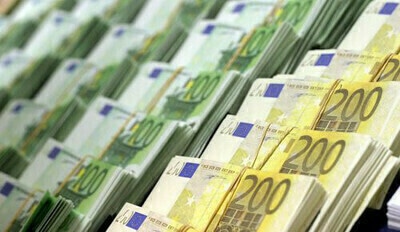

TOKYO/LONDON: The euro hit a one-month high against the US dollar on Monday after US President Donald Trump backed down from threatened 50% duties on European Union shipments from June 1, as the bloc asked for time to “reach a good deal”.
The dollar continued its decline against a broad spectrum of other currencies as Trump’s policy reversals, as well as the sweeping spending and tax-cut bill, turned investors away from US assets.
“The ‘Sell America’ theme, which obviously was the dominant theme back in April, is back on show,” said Ray Attrill, head of FX research at National Australia Bank.
“Markets have probably taken the view - and probably rightly so - that where we land eventually on a tariff situation between the US and the EU is not going to be at 50%, but how we get there is frankly anybody’s guess at the moment.”
The euro climbed as much as 0.55% to reach $1.1418 for the first time since April 29. It was last up 0.17% on the day at $1.1375, bringing gains for the year so far to 10%.
Much of the dollar’s decline in the past couple of months has been to the benefit of the euro, as investors have targeted a range of non-US markets.
The single currency could become a viable alternative to the dollar, the world’s reserve currency, if governments can strengthen the bloc’s financial and security architecture, European Central Bank President Christine Lagarde said on Monday.
“The ongoing changes create the opening for a ‘global euro moment,’” Lagarde said at a lecture in Berlin. “The euro will not gain influence by default - it will have to earn it.”
Sterling rose by 0.39% to its highest level since February 2022 and was last up 0.15% at $1.356.
The safe-haven yen and Swiss franc eased against a backdrop of improved investor sentiment. The dollar was last up 0.2% against the yen at 142.84, and was steady against the Swiss franc at 0.821 francs.
Trump announced his decision to delay EU tariffs until July 9 on Sunday after a call with European Commission President Ursula von der Leyen, who asked for more time to reach an agreement. July 9 is the end of the 90-day pause on Trump’s April 2 “Liberation Day” levies on the EU and many other trade partners.
The announcement, although encouraging for investors, is a stark reminder of how suddenly US trade policy can turn.
“Following Trump’s latest U-turn, we will, of course, have to wait and see what happens next. It is possible that a deal with the European Union will be reached by 9 July,” Commerzbank currency strategist Michael Pfister said.
“However, it is questionable what has changed in terms of the fundamental problems following a phone call. One thing should be clear after Friday’s announcement: the brief respite from tariffs that we enjoyed was only temporary.”
In a possible nod to fiscal worries among investors, Trump also said on Sunday that the spending and tax-cut bill is likely to see “significant” changes in the Senate.
The House of Representatives’ version of the bill is calculated to add about $3.8 trillion to the federal government’s $36.2 trillion in debt over the next decade, according to the Congressional Budget Office.
“What seems clear from the reconciliation bill...is that Trump and (Treasury Secretary Scott) Bessent have shifted tactics, swivelling hard from fiscal conservatism and reduced spending to an outright pro-growth policy stance,” said Chris Weston, head of research at Pepperstone.
“It is fast becoming a consensus view that the USD is on the path to a multi-year decline.”




















Comments
Comments are closed for this article.