




Petroleum sales experienced a notable surge in April 2025, marking a 13-month high for the oil marketing sector. Total volumetric sales reached 1.46 million tons during the month, representing a 32 percent year-on-year increase and a 20 percent rise compared to March 2025.
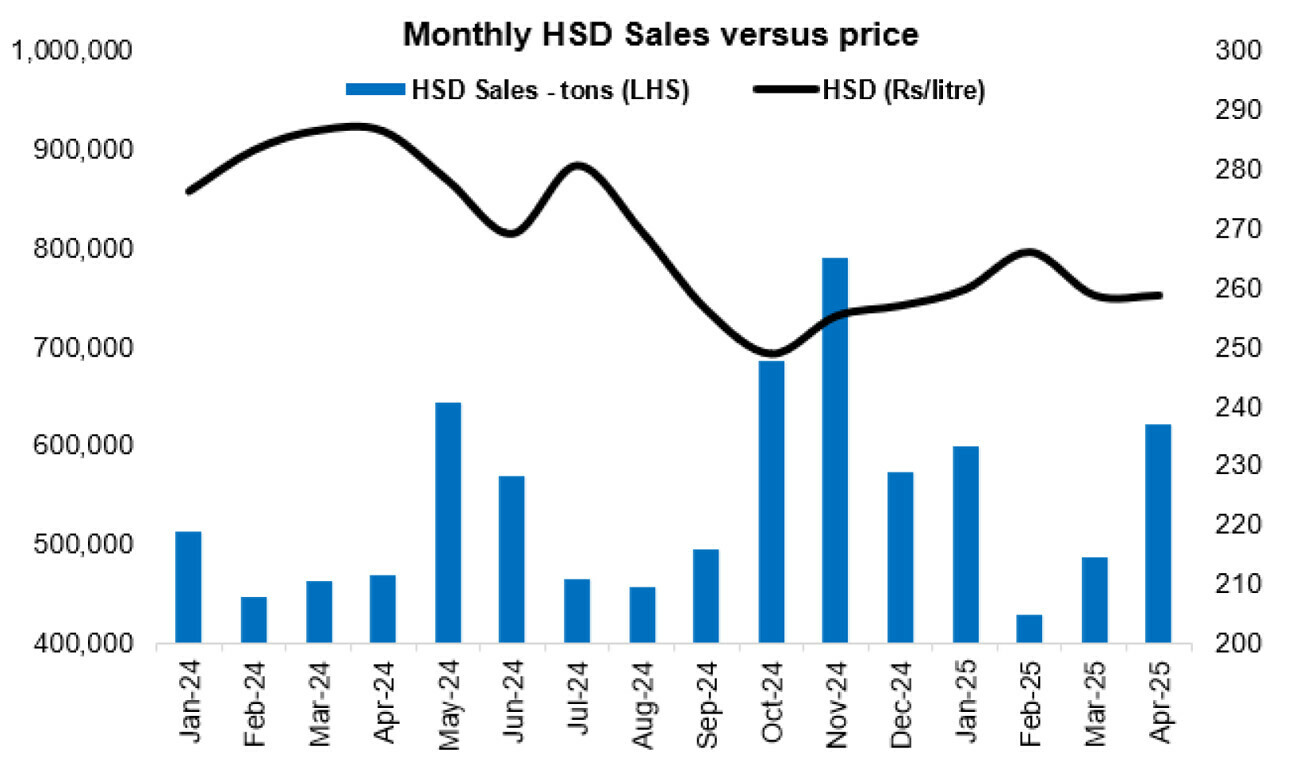
This sharp recovery can be attributed to a combination of factors including a low base from the previous year, seasonal uptick in consumption post-Ramazan, reduced smuggling of petroleum products across the Iran border, and a boost in transportation and harvesting-related demand. Moreover, a significant decline in fuel prices—13 percent lower for motor spirit (MS) and 10 percent for high-speed diesel (HSD) compared to the same period last year—also played a central role in stimulating demand.
Breaking down the product-wise performance, MS sales rose by 25 percent year-on-year and 14 percent month-on-month to reach 660,000 tons, underpinned by growing intercity mobility and improving economic activity. HSD volumes climbed to 622,000 tons, a 33 percent jump year-on-year and 28 percent sequentially, reflecting heightened agricultural usage during the harvesting season as well as a reduction in illegal imports.
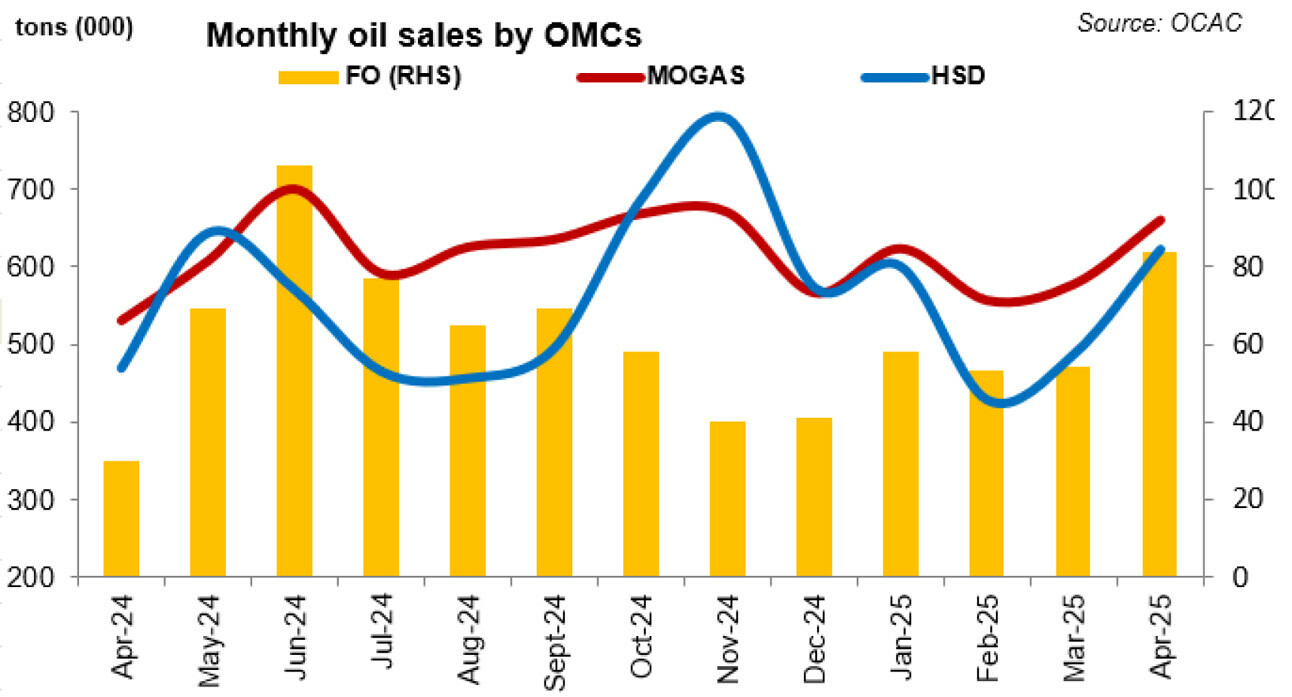
Furnace oil (FO) sales, though constituting a smaller share of the total, witnessed an exceptional increase of 182 percent year-on-year and 55 percent month-on-month to reach 84,000 tons, likely due to greater reliance on FO-based power generation as summer demand kicked in. High-octane blending component (HOBC) volumes also showed significant year-on-year growth, although they remained small in absolute terms.
On a cumulative basis, petroleum product sales for the first ten months of FY25 (10MFY25) stood at 13.22 million tons, a 6 percent increase from the same period last year. This growth was largely driven by MS and HSD, which posted gains of 6 percent and 11 percent respectively.
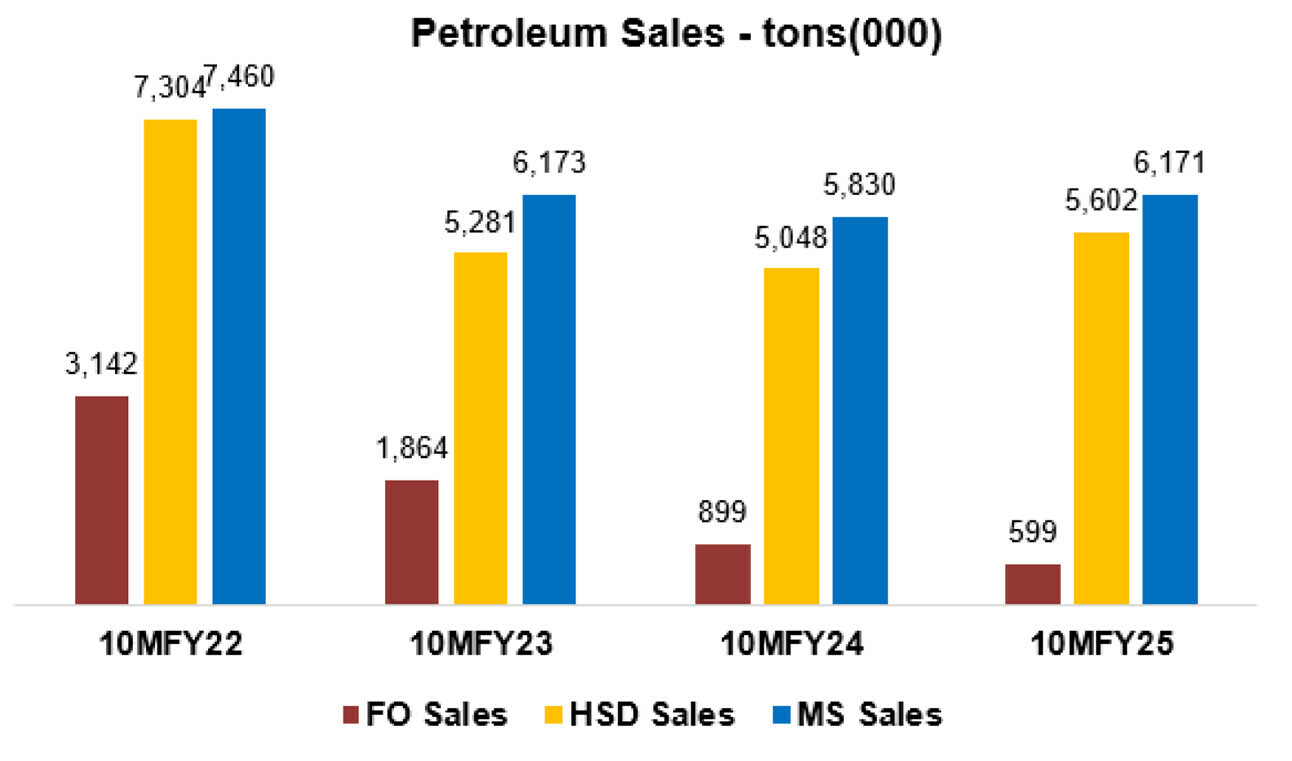
In contrast, FO sales fell by 31 percent year-on-year during the same period, consistent with the sector’s longer-term shift away from FO for power generation due to cost and environmental considerations. Excluding FO, total petroleum sales stood at 12.6 million tons, up 9 percent year-on-year, highlighting the growing prominence of retail fuels in the country’s energy consumption mix.
From a fiscal perspective, the government collected an estimated PKR 926–980 billion under the Petroleum Development Levy (PDL) during 10MFY25, against a full-year target of PKR 1.28 trillion as per the research note by AKD Securities.
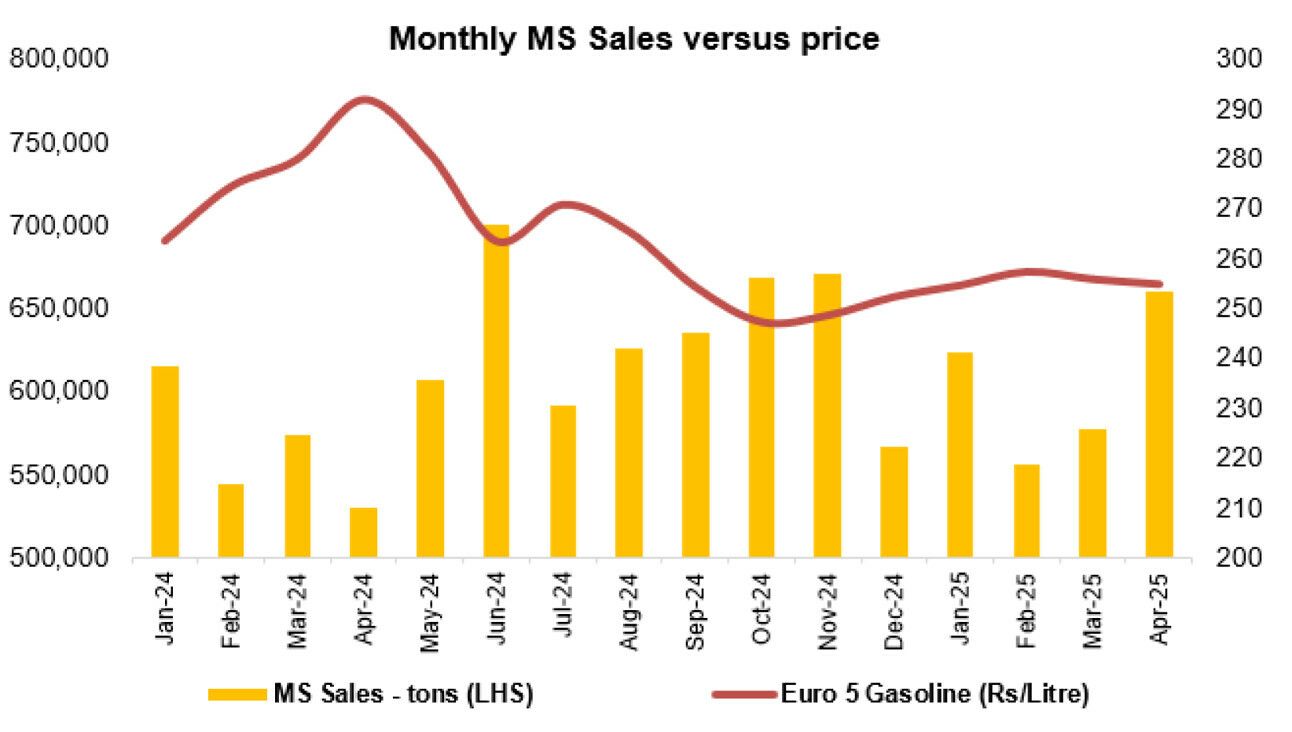
In highlights that in mid-April, authorities raised the PDL on MS and HSD to PKR 77–78 per liter to meet fiscal consolidation goals, partially to finance electricity subsidies in the final quarter of the fiscal year. This policy measure, while boosting revenue, also underscores the balancing act the government must perform between inflation management, revenue generation, and energy accessibility.
Overall, the data from April 2025 reinforces the view that petroleum demand in Pakistan remains sensitive to seasonal cycles, pricing dynamics, and enforcement of regulatory controls.
The strong monthly rebound also provides a robust base for continued growth in the upcoming months, with industry analysts projecting a 5 percent year-on-year increase in overall OMC sales for FY26, supported by expectations of lower fuel prices and a recovery in industrial and transport activity.




















Comments
Comments are closed for this article.