



WASHINGTON: The World Bank on Tuesday forecast that weakening global growth due in part to trade turmoil will push global commodity prices down 12% in 2025 and another 5% in 2026 to the lowest levels of the 2020s in real terms.
The development lender’s latest Commodity Markets Outlook report shows that inflation-adjusted, commodity prices would tumble to their 2015-2019 average in the next two years, marking an end to a price boom fueled by the COVID-19 economic recovery and Russia’s 2022 invasion of Ukraine.
The decline could moderate near-term inflation risks emerging from steep new U.S. tariffs and rising trade barriers globally, but it also could have negative consequences for developing economies that export commodities.
“Higher commodity prices have been a boon for many developing economies, two-thirds of which are commodity exporters,” World Bank Chief Economist Indermit Gill said in a statement. “But now we’re seeing the highest price volatility in more than 50 years. The combination of high price volatility and low prices spells trouble.”
He said these countries should liberalize trade where possible, restore fiscal discipline and create a more business-friendly environment to attract private capital.
Surging energy prices added more than two percentage points to global inflation in 2022, but falling prices in 2023 and 2024 have helped moderate inflation, the World Bank report said.
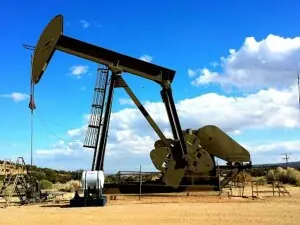
Energy prices are expected to fall by 17% to their lowest level in five years before dropping another 6% in 2026, the report said.
It forecast Brent crude prices to average $64 a barrel in 2025 - a decline of $17 from 2024 - and just $60 a barrel in 2026 amid ample supply and falling demand, partly due to the rapid adoption of electric vehicles in China, the world’s largest auto market. Brent traded at $64.80 a barrel early on Tuesday.
Coal prices are expected to fall 27% in 2025 and 5% further in 2026 as the growth of coal consumption for power generation in developing economies slows.
It said food prices are also expected to recede, falling by 7% in 2025 and an additional 1% in 2026, but this will do little to abate food insecurities in some of the most vulnerablecountries as humanitarian aid shrinks and armed conflicts fuel acute hunger.
The World Bank report also forecast that gold prices are likely to set a new record in 2025 as investors seek safe havens for capital amid rising uncertainty, but the price will stabilize in 2026.

















Comments
Comments are closed for this article.