


Brazil’s economy grows 3.4% in 2024 but year-end weakness signals fewer rate hikes

BRASILIA: Brazil’s economy grew 3.4% in 2024, the strongest since the post-pandemic rebound, but momentum slowed more than expected in the fourth quarter as restrictive monetary policy weighed on activity, fueling bets of an earlier end to the rate hike cycle.
The annual growth of Latin America’s largest economy, reported on Friday by statistics agency IBGE, once again defied market expectations for a more modest increase, supported by strong gains in investment and household consumption amid government policies aimed at boosting disposable income.
The performance in President Luiz Inacio Lula da Silva’s second year in office marked an acceleration from the 3.2% expansion recorded in 2023, and was the best since the 4.8% growth seen in 2021.
However, the economy showed signs of cooling in the final three months of the year as it expanded just 0.2% from the third quarter, missing the 0.5% median forecast in a Reuters poll of economists.
This followed downwardly revised 0.7% growth in the third quarter over the previous three-month period.
Jason Tuvey, deputy chief emerging markets economist at Capital Economics, said the data confirms that Brazil’s “recent period of strong growth has come to an abrupt end.”
He now projects 1.8% economic growth for 2025, down from a previous forecast for 2.3%, which he expects will prompt the central bank to wrap up its tightening cycle this month with the 100 basis-point hike policymakers have already penciled in.
Brazil’s economy grows 3.8% in 2024 but shows signs of cooling
Before the GDP release, private economists surveyed weekly by the central bank had expected rates to peak in June.
They had also projected GDP growth would decelerate to 2% this year, while the government maintained on Friday its 2.3% forecast, as activity loses steam amid aggressive monetary tightening to curb inflation, which ended last year at 4.8%, above the official 3% target.
Since September, central bank policymakers have raised interest rates by 275 basis points to 13.25%, signaling an additional 100 basis-point hike later this month, on the view that a robust labor market, expansionary fiscal policy, and vigorous credit expansion have been supporting consumption and aggregate demand.
“We observed how monetary policy translated into lower consumption in the last quarter, reinforcing the conviction that the central bank doesn’t need to raise interest rates beyond the 15% already priced in,” said Jose Alfaix, economist at investment management firm Rio Bravo, referring to the rate peak currently embedded in the yield curve.
Performance by sector
On the supply side, Brazil’s dominant services sector grew just 0.1% in the fourth quarter from the previous three months, sharply slowing from the 0.7% pace recorded in the third quarter.
Industry expanded 0.3% in the same period, while agriculture contracted by 2.3%.
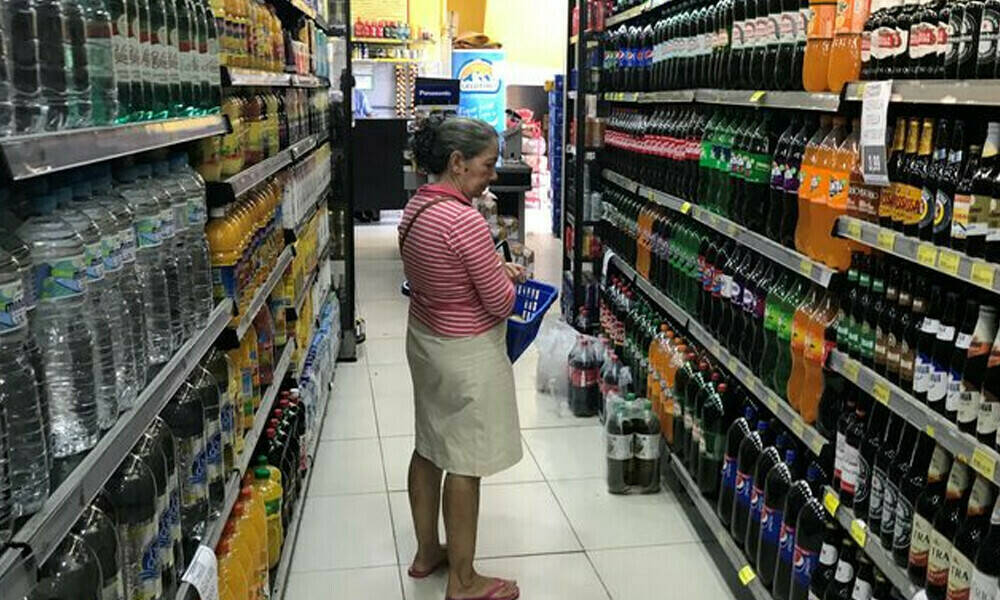
Looking at demand, household consumption - the main driver of GDP growth throughout the year - fell 1% from the third quarter, said IBGE.
“We saw a slight pickup in inflation, particularly food prices. The labor market continued to improve, but at a slower pace. Meanwhile, interest rate hikes that began in September last year were already weighing on activity,” said Rebeca Palis, IBGE’s national accounts coordinator.
On an annual basis, the 3.6% growth recorded in the fourth quarter also fell short of the 4.1% expected.


























Comments
Comments are closed for this article.