



Synthetic Products Enterprises Limited (PSX: SPEL) was incorporated in Pakistan as a private limited company in 1982. The company changed its status into a public limited company in 2008. The principal activity of the company is the manufacturing, and sale of plastic auto parts, plastic packaging for food, and the FMCG industry as well as molds, and dies.
Pattern of Shareholding
As of June 30, 2024, SPEL has a total of 199.736 million shares outstanding which are held by 1988 shareholders. Directors, CEO, their spouses, and minor children have the majority stake of 75.038 percent in the company followed by Local general public accounting for 9.84 percent shares. Modarabas & Mutual funds hold 3.13 percent shares of SPEL while insurance companies hold 2.6 percent shares. Around 1.47 percent of shares of the company are held by the foreign general public. The remaining shares are held by other categories of shareholders.
Financial Performance (2019-24)
Except for a plunge in 2020, the topline of SPEL has been making positive strides over the period under consideration. Conversely, its bottom line plunged in 2019, and 2023. The margins of the company drastically dropped in 2019 followed by a sound recovery thereafter. SPEL’s margins reached their optimal level in 2021. In 2022, SPEL’s margins eroded. In 2023, gross margin, and operating margin improved while net margin continued to slide. Conversely, in 2024, gross, and operating margins plummeted while net margin picked up. The detailed performance review of the period under consideration is given below.
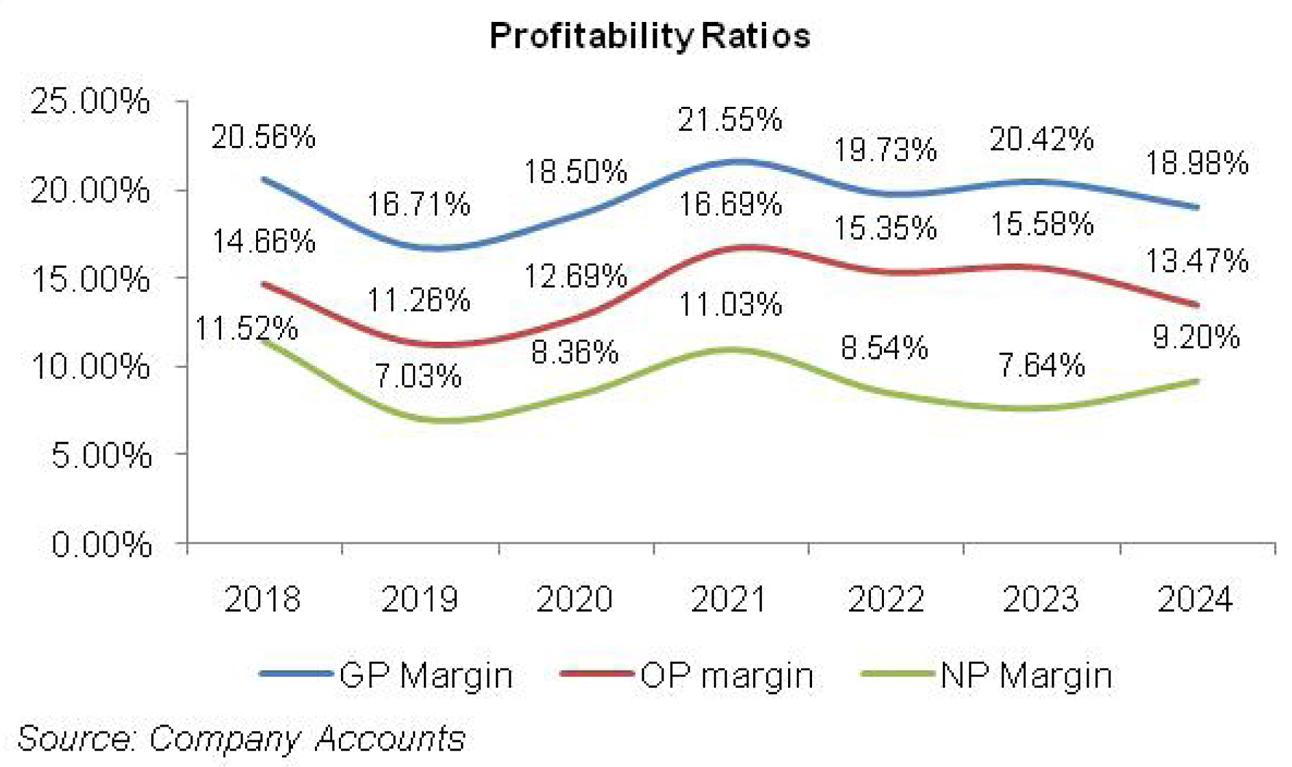
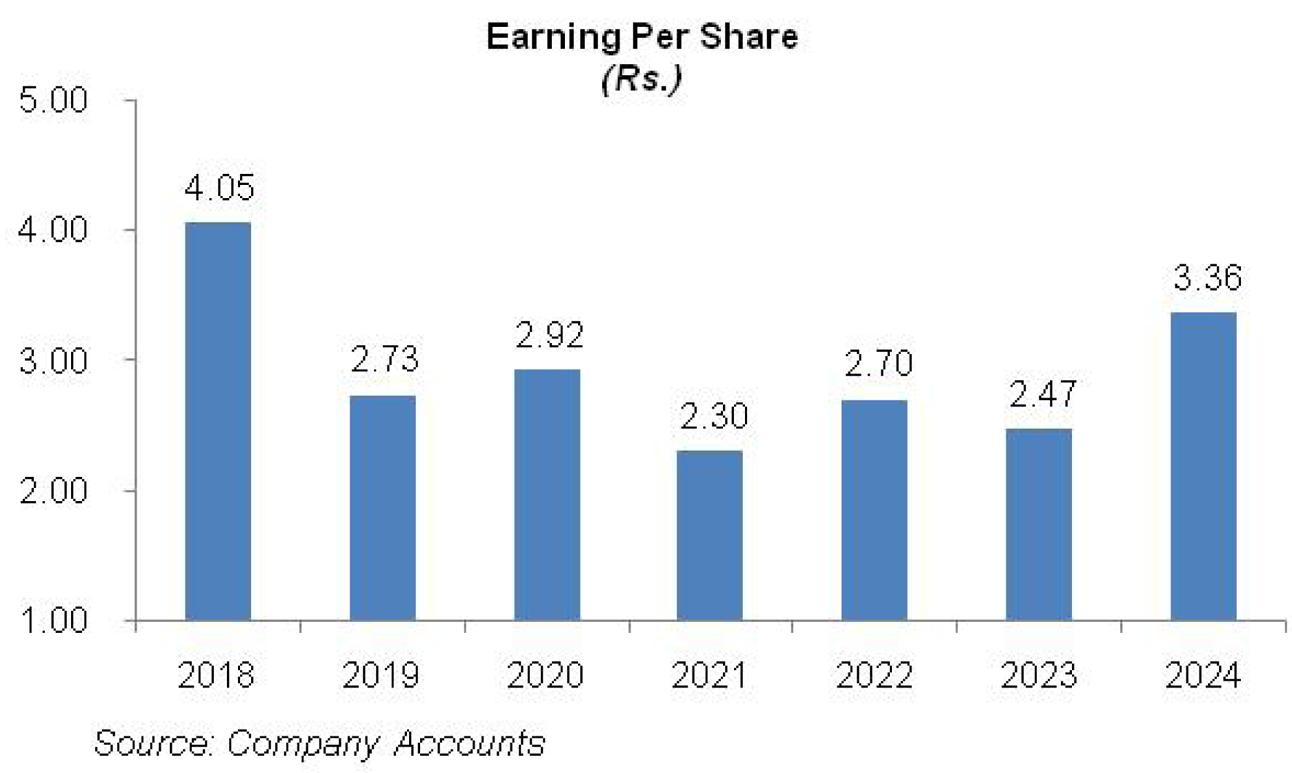
In 2019, SPEL’s topline grew by 14.85 percent year-on-year on the back of growth momentum shown by local sales. Conversely, export sales witnessed a downtick in 2019. Pak Rupee depreciation rendered the raw materials costly for SPEL which took a toll on its gross profit. SPEL’s gross profit slid by 6.68 percent year-on-year in 2019 with its GP margin clocking in at 16.71 percent versus the GP margin of 20.56 percent recorded in 2018. To counterbalance the rising cost of sales, the company restricted its operating expenses which only grew by 6.11 percent during the year despite inflationary pressure. Yet operating profit posted a plunge of 11.83 percent year-on-year in 2019 with OP margin standing at 11.26 percent versus OP margin of 14.66 percent recorded in 2018. Other expenses provided a much-needed breather as it dropped by 6.58 percent in 2019 due to the fact that the company did lesser provisioning for WWF, and WPFF during the year. Other income nosedived by 19.80 percent year-on-year in 2019 on account of lower income earned from non-financial assets. Finance cost gave another major blow to the bottom line as it expanded by a whopping 64.43 percent year-on-year on the back of the high discount rate as well as increased borrowings during the year. The result was a bottom line slide of 29.94 percent year-on-year in 2019 to clock in at Rs.241.19 million with an NP margin of 7 percent versus an NP margin of 11.52 percent recorded in 2018. EPS stood at Rs. 2.73 in 2019 versus EPS of Rs.4.05 registered in 2018.
In 2020, the local as well as the global economy was under the headwinds of COVID-19. The global pandemic took its toll on the performance of SPEL particularly in the last quarter of 2020. In the initial quarters of 2020, the government imposed a ban on the purchase of vehicles for the non-filers of income tax and then imposed excise duty on the vehicles. This increased the prices of automobiles and affected SPEL’s sales to the auto sector. The FMCG, and food packaging segment of SPEL performed quite well during the year, yet couldn’t sustain the topline which plunged by 9.72 percent year-on-year in 2020. During the year, export sales grew by 27 percent year-on-year, however, the wretched local performance didn’t let it create any impact on the top line. Low off take also reduced the cost of sales which helped in keeping the gross profit intact at Rs.573 million in 2020. GP margin grew to 18.5 percent in 2020. The company also controlled its operating expenses which plunged by 3.74 percent in 2020. This enabled a marginal 1.74 percent year-on-year growth in operating profit in 2020. OP margin climbed up to 12.7 in 2020. Other income boasted 151.61 percent year-on-year growth in 2020 primarily on account of income on unwinding of long-term receivables. Other expenses dropped by 9.19 percent in 2020 on the back of lesser momentum of loss on the disposal of fixed assets. Financial cost also offered support to the bottom line as it slid by 3 percent year-on-year despite a high discount rate in the initial quarters of 2020. While long-term loans grew as SPEL availed the refinance scheme initiated by SBP for the payment of wages, and salaries, short-term borrowings dipped during the year owing to lesser demand, and capacity utilization. The bottom line was able to post 7.31 percent year-on-year growth to clock in at Rs. 258.82 million in 2020 with EPS of Rs.2.92. NP margin also improved to 8.36 percent in 2020.
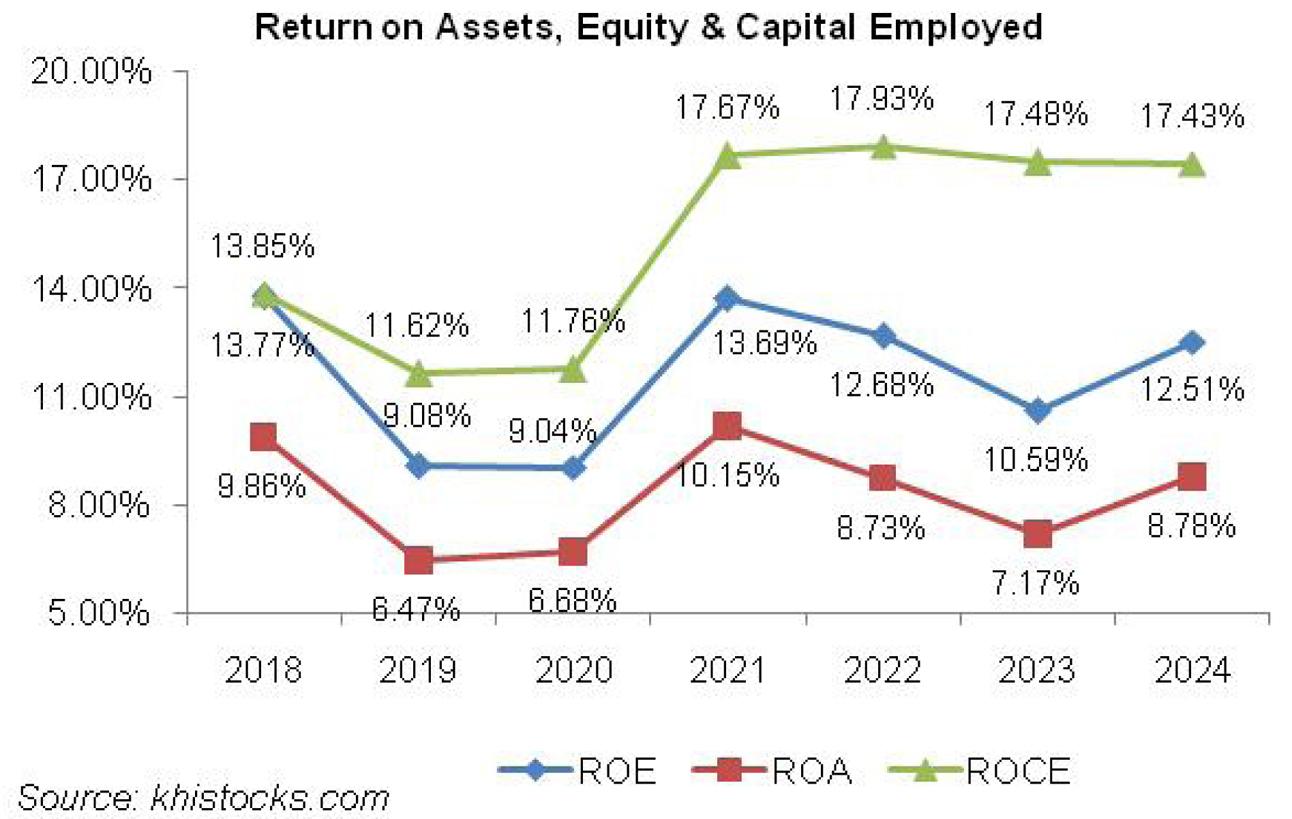
In 2021, the company initiated its new production facility in Karachi to cater to the demand recovery. As the economic activity began to stabilize, the topline grew tremendously by 34.66 percent year-on-year in 2021 which was the result of improved performance in both local and export markets in the auto as well as food & packaging division. Rising raw materials cost, fuel, and electricity charges as well as elevated repair, and maintenance of fixed assets pushed the cost of sales up by 29.62 percent in 2021, yet gross profit was able to boast a 56.85 percent improvement over last year. GP margin clocked in at 21.55 percent in 2021. Operating expenses also grew by 12.46 percent year-on-year in 2021 on the back of inflationary pressure as well as improved sales volume, and instigation of a new production facility during the year. Operating profit boasted a stunning 77.19 percent year-on-year growth in 2021 with OP margin clocking in at 16.69 percent. While SPEL secured increased long-term borrowings to finance various capital expenditures, short-term financing considerably reduced during the year which resulted in a 37.38 percent slippage in finance cost in 2021. The bottom line grew by a striking 77.82 percent year-on-year in 2021 to clock in at Rs.460.24 million with an NP margin of 11 percent. EPS dropped to Rs. 2.3 in 2021 as the company issued 4.5 percent right shares during the year to finance the setup of its new manufacturing facility.
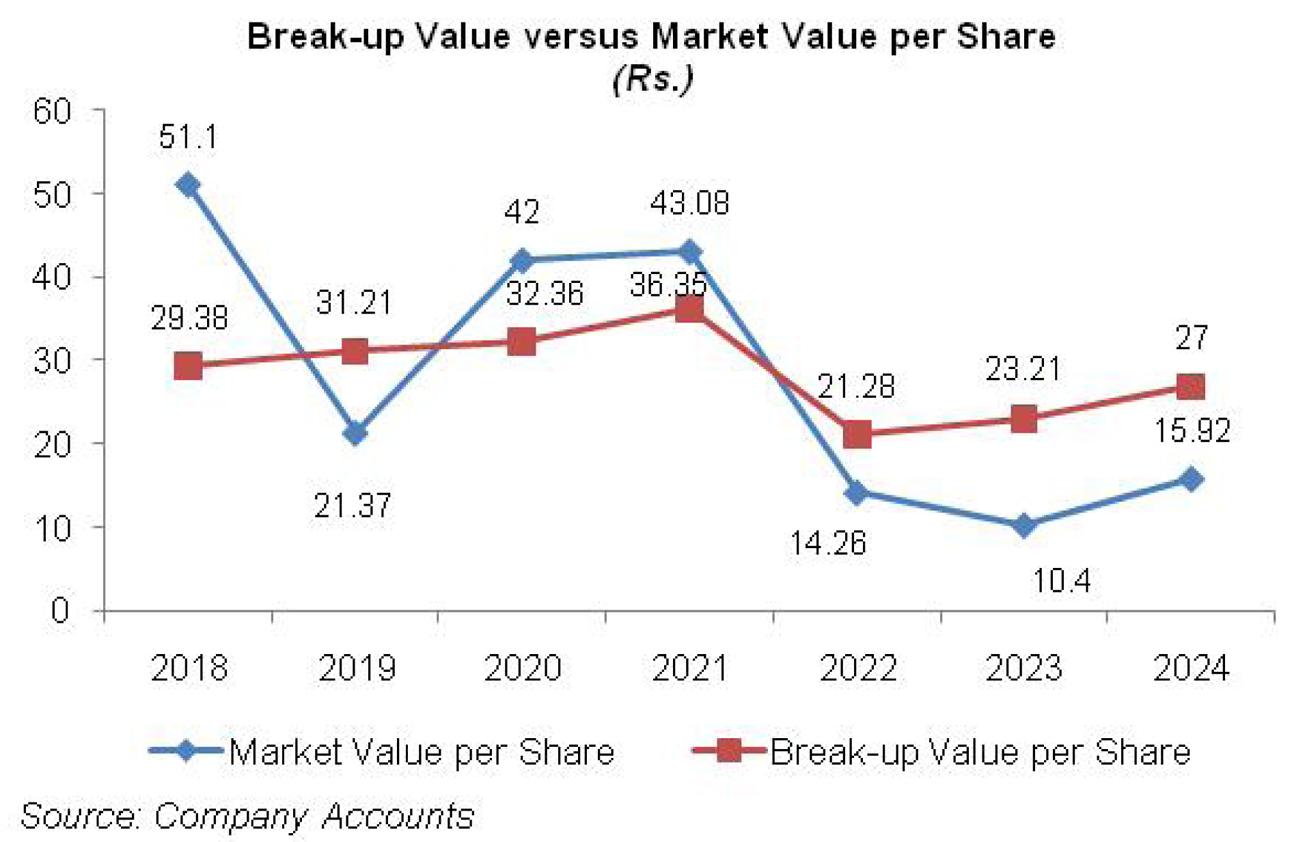
2022 brought along myriad new challenges for the company. The political, and economic instability coupled with an increase in the prices of raw materials, and the imposition of super tax wreaked havoc on the margins of the company. The topline achieved a significant 51.24 percent rise in 2022 mainly on the back of a fabulous 78 percent growth in auto segment sales. The food and packing division also grew by 40 percent during the year. Inflation, high discount rate, Pak Rupee depreciation, and an increase in energy tariff, and raw material prices drove up the cost of sales in 2022. SPEL attained a 38.49 percent year-on-year rise in its gross profit during 2022, however, GP margin slid to 19.73 percent during the year. Operating expenses posted a massive jump of 36.55 percent during the year. The main culprits behind the elevated operating expenses were the market-induced increase in salaries, traveling expenses, and depreciation on fixed assets. Operating profit expanded by 39 percent year-on-year in 2022, however, OP margin plummeted to 15.35 percent. Other income grew by 13.48 percent in 2022 on the back of scrap sales made during the year coupled with the amortization of deferred grants, and reversal of provisions for doubtful debts. Conversely, other expenses grew by 14.11 percent in 2022 on account of increased provisioning done for WWF, and WPFF during the year. Finance cost gave a major hit to the bottom line as it magnified by 122.85 percent during the year due to a high discount rate coupled with a drastic rise in both short-term and long-term borrowings during the year. The imposition of super tax further squeezed the bottom line growth. SPEL’s net profit grew by 17.10 percent to clock in at Rs.538.93 million in 2022. NP margin dropped to 8.54 percent while EPS clocked in at Rs.2.7 during 2022.
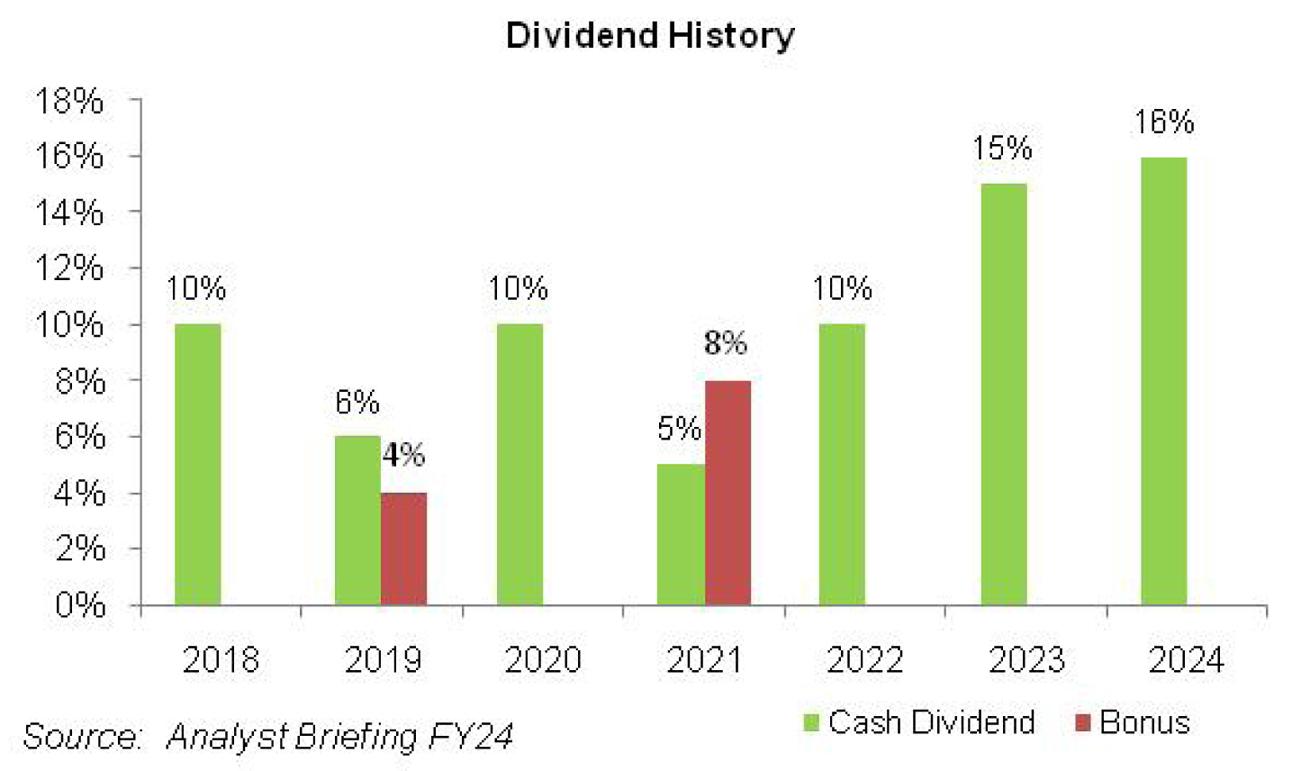
In 2023, the auto segment sales came under pressure owing to import restrictions. Hence, the company focused on its food, and packaging segment, and was able to muster1.94 percent year-on-year growth in topline in 2023. During the year, SPEL faced increased raw material prices, currency depreciation, and exorbitant fuel, and energy prices; however, its ability to invest in technology up-gradation, and automation as well as renewable energy restricted its cost of sales. Gross profit rebounded by 5.52 percent in 2023 with GP margin mounting to 20.42 percent. Administrative, and selling expenses also collectively grew by 12.52 percent in 2023 mainly on account of heightened payroll expenses, traveling expenses as well as advertisement expenses incurred during the year. It is to be noted that the company considerably streamlined its workforce to 550 employees in 2023 from 653 employees in the previous year. Operating profit marched up by 3.52 percent in 2023 with a marginal uptick in OP margin which stood at 15.58 percent. Other income built up by 26.17 percent in 2023 due to hefty profit earned on bank deposits as well as amortization of deferred grants. Other expenses escalated by 10.97 percent in 2023 mainly on account of higher profit-related provisioning. Finance cost spiraled by 31.71 percent in 2023 due to the unprecedented level of discount rate as well as higher short-term borrowings. Towering finance costs coupled with the retrospective imposition of a 10 percent super tax translated into an 8.87 percent thinner bottom line in 2023. SPEL’s net profit stood at Rs.491.097 million in 2023 with EPS of Rs.2.47 and NP margin of 7.64 percent.
In 2024, SPEL’s net sales grew by 8.31 percent. This mainly came on the back of local sales which grew by 5.17 percent to clock in at Rs.6.71 billion in 2024. During the year, the company also enhanced its footprint in the international market. This led to 392 percent growth in export sales which clocked in at Rs.256 million in 2024. In terms of segment, the FMCG sector contributed 78.43 percent to the total sales mix of SPEL in 2024 versus 77.61 percent contribution in 2023. The auto sector contributed 21.57 percent to the total revenue of SPEL in 2024, down from its share of 22.39 percent in 2023. The cost of sales grew by 10.26 percent in 2024 due to a massive hike in electricity, fuel, and water charges. This was despite the fact that the company added 1.32 MW of solar power to its operations. Gross profit inched up by only 0.67 percent in 2024 with GP margin dropping to 18.98 percent. Operating expenses escalated by 23.48 percent in 2024 due to a spike in directors’ remuneration, payroll expenses, traveling expenses, fee & subscription charges as well as advertisement & sales promotion expenses incurred during the year. SPEL streamlined its workforce from 550 employees in 2023 to 539 employees in 2024. Operating profit eroded by 6.41 percent in 2024 with OP margin falling down to 13.47 percent. Other income posted a staggering 206.54 percent growth in 2024 due to gains recognized on the disposal of property, plant & equipment coupled with greater profit on bank deposits. Other expenses rose by 20.12 percent in 2024 due to increased profit-related provisioning, higher ECL charges for the year as well as loss incurred on foreign currency transactions. Finance costs slid by 1.63 percent in 2024 due to a considerable decline in outstanding borrowings. This resulted in a gearing ratio of 17 percent in 2024 versus a gearing ratio of 20.76 percent recorded in 2023. Net profit strengthened by 30.52 percent to clock in at Rs.640.97 million in 2024. This translated into EPS of Rs.3.36, and NP margin of 9.2 percent.
Recent Performance (1HFY25)
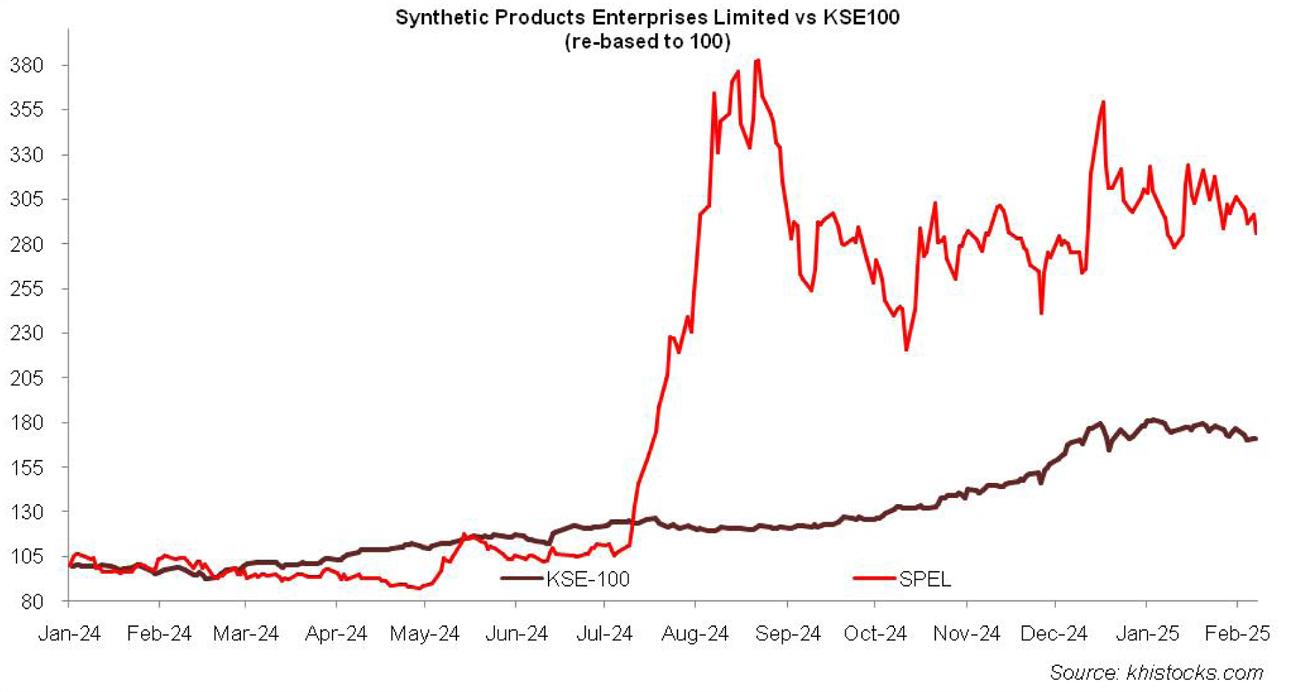
During the first half of FY25, SPEL’s net sales posted a staggering 47.73 percent year-on-year growth to clock in at Rs.4505.57 million. This came on the back of an increasing customer base, exponential growth in export sales as well an improved indigenous politico-economic backdrop providing a strong impetus to local sales. The cost of sales surged by 38.22 percent in 1HFY25. Improved sales volume, shift to solar energy, and better absorption of fixed cost due to high capacity utilization resulted in 87.98 percent growth in gross profit in 1HFY25. GP margin also jumped up from 19.12 percent in 1HFY24 to 24.33 percent in 1HFY25. Operating expenses escalated by 23.41 percent due to increased payroll expenses, traveling expenses as well as advertisement & promotion expenses incurred during the year. Operating profit registered a 119.54 percent enhancement in 1HFY25 with OP margin clocking in at 19 percent versus OP margin of 12.85 percent recorded during the same period last year. Other income rose by 26.36 percent in 1HFY25 probably because of higher gains recorded on the sale of fixed assets, and higher returns on short-term investments. Other income was wiped off by a 143 percent spike in other expenses in 1HFY25 which apparently came on the back of loss incurred on foreign currency transactions as well as higher provisioning done for WWF, and WPPF. To add to the ado, finance costs also picked up by 37.15 percent in 1HFY25 despite monetary easing. This was due to increased short-term borrowings obtained during the period to meet working capital requirements. Net profit increased by 97 percent to clock in at Rs.462.28 million in 1HFY25. This translated into EPS of Rs.2.44 in 1HFY25 versus EPS of Rs.1.22 recorded in 1HFY24. NP margin progressed from 7.69 percent in 1HFY24 to 10.26 percent in 1HFY25.
Future Outlook
SPEL plans to explore new export markets and undertake product innovation to diversify its sales mix. This coupled with demand recovery from FMCG, and auto sectors in the home market will provide further growth momentum. Operational excellence, technological advancements, and enhanced focus on the usage of renewable energy will result in cost optimization and improved margins.


























Comments
Comments are closed for this article.