



 SINGAPORE: Most emerging currencies edged higher on Friday as the dollar pulled sharply back from six-week highs after US President Donald Trump's imposed tariffs on steel and aluminium, sparking fears of a global ttrade war.
The dollar index against a basket of six major currencies fell 0.2 percent to 90.185.
The Trump administration said the tariffs would protect US industry, but the dollar and Wall Street shares slumped as the plan sparked fears of retaliatory trade measures and worries about its potentially negative impact on the US economy.
"Trade protectionism concerns, especially if retaliatory moves ensue, are expected to continue to circulate in the coming session, with the initial kneejerk reaction to take the dollar lower," said Emmanuel Ng, FX strategist at Oversea-Chinese Banking Corporation Ltd.
"In such an environment, we expect risk premiums to widen and emerging Asia to bear the brunt. Asian FX also have very little in terms of a backstop at this juncture, given that net portfolio inflows of late have been uninspiring."
Among Asian currencies, the Malaysian ringgit saw the biggest boost, gaining as much as 0.4 percent, snapping three straight sessions of losses.
The Korean won edged up 0.2 percent, but was on track to end lower for a second straight week.
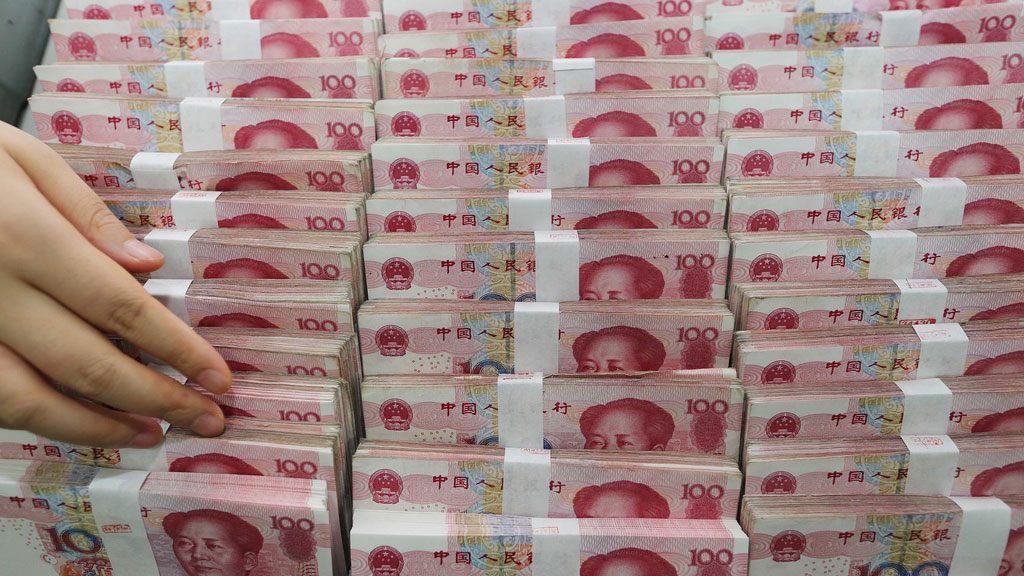
The Chinese yuan, the Taiwan dollar and the Singapore dollar all inched up about 0.1 percent.
The Indonesian rupiah and the Philippine peso traded flat, while Indian markets were closed for a holiday.
CHINESE YUAN
Yuan traders said Trump's tariff decision would be the key market focus in the near term, but the details and potential impact were still too unclear to heavily affect trade on Friday.
The Chinese currency looked set for a losing week.
Prior to market opening, the People's Bank of China set the midpoint rate at 6.3334 per dollar, 18 pips firmer than the previous fix of 6.3352.
In the spot market, the onshore yuan opened at 6.3344 per dollar and eased to a low of 6.3622 before recovering slightly to 6.3534 at midday.
THAI BAHT
The Thai baht slipped as much as 0.4 percent to a one-week low, making it the only currency to fall in the day.
Thailand's headline inflation rate eased in February, missing forecasts and keeping below the central bank's goal, giving policymakers leeway to keep monetary policy loose to aid economic growth.
The Bank of Thailand has kept its policy interest rate steady at 1.50 percent, near record lows, since April 2015.
The following table shows rates for Asian currencies against the dollar at 0545 GMT.


























Comments
Comments are closed for this article.