


Media's role vital in educating people on health issues: Faisal
- He informed the media about the COVID-19 vaccine activities and assured that it would be provided to the people free of charge.
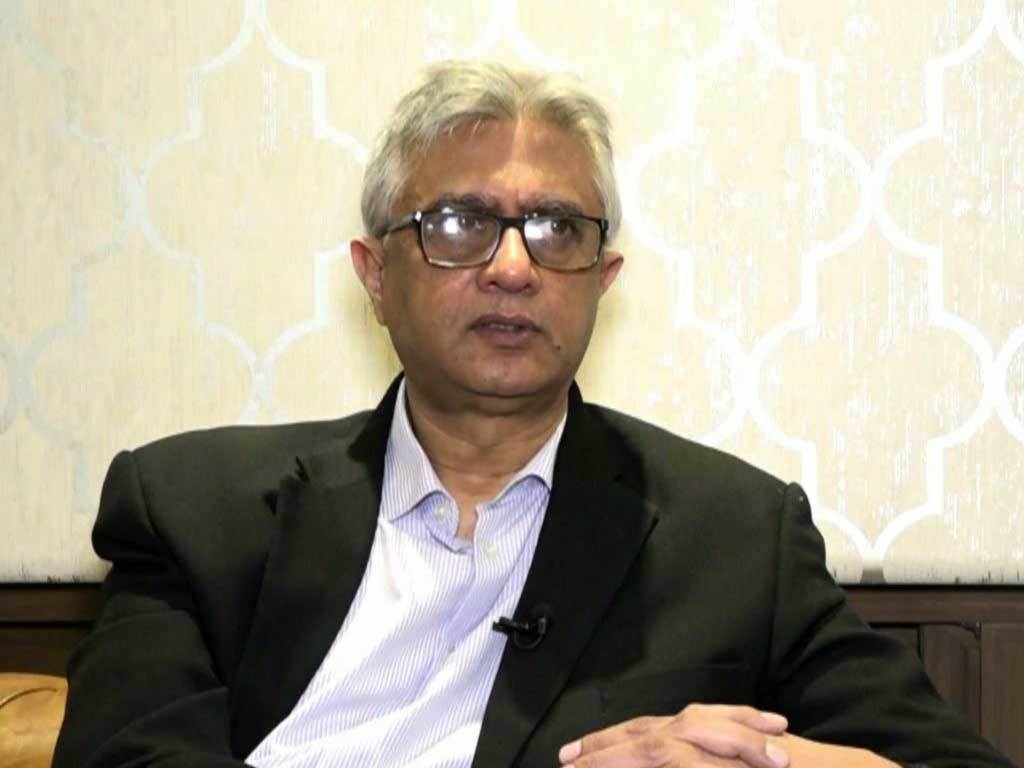

ISLAMABAD: Special Assistant to the Prime Minister on National Health Services, Regulations and Coordination Dr Faisal Sultan has said that media's role is important in creating awareness in public on health issues and various preventable diseases in the country.
Addressing the participants of five-day health journalists workshop via video link, Dr Faisal Sultan said that health journalists played effective role during COVID-19 high risk period to educate people on taking preventive measures and following SOPS issued by the government.
He informed the media about the COVID-19 vaccine activities and assured that it would be provided to the people free of charge. He requested the health journalists to report accurately and distinguish between fake and correct news.
He added keeping in view the large impact of social media, it was high time for health journalists to play their role in identifying the risks related to the pandemic and provide credible and timely information to the public.
Former Special Assistant to the Prime Minister on National Health Services, Regulations and Coordination, Dr Zafar Mirza highlighted the lessons learned from COVID-19, followed by a panel discussion on reporting the virus. He also presented the nuances of universal healthcare and primary healthcare.
Dr Zafar Mirza also spoke about Pakistan’s broader health and healthcare system, while Dr Raza Zaidi discussed the health sector governance, followed by a lively discussion.
Dr Malik Muhammad Safi facilitated the workshop’s second day, with a dedicated session on COVID-19 in Pakistan.
Dr Usman Mushtaq told the participants about the coronavirus’s basics, including the pandemic’s state in Pakistan and how to tackle it through preventive measures.
Samia Shah of Population Council informed the participants about population growth and the challenges it posed to health governance.
Dr Raza Zaidi discussed the national essential health services package in his second presentation, followed by a question and answer session.
Dr Zakiuddin Ahmed, later, talked about healthcare quality and patient safety. Dr Abdul Bari Khan focused on the private health sector. Dr Nadeem Khawaja discussed general practitioners’ roles, and Dr Shuaib Khan talked about quackery and the private health sector’s regulation.
Lively and prolonged discussions followed, with the participants referring to their observations of the private healthcare sector’s state to seek more details about the regulatory framework.
Later, Dr Assad Hafeez, Dr Tausif Janjua, Dr Israr ul Haq, and Senior Health Journalist Waqar Bhatti spoke on mother and child health, malnutrition and stunting, polio and essential immunization program, and problems journalists face covering health, respectively.
The workshop’s fourth day featured presentations by Fahmida Iqbal Khan and Dr Rajwal Khan of the UNAID on HIV/AIDs in Pakistan. At the same time, Dr Huma Qureshi discussed the high prevalence of hepatitis —the silent killer.
Dr Hasan Bin Hamza rounded off the discussion by presenting on non-communicable diseases and their healthcare burden.
Dr Amanullah Saif from the Drug Regulatory Authority of Pakistan informed the house about determining medicine prices, and Raisa Gul, Dean Faculty of Nursing and Midwifery, discussed the shortage of nurses in the country.
Dr Zaeem ul Haq gave a presentation on risk communication during COVID-19. The discussion that followed reflected the participants’ collective desire and the facilitators to have a regular information sharing on drug pricing to avoid undue sensationalism.
On the concluding fifth day, Haroon Baloch, a social media expert, spoke about technology use in health journalism and the effective use of social media platforms.
The workshop ended with the participants expressing their satisfaction with the learning imparted with a unanimous desire for continuation of the initiative to include and benefit other journalists.
For the purposes, the participants resolved that network of health journalists may be established to assist the journalists in getting a better understanding of the health sector, advocate for recognition of health care as a basic human right in the constitution, provide a platform for interaction among policy-makers and ensure access to research and authentic information for journalists to improve the quality of health journalism in Pakistan.
The workshop was organized by the Trust for Democratic Education and Accountability (TDEA) in collaboration with the Ministry of National Health Services, Regulations and Coordination at Bhurban with an aim to enhance the quality of health journalism in Pakistan.
A total of 23 journalists representing different media groups from all four provinces and Islamabad Capital Territory attended the workshop. Pakistan’s leading health professionals delivered presentations on their specific areas of expertise. Dr Zafar Mirza, former Special Assistant to the Prime Minister on National Health Services, was the workshop’s lead moderator.














Comments
Comments are closed for this article.